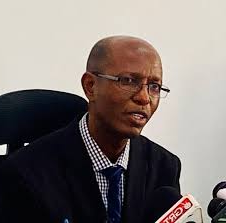
The Managing Director of the National Water and Electricity Company (NAWEC), Galo Saidy, has warned that the electricity disruptions affecting parts of The Gambia could persist for up to two more weeks.
Speaking in an interview with West Coast Radio, Mr. Saidy attributed the erratic power supply to technical problems affecting regional electricity providers in Senegal and Guinea. He explained that the outages stem from faults on the Organisation for the Development of the Gambia River Basin (OMVG) transmission network, placing the situation beyond NAWEC’s direct control.
“This is a technical issue that is beyond NAWEC’s control,” he said. “It concerns the power supply coming through the OMVG line. The suppliers are experiencing technical challenges, and both Senegal and Guinea are also facing difficulties.”
Mr. Saidy said The Gambia is participating in load-sharing arrangements with its regional partners to maintain the stability of the interconnected electricity grid. He cautioned that exceeding the country’s allocated share of power could jeopardize the entire system.
“We have to load share because the OMVG is a regional network,” he said. “If we take more power than we are supposed to, it could destabilize the whole grid.”
Despite the regional challenges, Mr. Saidy noted that NAWEC continues to supplement electricity supply through local generation and renewable energy sources. He said the company’s generators and solar power facilities have helped cushion the impact of the disruptions.
“We are generating electricity locally from our own generators, and we also have solar plants. Those are the sources that are helping us manage the situation,” he explained.
On when normal service could resume, Mr. Saidy said updates from regional suppliers suggest that the situation may be resolved within the next one to two weeks.
“Based on the information I am receiving from our suppliers, I would say another week or two at most,” he said. “Within the next two weeks, we should be able to return to normal operations, as far as I understand.”