


As Eni enters The Gambia’s most talked-about offshore block, questions remain about whether the country has fully understood the geological intelligence inherited from previous operators.
Introduction: A New Chapter for Gambian Petroleum Exploration
In a week dominated by news of how Senegal’s oil and Gas disputes continue to cast a long shadow over the Gambia’s own compromised and lacklustre exploration efforts, the Gambia Ministry of Energy and Petroleum announced what it described as a major breakthrough for the country’s hydrocarbon ambitions.
On Friday, the Government of The Gambia signed a Petroleum Exploration, Development and Production Licence Agreement (PEPLA) with Eni Gambia Ltd, a subsidiary of the Italian energy giant Eni S.p.A, for offshore Block A1.
The announcement has been received with a measure of scepticism by the Gambian public who have been taken on repeated roller coaster rides by officials about the offshore exploration potentials of the country only to have their hopes dashed at the end. Operators exited; licences changed hands and exploration programmes failed to deliver the breakthroughs that were promised. Against that backdrop, the disclosure that the Gambia National Petroleum Corporation (GNPC) will hold a 10% carried interest in the licence without bearing exploration costs has generated interest but not necessarily excitement. Even with the accompanying assurances that this will spur renewed seismic and drilling activities in one of the country’s most prospective offshore areas. The announcement feels more like a footnote than a transformative breakthrough.
The Gambia’s Minster of Petroleum Mr Nani Juwara standing beside an unnamed Representative of Eni both clutching copies of their red covered agreement, was effusive about the significance of the occasion describing it as “a proud and defining moment”for the country’s energy sector.
The most significant, however, was a statement by the newly appointed Director General of the Petroleum Commission, Ms Cany Jobe-Taal, an experienced exploration engineer, who described the agreement as:
“This signing is the result of a deliberate evidence-based and institution-led licensing process through effective management of the national data room, international promotion, pre-qualification and negotiations”.
It is a reassuring statement but amid the celebration lies an important question that deserves serious public attention: What does The Gambia actually know about Block A1, and has it fully examined the extensive geological information left behind by previous operators?
A country that understands its data can negotiate confidently. And a country that does not understand its data must rely heavily upon the interpretation of external operators. And therein lies the danger!
Block A1: A Strategic Offshore Asset
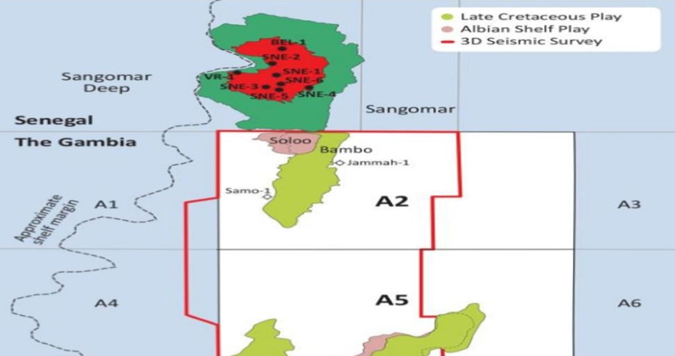
The A1 block is located offshore with an area mass of 1,300 km2 in water depths ranging from 1,250 to 3,500 meters. It sits to the left of the A2 block and its right north to south vertical axis is almost touching with the site of the bamboo 1 well. Its position at the southern margin of the Sangomar field means it shares similar geological trend with proven hydrocarbon systems elsewhere within the MSGBC Basin. Geological studies undertaken over many years indicate that oil migration pathways from mature source kitchen appear to converge at the uplifted crest along the palaeo-shelf edge before accumulating within high-quality clastic reservoirs at multiple burial depths.
It is this very promising prospect that has made the A1 block the priced target for acquisition by several ambitious exploration companies. Buried Hill Energy, a small independent Canadian company first held the licence for both the A1 and the A4 in 2006. African petroleum which later merged with PetroNor farmed in with Buried Hill to acquire 60% of A1. PetroNor retained control of the block until 2018, when the Government of The Gambia revoked its licence on the grounds that the company had failed to drill a well within the agreed licence period. The matter became the subject of a protracted arbitration at the International Centre for Settlement of Investment Disputes which ended by negotiated settlement. The A1 block was awarded to BP by the Government of the Gambia even before the arbitration was settled.
The Ministry is therefore entirely justified when it states that existing geological and geophysical studies indicate significant exploration potential within the block. However, the true value of Block A1 may not lie solely beneath the seabed, but also within the vast quantity of geological knowledge accumulated over decades of exploration.
BP’s Legacy in The Gambia
BP’s arrival in the Gambian with a licence which became effective on 30th July 2019 was seen as a watershed moment in the country’s oil and gas exploration history. Unlike smaller independent explorers, BP possesses the technical expertise, financial resources and regional experience necessary to unlock complex offshore opportunities. Its interest in the Gambia was not accidental. BP had already established a major presence in neighbouring Senegal and Mauritania, where its exploration activities contributed to the development of the Greater Tortue Ahmeyim (GTA) an enormous gas field now in production. This gas field originated as an oil field that was transformed through intense geothermal compression in the reservoirs.
The MSGBC Basin runs in a continuous offshore arc from Mauritania, through Senegal down past the Gambia into Guinea Bissau. BP knew the Basin held deep secrets, meaning undiscovered oil reserves down the line. The company moved quickly by funding the acquisition and reprocessing of extensive 2D and 3D seismic data. Technical studies were undertaken; prospect evaluations were completed. The quality of its enhanced data matched its technical expertise, and it was able to identify at least 3 sites with extraordinary potential for discovery. The seriousness of its efforts was soon followed by a detailed Environmental Impact Assessment. All that was left was to drill a well within the initial exploration period of 2 years ending on 29 July 2021. Then came COVID-19. BP’s exploration trajectory was derailed in early 2020 when BP informed the Ministry that the adverse effects of the covid pandemic had forced it to change its corporate strategy towards low carbon energy. The company withdrew before drilling a well. It paid the Government of the Gambia USD$29m before exiting the block which then reverted to the government.
To the uncritical eye, BP’s exit after having accumulated such a vast reservoir of proprietary geological intelligence on the Block’s potential could be reduced to a simple matter of cost-benefit analysis. It is difficult to dismiss that hypotheses especially given that only months after withdrawing from The Gambia, BP announced plans to drill oil in America, specifically Texas. The very type of upstream activity it had publicly claimed to be strategically moving away from. Though the inconsistency might be unsettling, BP’s relinquishment of its licence does not necessarily indicate a lack of prospectivity. Major oil companies frequently exit acreage for a range of reasons; portfolio optimisation, shifting capital-allocation priorities, energy-transition commitments, changes in corporate strategy, potential cross-border unitisation complexities particularly with Sangomar so close, or, as in this case, the reputational risks associated with operating in severely underdeveloped jurisdictions with weak institutional frameworks. The key question is not why BP left, but what BP learned before leaving.
The Hidden Asset: Geological Data
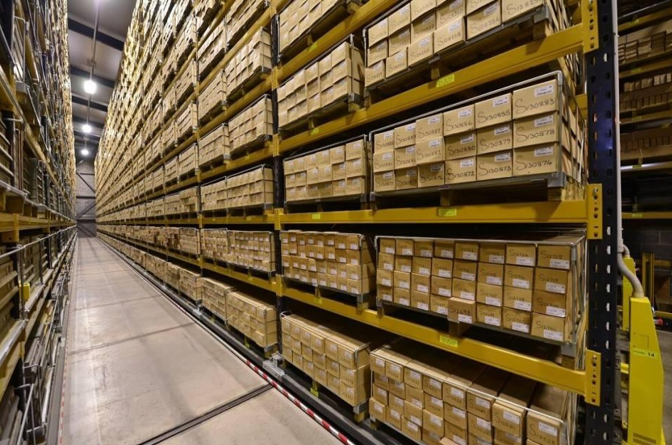
Oil and gas exploration is often portrayed as a search for hydrocarbon. In reality, it is first and foremost a search for information. It is therefore important to understand the architecture of geological data. In organised institutions, the data is kept in a repository also called data room or more specifically oil and gas data room. This is nothing other than a location where technical, financial and legal information is secured during the sale, leasing or farm out of petroleum assets. Historically, they used to be physical rooms in back-office blocks where prospective operators would shift through pages of dusty files and reports to assess investment options. These days, they have evolved into virtual data rooms hosted on secured cloud platforms. The information in these rooms is highly confidential and are of a proprietary nature. The content of the information in such a room would comprise of the following; 2D and 3D seismic surveys, seismic interpretation reports and geographic maps. Such datasets typically include basin modelling showing the layout of a basin and its features, well logs, production history, reservoir analysis, and well testing data. In addition, the data package will include environmental reports, risk assessments, asset titles, and joint operating agreements, all of which define the legal, operational, and commercial framework surrounding the block.
Taken together, these datasets form an intellectual blueprint of a nation’s subsurface resources. In many cases, the information itself is worth more than the licence. They are the most valuable assets a petroleum-producing state can possess. They mark the definitive boundary between deep-sea conjecture and rigorous scientific investigation. A government that understands its data negotiates from a position of strength. A government that does not remains a perpetual student, dependent on the interpretations and representations of costly external “teachers” and consultants.

The Data Room Question
This is why Ms Jobe-Taal’s reference to the“effective management of the national data room”deserves closer examination. Her statement reflects an aspiration that every Gambia should support. However, it also invites scrutiny of the recent history of petroleum data management in the country.
Over the years, persistent concerns have emerged about the preservation of technical records, the management of core samples, institutional continuity, and access to digital repositories. Exploration files and core samples have at times been left abandoned, scattered across floors, misplaced in disused offices, or simply forgotten. In other cases, something as basic as lost password credentials has resulted in the long-term loss of access to virtual data rooms, effectively locking the state out of its own geological archives. This poses a series of legitimate public interest questions:
1. Was all legacy BP dada successfully transferred to the Petroleum Commission?
2. Was unrestricted access maintained following relinquishment?
3. Was the data independently analysed by Gambia technical personnel?
4. Were external consultants engaged to interpret the information?
5. What information was ultimately presented to Eni during negotiations?
6. Has The Gambia fully captured the value of the knowledge generated by the previous operators?
These are questions of governance and stewardship for the consequences of not fully understanding available data can be catastrophic to any nation.
It is exactly why section 5(k) of the Petroleum Commission Act, 2021 mandated the commission to amongst other duties, manage the national petroleum repository. All the data is the proprietary asset of the state. A failure to preserve, secure and understand them means exploration decisions may be less informed, licensing negotiations may be disadvantaged, resource assessments may be incomplete, and national bargaining power may be severely compromised. The nation ultimately loses the ability to protect its own resources.
The converse of this can be seen in how Senegal is being so assertive renegotiating contract terms with oil giants simply because it has access to production data.
In the case of the Gambia lessons must be learned from the Ministry’s, lack of technical expertise, its institutional complacency and over reliance on FAR Ltd.’s interpretation of the viability of its wells. The importance of these questions is not merely theoretical. Documents disclosed by the Petroleum Commission (then headed by Jerreh Barrow) reveal that, in February 2024, Commission officials were still engaged in a reconciliation exercise with FAR Gambia Ltd to determine what technical records had been received, what information remained outstanding and what material previously supplied was unreadable. These exchanges occurred after the surrender process had been completed and raise legitimate questions as to whether the State had fully secured, reconciled and independently assessed all available exploration information before accepting the surrender of the licence over the A2 and A5 Blocks.
Eni’s Arrival: Opportunity and Responsibility Eni S.p.A is an Italian multinational energy company considered one of the“supermajor” oil companies in the world. The Italian government owns 33.084% golden share in the company that has a market capitalisation of euro 48 billion. The company has phenomenal operational reach with major exploration successes across the world in oil, gas, construction, manufacturing and power generation.
Its decision to enter Block A1 represents a significant vote of confidence in the Gambia’s offshore potential. That confidence should be welcomed. At the same time, history demonstrates why vigilance remains essential.
The company’s recent track record in Africa is far less impressive than its reputation might suggest. In 2009, the company was caught in a bribery and corruption allegation in Uganda while it was in competition for oil assets with Tullow Oil. Following corruption charges against subsidiary Saipem, Eni’s CFO Alessandro Bernini resigned.
In 2011, Eni and Royal Dutch Shell stood trial in Italy over allegations of corruption in the 2011 purchase of a big offshore field in Nigeria known as OPL 245. It was reported that ENI and shell; paid $1.3 billion in bribes. The company and its chief executive officer Claudio Descalzi and Royal Dutch Shell were fully acquitted by the Italian court of Milan. The acquittal was deemed final after Nigeria’s Attorney General waived the country’s right to appeal before Court of Appeal of Milan.
The point is not to suggest wrongdoing. It is to recognise that effective governance requires scrutiny regardless of who the operator may be. Thus, while Eni’s entry into The Gambia must be celebrated as a mark of endorsement in the country’s hydrocarbon potential, like the famous crocodiles in Kachikally, the Gambia must sleep with one eye open. History has taught us that even a six-legged beast breathing red fire deserves careful observation. If the experiences of FAR Ltd and Petronas have taught us anything, it is that the cost of blind trust can be measured in lost opportunities, lost knowledge and lost resources. Trust alone is no substitute for independent scrutiny.
The question must be asked, what did Eni see in Block A1 that justified entry into one of West Africa’s frontier offshore basins? The answer almost certainly lies in geology, data and prospectivity. Eni has not made any public disclosure about where it got that data from, what it paid for it and to whom.

Beyond Licences: The Real Test of Petroleum Governance
Oil and gas exploration is like a marathon. The easiest part of it is the first tentative step and so signing a licence agreement is only the beginning of a long journey that could run for decades. The success of that journey lies in governance over data preservation, technical oversight, regulatory independence, transparency and institutional competence. The management of information may ultimately determine whether The Gambia benefits fully from its offshore resources.
Conclusion
As Eni begins a new chapter in Block A1, the country has every reason to be optimistic. However, optimism should be accompanied by transparency and rigorous oversight.
The most valuable asset in The Gambia’s petroleum sector may not be the oil beneath the Atlantic Ocean. It may be the knowledge already gathered, paid for and inherited from those who explored before. The question now is whether that knowledge has been fully preserved, fully understood and fully utilised in the national interest. The issue is not whether Eni finds oil. The issue is whether The Gambia possesses the technical capacity, institutional memory and regulatory oversight necessary to independently understand what Eni finds.