
Magistrate Krubally convicts a mother on all three counts of drug possession after substances hidden in a food bowl were discovered at prison screening. She pleads guilty, claims she was an unwitting courier. She has been convicted on three counts of drug possession and ordered to pay fines totalling D150,000 or face three consecutive years in prison.
Principal Magistrate M. Krubally of the Banjul Magistrates’ Court delivered judgment today convicting Binta Jallow prosecuted by ASP M.A. Mendy of the Drug Law Enforcement Agency (DLEAG) on all three counts. The sentence was imposed as D50,000 per count, with a default custodial term of one year on each count if the fines are not paid, the terms to run consecutively.
“Trying to smuggle drugs to prison is at the highest level a very bad attempt that has the potential of encouraging criminality in prison.” Principal Magistrate M. Krubally
According to the prosecution’s brief facts, the incident occurred on 18 March 2026 when Binta Jallow arrived at Mile 2 Central Prison carrying a bowl of rice intended, she said, for a detainee in the remand wing. She was directed to the facility’s screening room, where Routine Sergeant Alassan Trawally searched.
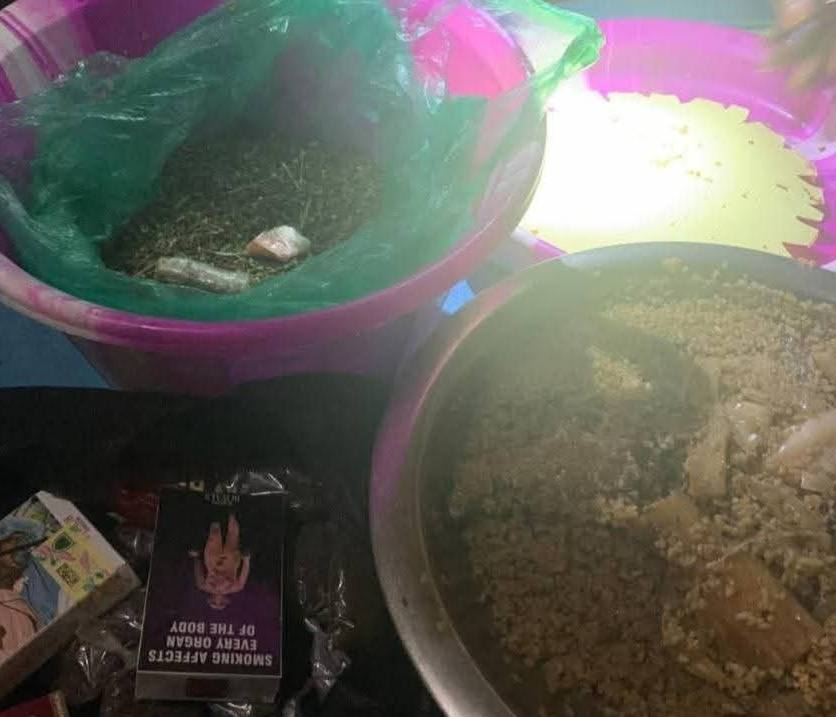
During the search, Sergeant Trawally noticed an unusual sound when he inserted a spoon into the food, suggesting something solid was concealed beneath the rice. On the suggestion of Sergeant Batch Njie, the bowl was emptied into a separate basin revealing two pieces of hashish and tablets of clonazepam buried within. A quantity of cannabis sativa was also found. When shown the substances, Jallow told the officers she had no idea what was inside the bowl.
Binta Jallow was subsequently escorted to the DLEAG Central Station in Banjul by Sergeant Batch Njie and received by NCO2 Ousman Kassama. She was later taken to the DLEAG Annex in Bijilo, where the substances were formally weighed in her presence and weighment certificates issued bearing her name and address.
Four forensic samples were sent to the Drug Analysis Unit, and the resulting analytical reports were tendered before the court as exhibits alongside the physical substances, daily report, cautionary and voluntary statements, and weighment certificates.
The charge sheet listed three counts under the Drug Control Act 2014 (as amended): possession of 264 grams of cannabis sativa, possession of 5 grams of 526 milligrams of hashish, and possession of 4 grams of clonazepam, all offences allegedly committed on 16 March 2026 at Mile 2 Central Prison.
When arraigned before Magistrate Krubally on 23 March 2026, Binta Jallow then without legal representation entered voluntary guilty pleas to all three counts after each charge was read and interpreted to her in Wolof, her preferred language.
The prosecution, however, was not yet in possession of all exhibits and applied for an adjournment to narrate the brief facts, a necessary procedural step before conviction could be confirmed. Jallow was remanded at Mile 2 pending the adjourned date.
When the matter was called on 8 April 2026, defence counsel A.J. Njie had entered an appearance for Jallow and moved to amend the charge sheet correctly noting that the accused’s name had been recorded as “Bintou” rather than “Binta”, and her address listed as Brikama rather than Bundung. The court granted those corrections. Counsel then went further, submitting that his client now wished to change her plea to not guilty.
The magistrate rejected the application, ruling that the procedurally correct step was for the prosecution to first narrate the brief facts as originally ordered — before the accused could be called to plead again. In pointed language, the court told counsel he had “put the cat before the horse” and that his application was “an indecent rush.”
The application was refused.
When the prosecution narrated the brief facts in the presence of counsel at the subsequent hearing, the court asked Jallow directly whether she had heard them and whether they were correct. She replied that they were, and that the reason she was confirming them was that the substances had indeed been found in her possession. The magistrate found that response conclusive.
Before imposing a sentence, Magistrate Krubally invited Binta Jallow to present mitigating circumstances. She told the court she had two young children a four-year-old boy and a two-year-old girl whose care she was solely responsible for, as her husband had left the country on the “back way” and had not returned.
She said her parents were also abroad her mother in England, her father in the United States and that she managed transactions on their behalf. She implored the court for mercy, claiming she had been given the bowl by a man named Ousman Ceesay and had no knowledge that drugs were concealed inside. She vowed she would not repeat the offence.
The prosecution confirmed that Binta Jallow had no prior criminal record.
Noting her first offender status, her voluntary and timely guilty plea, and the dependents in her care, Magistrate Krubally nonetheless delivered a stern assessment of the conduct itself. Smuggling narcotics into a prison, he said, carries uniquely serious societal implications threatening the integrity of a detention facility, emboldening those already serving sentences, and undermining the rule of law. Deterrence, he held, demanded a sanction.
Magistrate Krubally sentenced Jallow to a fine of D50,000 on each of the three counts D150,000 in total with a default term of one year’s imprisonment per count should payment not be made. Magistrate Krubally ordered the sentences to run consecutively, meaning a failure to pay any of the fines would result in the custodial terms to a maximum of three years.