
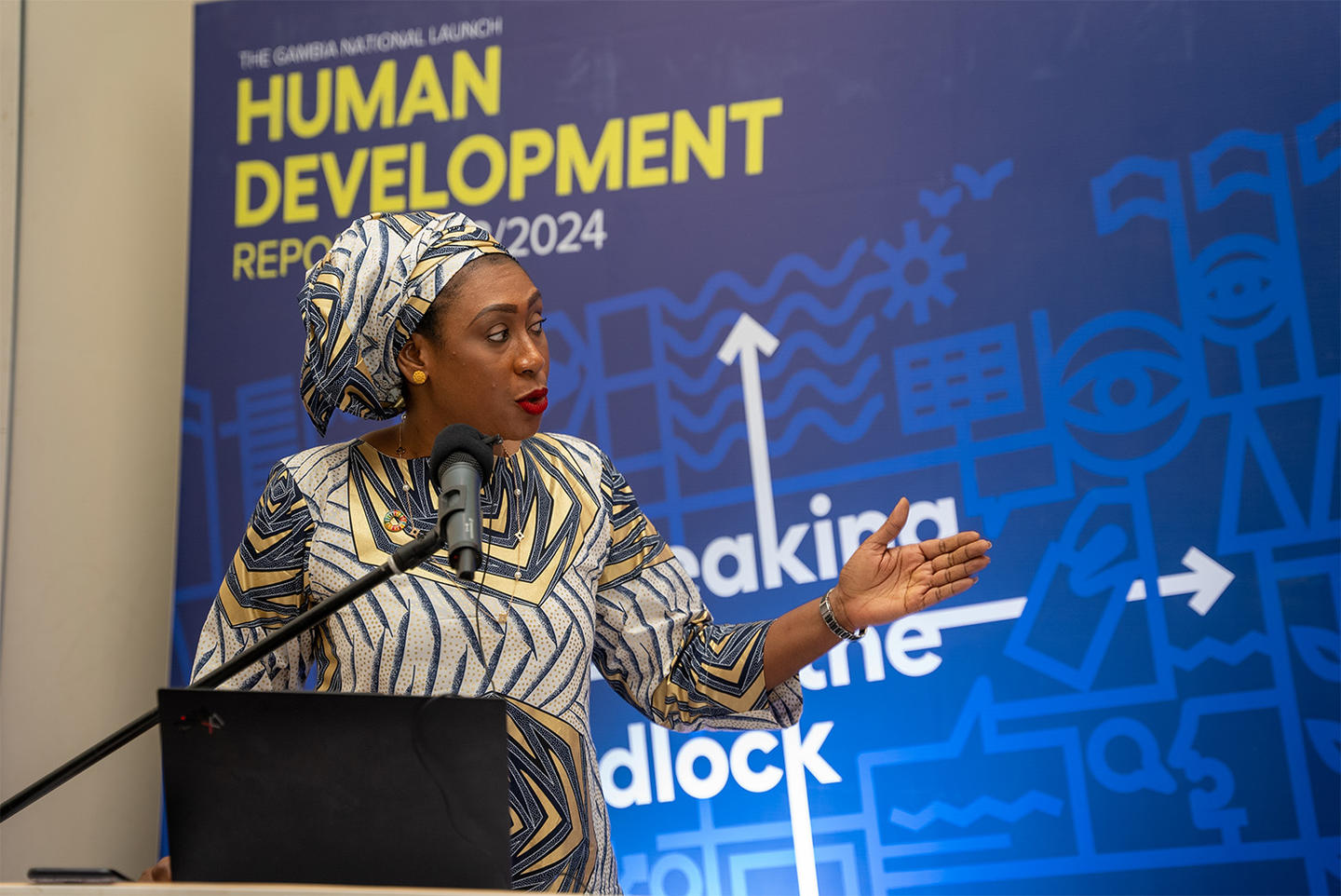
The Gambia’s growing youth population presents a major opportunity for economic transformation, but the country risks failing to benefit from its demographic advantage unless it significantly expands access to skills, jobs and productive economic opportunities, according to a new United Nations Development Programme (UNDP) report.
The 2025 Gambia National Human Development Report, titled Expanding Opportunities for the Dynamic Youth of The Gambia: A Call to Action, identifies youth employment, education, skills development and inequality as some of the country’s most pressing development challenges.
More than four in ten Gambians are between the ages of 15 and 35, according to the report, making young people one of the country’s greatest potential assets. But the UNDP says converting that demographic strength into economic growth will require stronger links between education and employment.
The report notes that The Gambia has made progress in several areas of human development, including near-universal basic education enrolment and an increase in life expectancy from 56.9 to 62.9 years.
However, those gains have not eliminated significant barriers facing young people as they attempt to enter the labour market.
The report cautions against relying solely on the commonly cited youth unemployment rate of 8.3 percent. That figure, it says, does not capture the wider problem of labour underutilisation, including underemployment, discouraged workers and the mismatch between workers’ skills and available jobs.
Education-Employment Gap
A central concern identified by the UNDP is the gap between what young Gambians learn and what employers need.
The report calls for greater investment in technical and vocational education and training, digital skills, entrepreneurship and other forms of practical training that can improve young people’s transition from education into employment.
It also recommends strengthening labour-market information systems so that education and training programmes are better aligned with emerging economic opportunities.
The report argues that the challenge is not simply to create more jobs but to create decent and productive employment capable of providing young people with sustainable livelihoods.
Sectors With Potential
The UNDP identifies several sectors that could provide greater employment opportunities if properly developed.
These include agriculture and agro-processing, tourism, information and communications technology, logistics and the green economy.
The report also highlights emerging industries that can create economic opportunities without requiring traditional large-scale industrialisation.
For young entrepreneurs, it calls for improved access to finance, markets, technology and mentoring, while encouraging policies that allow small businesses and informal enterprises to formalise, expand and create jobs.
Digital Skills and the Future of Work
The report also warns that the world of work is changing rapidly as technology, artificial intelligence and automation reshape economies.
It therefore calls for greater investment in digital literacy, connectivity, science, technology, engineering and mathematics, as well as skills relevant to emerging industries.
For The Gambia, the report suggests that preparing young people for these changes could help the country overcome some of the limitations of its small domestic economy and connect Gambian workers and businesses to new opportunities.
Inequality Remains a Barrier
The UNDP also highlights regional and gender disparities that affect access to opportunity.
It calls for policies that ensure young people, including those facing social or economic barriers, are not excluded from education, employment and entrepreneurship opportunities.
The report places particular emphasis on creating “second chances” for young people who have fallen outside conventional education and employment pathways.
From Demographic Growth to Demographic Dividend
The report’s central message is that having a young population does not automatically produce economic growth.
The demographic dividend can only emerge when young people have the education, skills, health, employment opportunities and economic freedom needed to become productive participants in the economy.
That, according to the UNDP, requires coordinated action from government, the private sector, development partners, civil society, communities and young people themselves.
The report therefore calls for sustained investment in education and skills, expansion of decent employment, support for entrepreneurship and innovation, investment in high-potential sectors and greater inclusion.
For The Gambia, the stakes are significant. A large and increasingly connected youth population could become a powerful engine of economic growth. But without sufficient jobs and opportunities, the same demographic trend could deepen unemployment, underemployment and inequality.
The UNDP’s message is therefore less about the size of The Gambia’s youth population than about what the country does with it: turning young people’s numbers into skills, skills into employment, and employment into sustainable economic development.