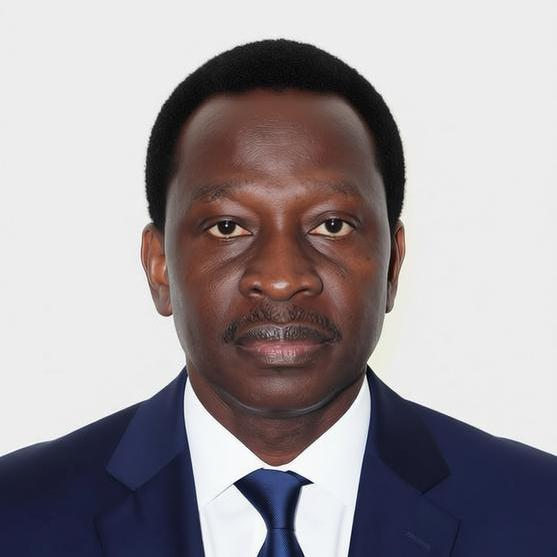

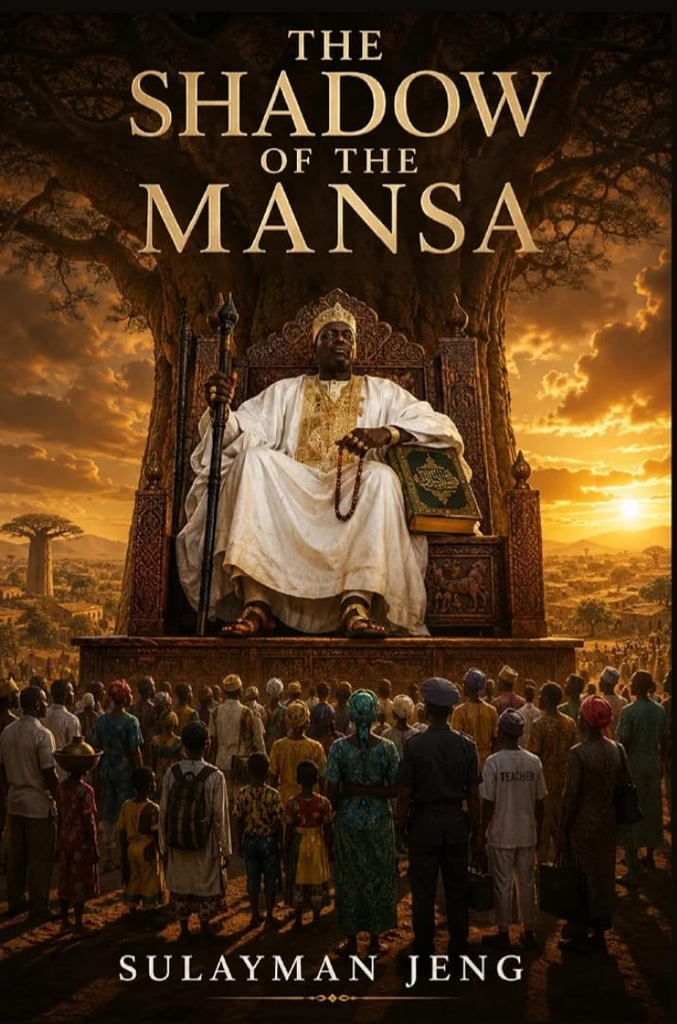
Gambian writer Sulayman Jeng has published The Shadow of the Mansa, a new work of fiction that takes readers into an imagined West African society where political power, social divisions and fear shape everyday life.
The novel is set in Kankary Kunda, a fictional community ruled by the Mansa, whose grip on power has gradually become associated with fear, division and personal authority.
But Jeng’s story is not only about a ruler and the people beneath him. Much of the novel is concerned with how ordinary people respond when the choices they make begin to carry consequences for their families, neighbours and communities.
Characters such as Saloum and Musukoi, Mbarodi and Jabou, Silabali, Amadou and Nyakoi provide different perspectives on life in Kankary Kunda. Through them, Jeng explores courage, friendship, family, sacrifice and the difficult decisions that often accompany resistance to injustice.
The novel also touches on prejudice between communities and the expectations that families place on their members. Questions of inequality, justice and public responsibility run alongside the personal stories, giving the political narrative a more intimate dimension.
At the centre of the story is the gradual realization that change does not necessarily begin with a powerful individual. It can start with ordinary people deciding that fear should no longer determine how they live or treat one another.
“Fear is a heavy chain, but chains break when enough people pull together,” is one of the book’s defining lines.
More Than a Political Story
Although Kankary Kunda is fictional, many of the questions raised by the novel will be familiar to readers who have witnessed political division, discrimination or the abuse of power.
Jeng asks what happens when political authority becomes closely tied to personal power and what citizens can do when institutions fail to protect them.
The book also considers the persistence of prejudice within communities and families, while exploring whether people separated by suspicion and inherited divisions can find a way to rebuild trust.
Rather than presenting these issues as a political argument, Jeng places them within the lives of his characters. Their relationships, conflicts and personal choices provide the vehicle through which the larger questions about society and leadership are examined.
The result is a story in which politics and everyday life are closely connected.
Freedom, in Jeng’s telling, is not simply about removing an unpopular ruler. It also involves what people do with that freedom afterwards — how they hold leaders accountable, treat one another and contribute to the communities in which they live.
The Author
Jeng is a Gambian writer whose work draws heavily on African social and cultural experiences.
His writing explores themes of power, family, identity, community and the responsibilities that accompany freedom. In The Shadow of the Mansa, these themes come together through a fictional West African setting and a cast of characters dealing with both personal and political challenges.
The fictional setting allows Jeng to examine sensitive issues without tying the story to one particular country or political administration. At the same time, the cultural setting of Kankary Kunda gives the novel a distinctly West African character.
Where to Find the Book
The Shadow of the Mansa is available through Amazon and other major online book platforms.
The book is also being made available to journalists, reviewers, literary organizations and book bloggers interested in reviewing the work or speaking with the author.