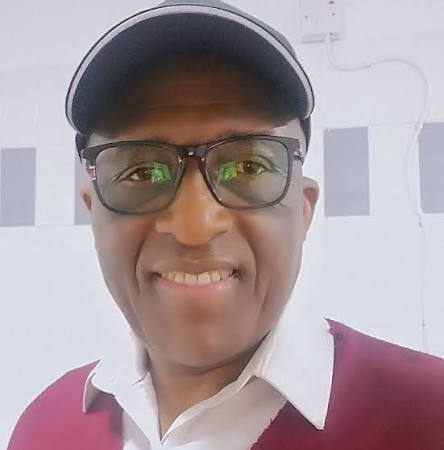
Saul Jawara has called for a fundamental change in The Gambia’s political culture, arguing that ego, personal ambition and the pursuit of political advantage have increasingly overshadowed the national interest.
In comments following an AG Radio programme, Jawara said the country’s political challenges require cooperation, institutional reform and leadership driven by public service rather than competition for positions and personal benefits.
He compared the current state of Gambian politics to a shattered windscreen, saying political actors can clearly see the problems confronting the country but continue to argue over responsibility and leadership instead of working collectively to repair the system.
According to Jawara, The Gambia faces serious national challenges that demand attention, including strengthening democratic institutions, upholding the rule of law, combating corruption, improving accountability and transparency, and creating institutions capable of sustaining development beyond individual governments.
However, he argued that political debate has too often been dominated by personal disputes, political manoeuvring and struggles over leadership positions.
“At times, it is difficult to see whether the motivation is genuinely about improving the lives of Gambians or about securing political power and benefits,” he said.
Jawara warned that such behaviour has contributed to declining public confidence in politicians. He said many citizens have become increasingly sceptical after years of political promises, shifting alliances and what he described as the abandonment of principles for political convenience.
He noted that ordinary Gambians continue to confront unemployment, poverty, inadequate public services and limited economic opportunities despite repeated pledges by successive political leaders.
Jawara said public office should be regarded as a responsibility rather than an opportunity for personal enrichment.
“Leadership should be about something much bigger than winning elections or occupying public office,” he said, stressing that politics should be based on service, sacrifice and a commitment to leaving the country in a better condition for future generations.
He also criticised what he described as a tendency among politicians to treat political disagreement as personal hostility.
According to him, democracy does not require political actors to agree on every issue, but instead depends on strong institutions and rules that allow competing views to coexist peacefully while ensuring accountability and fair political competition.
Jawara said The Gambia needs leaders capable of placing national interests above individual ambitions, accepting criticism and recognising political opponents as fellow citizens rather than enemies.
He expressed concern that the race for political power appears to have taken precedence over broader questions of national development.
“The Gambia deserves better,” he said. “Our people deserve political leaders who are prepared to sacrifice for the country rather than sacrifice the country for themselves.”
Jawara argued that meaningful development cannot be achieved through slogans, rallies and campaign promises alone. Instead, he said progress requires competent institutions, sound economic and social policies, accountability, investment in citizens and a long-term national vision.
His remarks also appeared to signal personal political ambitions, as he declared that the shortcomings he sees in the country’s leadership are among the reasons he believes he must enter the political arena.
“This is precisely why I have to run,” Jawara said.
He maintained that his interest in politics should not be viewed as being centred on personal advancement, but rather on what he could contribute to national development and the kind of country that could be left for future generations.
Returning to his earlier analogy, Jawara said The Gambia does not need more politicians competing for control of the steering wheel of a damaged vehicle.
Instead, he said the country requires leaders willing to repair the system, agree on a common national destination and work collectively to move The Gambia forward.
For Jawara, that would require a political culture built around service, responsibility, institutional strength and national unity rather than personality-driven politics and competition for individual advantage.