

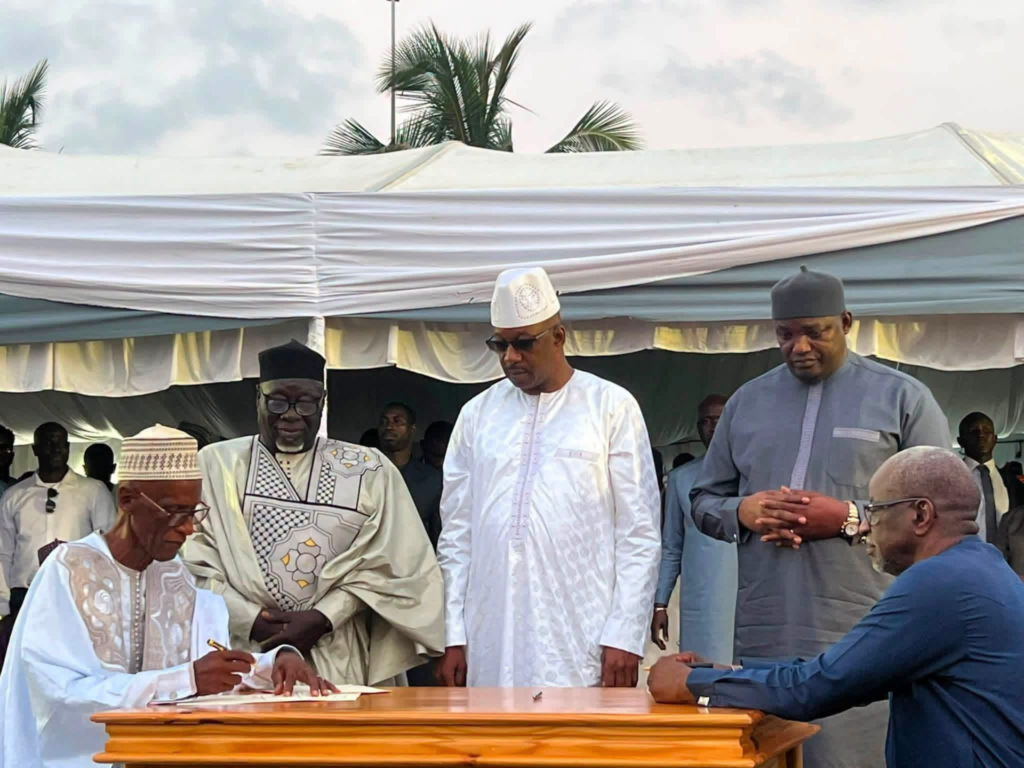
The decision by Mama Kandeh and the Gambia Democratic Congress to enter President Adama Barrow’s NPP-led alliance may strengthen the incumbent ahead of the December election, but it could also mark the beginning of Kandeh’s political decline.
Kandeh insists that the GDC remains an independent party and that the alliance serves the national interest. However, West African political history shows that opposition leaders who abandon their independent platforms to support incumbents often lose the relevance that made them attractive in the first place.
Senegal’s Idrissa Seck provides a warning. After finishing second in the 2019 presidential election with 21 percent, his Rewmi party joined President Macky Sall’s governing coalition in 2020. Seck was appointed president of the Economic, Social and Environmental Council, while Rewmi received ministerial positions. Instead of strengthening him, the arrangement weakened his standing as an opposition alternative. By the 2024 election, he was no longer among the dominant forces shaping Senegalese politics.
Former Senegalese Prime Minister Souleymane Ndéné Ndiaye followed a similar route. He left Abdoulaye Wade’s Senegalese Democratic Party, established the National Union for the People and later aligned himself with Macky Sall. Despite his impressive record, including serving as prime minister, his independent political influence gradually diminished.
Other Senegalese figures, including Djibo Leyti Kâ and Ousmane Ngom, also demonstrate how joining the government of a former rival can provide temporary access to power but weaken an individual’s distinct political identity.
Mama Kandeh faces the same danger. The GDC was created as an alternative to both the old political establishment and Barrow’s administration. Its supporters voted for Kandeh because they believed he represented a different direction.
By backing Barrow, Kandeh risks surrendering that identity and reducing the GDC to a supporting organisation within a much larger incumbent machinery. If Barrow wins, the NPP may absorb the political benefits. If he loses, Kandeh could share responsibility for the defeat.
The alliance may offer immediate influence, but relevance cannot be guaranteed. Kandeh must therefore explain what the GDC gains beyond promises, positions and proximity to power. Otherwise, history may remember this alliance as the moment he exchanged political independence for temporary accommodation.