

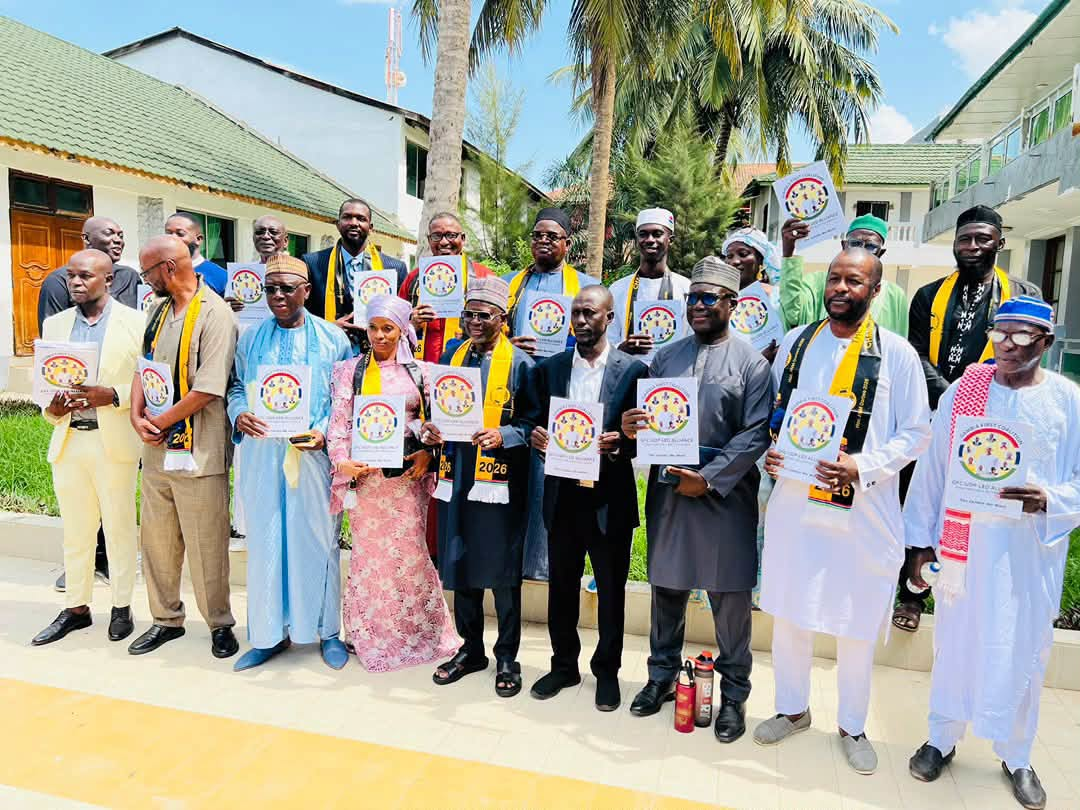
United Democratic Party (UDP) leader Ousainou Darboe has unveiled the manifesto of the Gambia First Alliance (GFA)-led coalition, setting out plans for economic recovery, constitutional reform, improved public services and greater accountability in government ahead of the December 5 presidential election.
The manifesto, titled The Gambia We Want, was launched at Paradise Suites Hotel, where Mr. Darboe outlined what he described as a new direction for the country. He said the coming election would be an important opportunity for Gambians to decide how they want their country governed.
One of his major pledges was to serve only a single five-year term if elected president, arguing that the presidency should be about public service rather than personal ambition.
He also promised to cut expenditure at the Office of the President within his first 100 days in office and reduce his own presidential salary by 20 per cent.
Mr. Darboe said political leaders must be prepared to make sacrifices themselves instead of placing the burden of economic hardship on ordinary citizens.
He questioned the fairness of asking market vendors, farmers and struggling households to make sacrifices while government officials continued to enjoy expensive privileges at taxpayers’ expense.
Addressing the country’s economic difficulties, the UDP leader pointed to the rising cost of food, unreliable electricity, unemployment and the challenges many families face in accessing affordable healthcare.
He said Gambians had waited long enough for improvements in their living conditions and deserved a government that would move beyond campaign promises to deliver practical results.
Presenting the coalition’s economic programme, Mr. Darboe said his administration would focus on increasing local production, creating jobs and reducing the country’s dependence on imported goods.
He pledged a review of government spending, with the intention of cutting unnecessary expenditure and directing more resources towards productive sectors of the economy.
Agriculture would receive particular attention, with proposed investments in irrigation, mechanisation and food processing. He also promised to make affordable financing available to women involved in farming and other productive activities.
The manifesto also places emphasis on expanding employment opportunities for young people, developing the fisheries and tourism industries and providing greater support for local businesses and entrepreneurs.
Mr. Darboe said the country’s debt burden would be another major concern for his proposed administration. He argued that economic growth must outpace the accumulation of national debt if The Gambia is to achieve lasting financial stability.
He said the benefits of economic development should reach people in all parts of the country, from market traders in Brikama and vegetable growers in Bakau to farmers in the Central River Region and fishing communities along the coast.
Constitutional reform and stronger institutions
Constitutional reform is another central feature of the coalition’s programme.
Mr. Darboe promised that within his first year in office, his government would present a new draft constitution, drawing on the principles of the 2020 draft, which failed to secure the required support in the National Assembly.
He said a new constitutional framework was necessary to strengthen democratic institutions, protect fundamental rights and guarantee the independence of public institutions.
The UDP leader argued that the presidency should be treated as a public trust, not a position that places anyone above the law.
He pledged to uphold the principle that all Gambians should enjoy equal protection under the Constitution, regardless of their political affiliation, social standing or where they live.
He said his proposed government would work towards building institutions that serve the interests of the country rather than those of the people occupying positions of power.
Security sector and public service reforms
Security sector reform also featured prominently in the manifesto.
Mr. Darboe promised to build professional, well-equipped and accountable security institutions, stressing that the police, military and other security agencies must remain politically neutral.
He said security personnel should protect citizens and defend the Constitution rather than become instruments of political power.
According to him, Gambians in communities ranging from Farafenni and Banjul to Kuntaur and Foni should be able to live their daily lives without fear.
He maintained that the security services must serve the nation and its people, not individual political leaders or parties.
On public service reform, Mr. Darboe pledged to introduce merit-based recruitment and promotion, strengthen professional training and improve accountability across government institutions.
He said political connections should not determine who gets a government job or advances within the civil service. Instead, appointments should be based on qualifications, experience and ability.
He also promised better working conditions for civil servants, arguing that public employees need adequate resources and institutional support to perform their duties.
Mr. Darboe pointed to the challenges facing teachers in provincial schools, nurses in rural health facilities and young graduates searching for employment. He also highlighted the difficulties citizens encounter when trying to access basic government services and official documents.
He said a more efficient and impartial public service would be essential to restoring confidence in government.
Healthcare, education and basic services
The coalition also intends to prioritise healthcare, education, electricity and access to clean water.
Mr. Darboe questioned how government could claim to be delivering development when families in Basse continued to face difficulties accessing medical care, students in Janjanbureh encountered limited educational opportunities and households in different communities struggled with electricity and water shortages.
He promised to improve public service delivery and ensure that development projects reached communities outside the Greater Banjul Area.
Local government would also have a greater role under his proposed administration. He said councils should be empowered to contribute more effectively to development planning and the delivery of services in their respective communities.
The UDP leader also recognised the contribution of Gambians living abroad, describing the diaspora as an important partner in the country’s economic and social development.
Promises of accountability
Mr. Darboe described The Gambia We Want as more than a campaign document, presenting it as a commitment between the Gambia First Coalition and the electorate.
He promised to introduce systems for tracking government performance, publishing regular progress reports and ensuring that public officials answer for the commitments made to citizens.
He said public confidence in government could not be restored through speeches alone, but had to be built through results that people could see and measure.
He encouraged Gambians to study the manifesto, question its proposals and hold the coalition accountable if it wins the election.
Mr. Darboe also insisted that citizens must feel free to challenge their leaders and demand explanations when government promises are not fulfilled.
In concluding his address, the UDP leader said the December 5 election should be about more than replacing President Adama Barrow or changing the political party in power.
He argued that the country needed a fundamental change in the way government operates, particularly in how public resources are managed and how decisions affecting ordinary citizens are made.
He said the coalition wanted to restore public ownership of government and ensure that national resources were used to improve people’s lives and create opportunities for future generations.
Addressing communities across the country, including Niamina, Wuli, Sandu, the North Bank and Lower River regions, Mr. Darboe said every Gambian should have a fair opportunity to improve their family’s living conditions.
He formally declared the Gambia First Coalition manifesto, The Gambia We Want, launched and thanked those who attended the event as well as supporters who followed the proceedings on social media.
He ended his address by describing the December 5 presidential election as a decisive moment for the country’s future, urging Gambians to consider the direction they want The Gambia to take.


