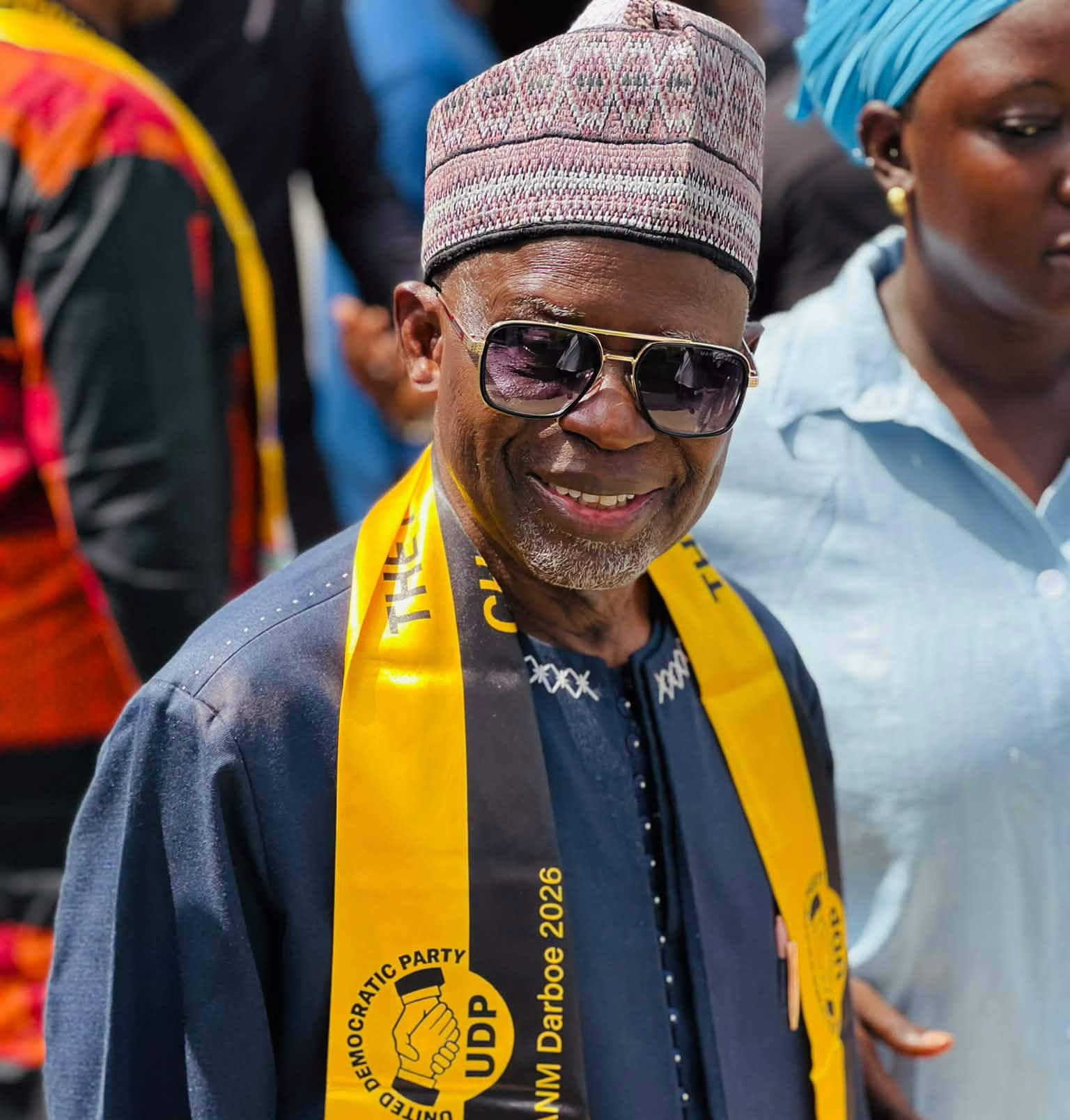
UDP leader and Secretary General Ousainu Darboe has promised to improve salaries, working conditions and welfare benefits for members of The Gambia’s security services if elected president on December 5.
Addressing party supporters at a political meeting in Lamin, Mr. Darboe argued that police officers, soldiers and other uniformed personnel were not receiving the support and financial rewards their responsibilities demanded.
He said many security officers worked long hours, faced difficult conditions and put their lives at risk to protect the country, yet continued to struggle with basic living expenses.
The opposition leader also raised concerns about the state of some police stations, describing their conditions as poor. He pointed to deteriorating buildings, inadequate furniture and a shortage of essential facilities, which he said made it difficult for officers to carry out their duties effectively.
Mr. Darboe also took issue with the public criticism often directed at police officers accused of demanding money from motorists.
Rather than looking at such incidents in isolation, he argued, the government should examine the financial difficulties facing some members of the force.
He claimed that low salaries had left some officers so financially strained that they resorted to asking motorists for small amounts of money, sometimes to buy attaya.
Mr. Darboe said condemning such behaviour alone would not address the problem, arguing that improving officers’ pay and living conditions was necessary to tackle the circumstances behind it.
He said similar difficulties were affecting members of the armed forces, claiming that some soldiers struggled to afford transport to their duty stations and occasionally had to depend on lifts to get to work.
He described this as an unacceptable situation for personnel whose responsibility was to defend the country’s territorial integrity and protect its citizens.
The UDP leader highlighted the demands placed on security personnel, particularly police officers who work late into the night, respond to public complaints and conduct patrols while much of the population is at home.
He also recalled the risks faced by soldiers when called upon to respond to security threats, including incidents along the country’s borders.
Mr. Darboe said security sector reform would form an important part of the UDP’s policy programme, with better remuneration, improved working conditions and professional development among its priorities.
He pledged that, under a UDP government, the welfare of security personnel would receive greater attention, adding that officers deserved salaries and benefits that reflected the importance of their work.
He further argued that the welfare of those responsible for protecting the country should be given serious consideration, rather than allowing the privileges enjoyed by government ministers to take precedence.
Beyond salaries and working conditions, Mr. Darboe called for a professional and politically neutral security sector, insisting that the country’s uniformed services must serve the Constitution and all Gambians without discrimination based on political affiliation.
He said a UDP administration would work with the security institutions to build a force that was professional, republican in character and free from partisan political interference.
Turning to young people, the opposition leader encouraged them to consider joining the security services, describing careers in the police, army and navy as honourable professions worthy of public respect.
He also urged serving officers to take pride in their work, assuring them that a government led by the UDP would recognise their sacrifices and provide greater opportunities for professional growth.
The Lamin meeting also offered Mr Darboe the opportunity to talk about his party’s preparations for the December presidential election.
He praised UDP supporters for their commitment and mobilisation, expressing confidence in their determination to secure victory at the polls.
Mr. Darboe recalled that he was chosen as the party’s presidential candidate on September 10, 2025, saying he accepted the responsibility because he believed in the strength and commitment of the party’s supporters.
He also referred to young supporters who have pledged to repay what they call “Baba’s debt with votes”, saying he was confident they would honour that promise on election day.
The UDP leader expressed confidence that the enthusiasm displayed by his supporters would translate into electoral success on December 5.
His message in Lamin placed security sector reform alongside the broader promises of his proposed administration, with particular emphasis on better treatment of uniformed personnel, professional standards and political neutrality within the security services.