
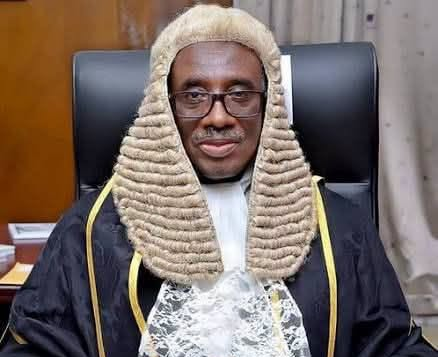
The office of the Chief Justice is the highest judicial position of the country’s constitutional order. The 1997 Constitution sets out clear requirements and procedures that govern both the qualifications and the appointment process.
The path to the office of the Chief Justice begins with the President. Under Section 138 of the Constitution, the President appoints the Chief Justice, but not unilaterally. The President must first consult with the Judicial Service Commission before making the appointment.
The consultation requirement represents a constitutional safeguard, ensuring that the appointment process involves judicial expertise and oversight rather than resting entirely in executive hands.
On who can be appointed. The Constitution establishes two pathways to qualification for appointment as Chief Justice. Both are set out in Section 139.
The first pathway a person may be appointed is if he/she is qualified to be appointed as a Judge of the Supreme Court. To qualify as a Supreme Court Judge, a person must either have held office as a Judge of the Court of Appeal or a judge of a court with similar jurisdiction in a common law country for not less than five years; or have practised as a lawyer before a court having unlimited jurisdiction in civil and criminal matters in a common law country for not less than 12 years.
The second pathway a person may be appointed Chief Justice if he/she have been a judge of a superior court of a common law country for not less than 10 years.
So, the Constitution requires substantial judicial or legal experience in a common law jurisdiction, whether through appellate bench experience, extensive legal practice, or senior judicial service. The requirement is experience and expertise, not a particular institutional background.
When the office becomes vacant. The Constitution provides for continuity of judicial leadership. Under Section 140, the next most senior judge on the Supreme Court assumes the role on an acting basis. However, that is a temporary measure.
Then the President must make a substantive appointment to replace the Chief Justice within six months of the post becoming vacant. The six-month deadline ensures that the vacancy does not continue indefinitely and that the judiciary has a permanent Chief Justice within a defined timeframe.
The Chief Justice’s tenure is protected by the Constitution. Under Section 141, the Chief Justice holds office based on security of tenure. A Chief Justice cannot be arbitrarily removed or dismissed at the pleasure of the President or any other authority.
The Constitution provides two pathways regarding retirement. A Chief Justice may voluntarily retire after attaining the age of 65 years but mandatorily retire upon attaining the age of 75 years.
This is the constitutional framework for Chief Justice appointments based on Sections 138, 139, 140, and 141 of the 1997 Constitution