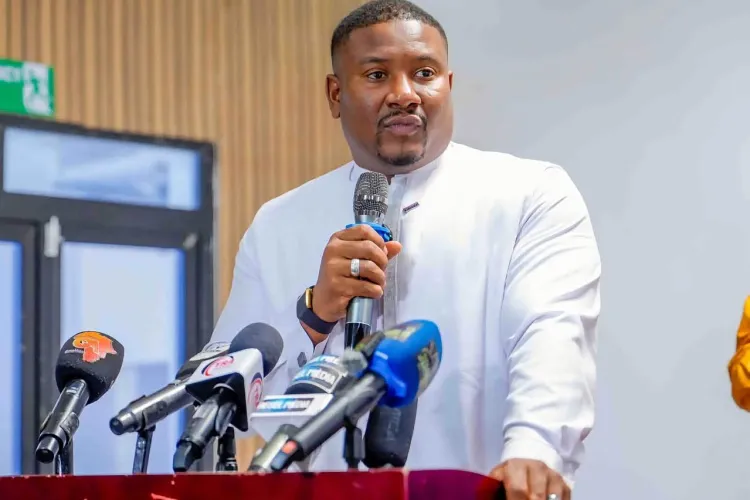
Talib Ahmed Bensouda, Mayor of Kanifing Municipality and Coalition 2026 presidential candidate, has criticised President Adama Barrow for what he described as an unfair dismissal of the development records of former presidents Sir Dawda Kairaba Jawara and Yahya Jammeh.
Bensouda argued that both former leaders made significant contributions to the country’s development, insisting that several infrastructure projects and institutions the current administration takes credit for were initiated or established under their governments.
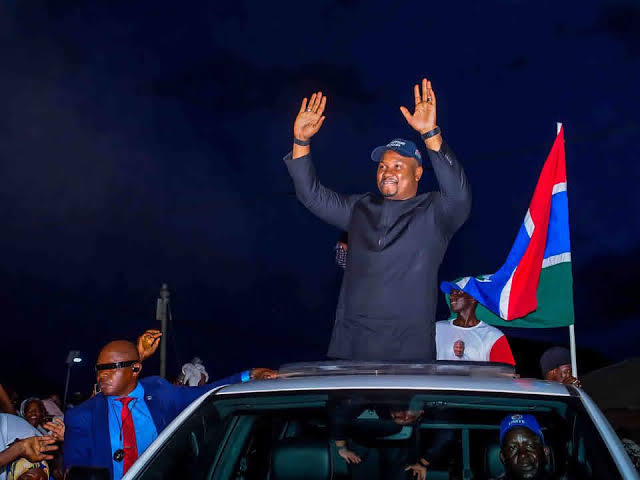
Addressing a political rally in Bwiam, Foni, Bensouda took issue with Barrow’s recent claim that his administration had achieved more than the combined accomplishments of the Jawara and Jammeh governments.
“If you cannot thank them, just leave them alone,” he told supporters, urging the President to acknowledge the contributions of those who governed the country before him.
To challenge Barrow’s assessment, Bensouda pointed to a number of major infrastructure projects undertaken during Jawara’s presidency. These included the construction of State House, Banjul International Airport, major roads and bridges in the capital, as well as the ferry terminal linking Banjul and Barra.
He also highlighted projects undertaken during Jammeh’s 22 years in power, citing the Trans-Gambia Highway, Jabang Highway, the initial construction work on the Farafenni Bridge and the Faraba campus of the University of The Gambia.
Although he was too young to have witnessed much of Jawara’s administration, Bensouda said he personally remembered some of the development projects carried out during Jammeh’s presidency, including the construction of the pillars for the Farafenni Bridge.
He further argued that several infrastructure projects connected to The Gambia’s preparations for hosting the Organisation of Islamic Cooperation (OIC) summit had their origins in agreements reached during Jammeh’s administration, even though President Barrow’s government has overseen their completion and inauguration.
Beyond the disagreement over development records, Bensouda also questioned Barrow’s continued pursuit of the presidency, accusing him of moving away from the commitments he made on constitutional reform and presidential term limits.
He recalled that Barrow had previously criticised former leaders for staying in power for too long and had pledged to introduce a new constitution that would restrict presidents to two terms.
Bensouda argued that the President’s political journey, which included three years under the transitional arrangement, a subsequent five-year term and another five years following his re-election, made his current pursuit of another mandate difficult to reconcile with those earlier promises.
He described Barrow as a “lorry without brakes”, an expression he used to question what he sees as the President’s determination to remain in power.
The Coalition 2026 candidate concluded by urging Gambians to take a more active interest in determining the country’s political and economic future.
He said his vision was to build a government focused on reducing poverty, expanding economic opportunities and ensuring transparency in the management of public affairs.
Bensouda argued that Gambians should not have to leave their homeland in search of better economic prospects, but should instead have the opportunity to build successful and prosperous lives within the country.
He said he wanted to see a Gambia where citizens could be born, raised and achieve their ambitions without feeling that migration was their only route to a better future.
His message centred on the need for accountable leadership, economic opportunity and a development agenda that puts the interests of ordinary Gambians ahead of political ambitions.