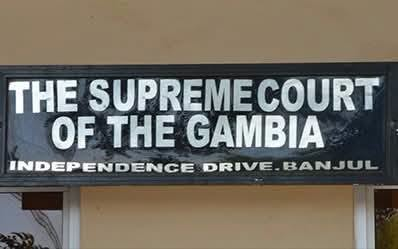
The Supreme Court has commenced the State’s defence in the constitutional challenge against the Female Genital Mutilation (FGM) ban, with testimony from two government witnesses on the legislative consultations that preceded the Women’s (Amendment) Act 2015.
The case, Almameh Gibba & 7 Others v. Attorney General, challenges the constitutionality of Sections 32A and 32B of the Women’s Act, which criminalise FGM. The plaintiffs argue the amendments violate Sections 17, 25, 28, 32, and 33 of the 1997 Constitution. The State denies this, and the plaintiff’s case has now closed.
When the case was called before testimony began, Counsel L.J. Darboe representing the plaintiffs raised a procedural objection, stating that he had not been served with an affidavit accompanying the witness statement of the State’s second witness.
Counsel A.A. Wakawa, representing the State, disputed that, asserting that all parties had been served with both the summary and affidavit.
Neneh Touray of the Ministry of Gender, Children and Social Welfare (MoGCSW) testified first. When asked whether her witness statement signed on 30th December 2025 should be admitted as her evidence-in-chief, she assented. Counsel Wakawa then applied for admission.
Counsel Badjie, appearing for the plaintiffs, objected, arguing the statement should be struck out because the accompanying affidavit had not been properly adopted.
Under cross-examination, Nenneh Touray acknowledged gaps in her recall: she could not remember the names of independent witnesses present when she gave the statement, and when pressed on whether all such witnesses were Ministry staff, she replied, “I don’t know.”
She confirmed the procedural steps: reviewing, signing, taking an oath, and stamping the affidavit after signature, though her answers suggested uncertainty about the rigour of the attestation process.
On the substance of her evidence, Nenneh Touray testified that extensive consultations preceded the restrictions on FGM. Before the Children’s Act was amended in 2010, and again during incorporation into the Women’s Act, the government consulted widely with civil society, including GAMCOTRAP, Wassu Gambia Kafo, and others. After the Women’s Act passed, sensitisation continued through the Women’s Bureau under the Office of the Vice President.
Nenneh Touray testified that the Supreme Islamic Council had initially recommended against including FGM provisions in the Women’s (Amendment) Act, proposing instead that the matter be “set aside to allow for further consultation and sensitisation.” However, she added that the Council had not been excluded from subsequent activities and was “always consulted.”
Dr Momodou Bittaye, Chief Medical Director at Edward Francis Small Teaching Hospital (EFSTH) and a medical practitioner for over 15 years, testified next. He identified and adopted his witness statement as evidence-in-chief.
Dr Bittaye referred to the Obstetric Outcomes of FGM Report, which he co-authored. When Counsel Wakawa moved to tender the report into evidence, Counsel Badjie objected on the ground that proper foundation had not been laid. Counsel Wakawa countered that the objection was “merely a technical attempt” to exclude admissible evidence, noting that the witness had identified the report, explained its authorship, and described his role, all reflected in paragraph 8 of his statement.
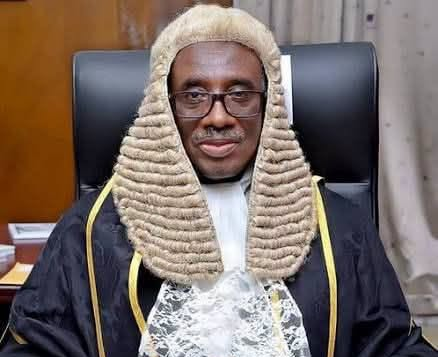
Justice C. Jallow admitted the report into evidence. Dr Bittaye was then questioned about a Demographic and Health Survey assessing FGM’s impact, conducted by the Gambia Bureau of Statistics (GBoS) in collaboration with relevant partners and published in both hard-copy and electronic formats.
When Counsel Wakawa applied to tender it, Counsel Badjie objected that it constituted secondary evidence in breach of Section 101 of the Evidence Act, arguing it ought to have been certified, and that photocopies do not satisfy statutory requirements.
Counsel Wakawa submitted that Section 101 did not apply because the document before the court was an extract, which he maintained was admissible. Counsel Badjie replied that the witness himself had described it as an extract, and that extracts are “capable of alteration.”
After reviewing the document’s compliance with legal requirements for admissibility, Justice C. Jallow rejected its admission into evidence.
The State’s case continues. The case remains listed for further hearing.