
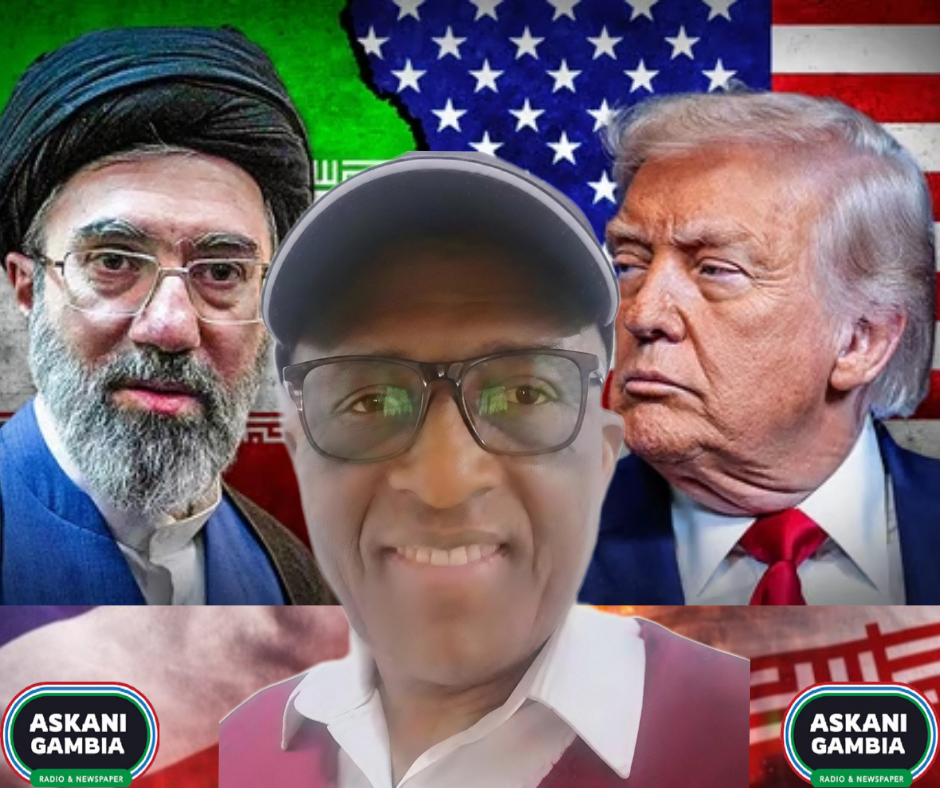
Saul Jawara, a Swedish writer born in Gambia and a geopolitical commentator based in the UK, has commented on the recent developments involving the US, Iran and Israel. He believes that Washington and Tehran might be moving closer to a preliminary deal to ease tensions and create room for broader negotiations.
Speaking to AG Radio, Jawara said recent diplomatic signals indicate that both the United States and Iran are exploring measures that could help de-escalate months of heightened tensions marked by military confrontations, economic pressure, and uncertainty over the future of Iran’s nuclear program.
According to Jawara, discussions surrounding a possible framework agreement could include several confidence-building measures designed to improve relations and encourage further dialogue between the two sides. Among the proposals being discussed are the lifting of the U.S. naval blockade affecting Iranian ports and shipping routes, a temporary easing of restrictions on Iranian oil exports, and the release of an estimated $24 billion to $25 billion in Iranian assets currently frozen abroad.
He explained that under such an arrangement, Washington would also refrain from imposing additional sanctions during a designated negotiation period and would support discussions focused on Iran’s economic recovery and reconstruction efforts.
“Both sides would also agree to extend and stabilize the current ceasefire, cut back military activity in and around the Persian Gulf, and continue negotiations for a broader and more comprehensive agreement,” Jawara said. “The framework would also put into place a mechanism to tie economic benefits to Iran’s sticking to the terms of the agreement.”
Jawara noted that while these proposals could represent a significant breakthrough in efforts to reduce tensions, major obstacles remain before any formal agreement can be reached.
He pointed out that negotiators continue to differ on several critical issues, including the extent and timing of sanctions relief and the future of Iran’s nuclear activities. One of the most contentious questions, he said, is whether Iran would be required to dismantle portions of its nuclear infrastructure or merely suspend certain activities under international monitoring.
Another unresolved matter concerns Iran’s stockpile of enriched uranium, which has long been a source of concern for Western governments and international nuclear watchdogs. The handling of these materials is expected to be a central issue in any future agreement.
Jawara further observed that discussions could eventually expand beyond nuclear-related matters to include Iran’s ballistic missile program and its support for regional armed groups, including Hezbollah. These problems have remained major problems for both the United States and Israel and will probably be major problems in any comprehensive long-term settlement.
The geopolitical commentator stressed that the success of any agreement would depend on the willingness of all parties to make concessions and continue the diplomatic dialogue. He noted that while an initial agreement might reduce regional tensions, a lasting solution would require addressing the fundamental security and political differences that have plagued Iran-West relations for years.
Latest diplomatic moves come amid continuing international worries about stability in the Middle East, with world powers looking closely to see if they can help avoid a further escalation and promote talks between the parties involved.
US-ISRAEL-IRAN WAR: Potential U.S.-Iran Agreement Could Mark Major Diplomatic Shift, Says Jawara
Share

Read more