
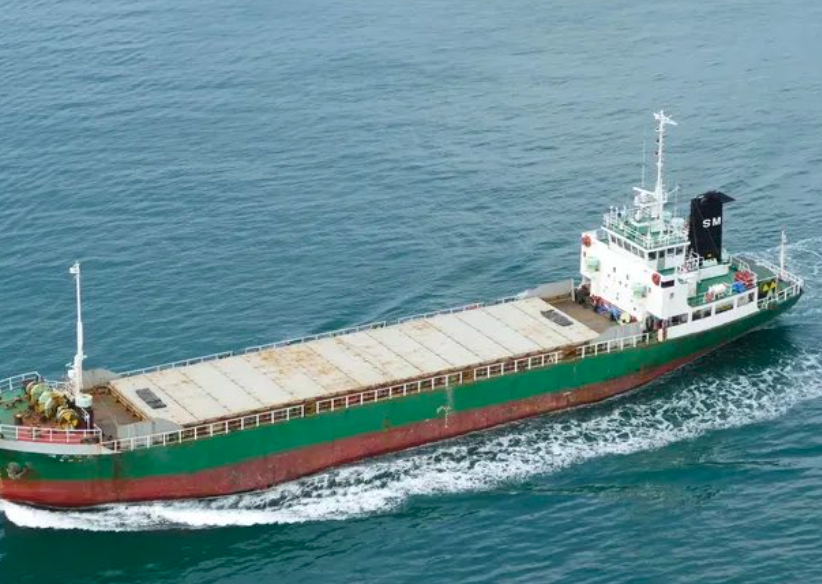
The United States military has disabled a Gambia-flagged cargo vessel after it allegedly attempted to breach an American-enforced blockade on Iranian ports, marking another escalation in ongoing tensions in the Gulf region.
According to the U.S. Central Command (CENTCOM), the cargo ship, identified as the M/V Lian Star, was struck on May 29 after repeatedly ignoring warnings from U.S. forces. Officials said the vessel was heading toward an Iranian port through the Gulf of Oman when it failed to comply with more than 20 separate warnings issued by American military personnel.
CENTCOM stated that a U.S. aircraft fired a Hellfire missile into the ship’s engine room, disabling the vessel and preventing it from continuing its journey to Iran. The military said the action was taken only after the crew refused to alter course or respond to repeated communications. No information has been released regarding injuries among the crew members, and U.S. officials said the ship has not been boarded and remains adrift in the Gulf of Oman.
The incident comes amid a broader U.S. effort to enforce a blockade on Iranian ports, introduced after Tehran effectively restricted maritime traffic through the strategically important Strait of Hormuz. The waterway is one of the world’s most strategic shipping lanes, carrying a large chunk of the world’s oil and gas supplies. Disruptions in the region have already affected energy markets and international trade.
U.S. officials said this is the latest in a series of enforcement actions since the blockade began. CENTCOM reported that American forces have disabled several commercial vessels and redirected more than 100 others in an effort to uphold the restrictions.
The development underscores the fragile security situation in the Middle East even with a temporary ceasefire between the United States and Iran. Diplomatic efforts are underway to broker a longer-term deal and reopen crucial shipping lanes but there are major differences over regional security and Iran’s nuclear program.
More incidents at sea could increase tensions and contribute to risks to global commerce and energy supplies, analysts say.
The United States military has disabled a Gambia-flagged cargo vessel after it allegedly attempted to breach an American-enforced blockade on Iranian ports, marking another escalation in ongoing tensions in the Gulf region.
According to the U.S. Central Command (CENTCOM), the cargo ship, identified as the M/V Lian Star, was struck on May 29 after repeatedly ignoring warnings from U.S. forces. Officials said the vessel was heading toward an Iranian port through the Gulf of Oman when it failed to comply with more than 20 separate warnings issued by American military personnel.
CENTCOM stated that a U.S. aircraft fired a Hellfire missile into the ship’s engine room, disabling the vessel and preventing it from continuing its journey to Iran. The military said the action was taken only after the crew refused to alter course or respond to repeated communications. No information has been released regarding injuries among the crew members, and U.S. officials said the ship has not been boarded and remains adrift in the Gulf of Oman.
The incident comes amid a broader U.S. effort to enforce a blockade on Iranian ports, introduced after Tehran effectively restricted maritime traffic through the strategically important Strait of Hormuz. The waterway is one of the world’s most strategic shipping lanes, carrying a large chunk of the world’s oil and gas supplies. Disruptions in the region have already affected energy markets and international trade.
U.S. officials said this is the latest in a series of enforcement actions since the blockade began. CENTCOM reported that American forces have disabled several commercial vessels and redirected more than 100 others in an effort to uphold the restrictions.
The development underscores the fragile security situation in the Middle East even with a temporary ceasefire between the United States and Iran. Diplomatic efforts are underway to broker a longer-term deal and reopen crucial shipping lanes but there are major differences over regional security and Iran’s nuclear program.
More incidents at sea could increase tensions and contribute to risks to global commerce and energy supplies, analysts say.