

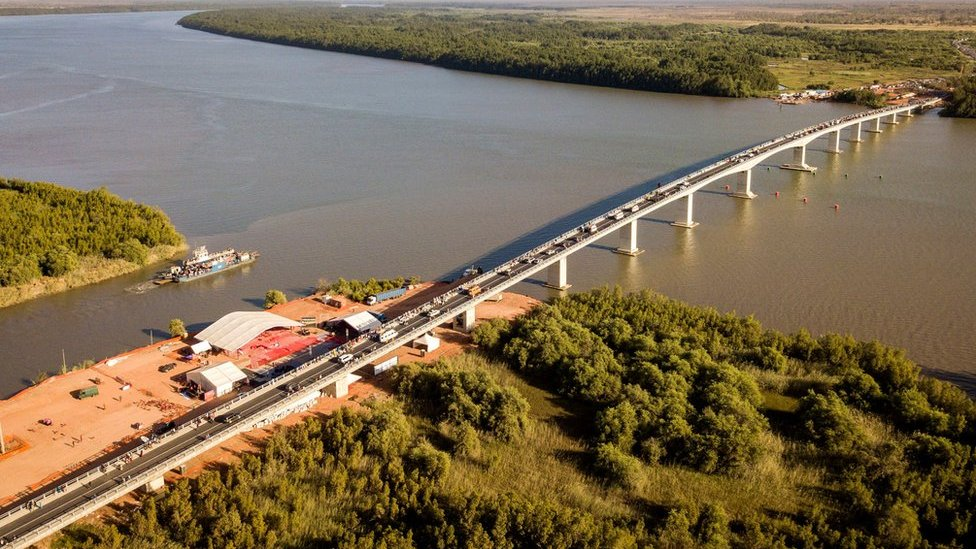
Formal requests for information under the Access to Information Act, 2021 were submitted by Ousman F. M’Bai on 31 March 2026 to the following public institutions in relation to the Senegambia Bridge concession agreement:
- 1. The Ministry of Finance and Economic Affairs
- 2. The Ministry of Works and Infrastructure
- 3. The Attorney General’s Chambers and Ministry of Justice
- 4. The National Roads Authority.
The requests sought information concerning the legal, financial, planning, and governance basis of the concession arrangement, including records relating to valuation, projected revenues, infrastructure planning implications, and the legal framework underpinning the agreement.
The requests were submitted in the public interest given the national importance of the Senegambia Bridge and the ongoing public debate surrounding the concession, including concerns regarding:
- 1. long-term toll revenue arrangements;
- 2. restrictions on competing infrastructure development;
- 3. fiscal implications for the State; and
- 4. transparency in the management of public assets.
To date, the Ministry of Finance and Economic Affairs and the National Roads Authority have failed to provide any substantive response, notwithstanding that extensions of time were granted on 27 April 2026 under the Access to Information Act.
The Ministry of Works and Infrastructure stated that the Ministry of Finance and Economic Affairs was the main contracting authority to the Senegambia Bridge Concession Agreement and directed that the request be pursued through that Ministry. The Attorney General’s Chambers declined disclosure of certain records on grounds of legal professional privilege and Cabinet confidentiality.
The failure of key public institutions to provide information concerning a major national infrastructure concession raises serious questions regarding transparency, public accountability, and compliance with the Access to Information Act, 2021.
This matter concerns the public’s right to understand the legal and financial basis upon which strategic national infrastructure assets are managed and whether long-term restrictions affecting future infrastructure planning are justified and proportionate.
The information requested relates to issues of significant public importance, including:
- 1. the valuation of the concession;
- 2. projected toll revenues over the concession term;
- 3. fiscal risk to the State;
- 4. infrastructure planning restrictions; and
- 4. the legal justification for the concession structure.
The public has a legitimate interest in understanding how these decisions were made.
At this stage, no conclusions are being drawn regarding the ultimate legality of the concession arrangement. However, transparency and disclosure are essential to informed public discussion and constitutional accountability.
Where public authorities fail to comply with their statutory obligations of disclosure, recourse to the courts may become necessary. In the absence of satisfactory responses, Mr M’Bai intends to consider the issuance of pre-action letters to the relevant institutions and the pursuit of appropriate legal remedies. All rights are expressly reserved.
The Access to Information Act, 2021 was enacted to promote openness, accountability and public participation in government decision-making. Compliance with lawful requests for information is not discretionary but forms part of the statutory obligations owed by public institutions to the public they serve.