
The continued stay of Seedy Njie in high Public Office after his deeply divisive and discriminatory remarks represents not merely a political controversy, but a Constitutional, Ethical, and National crisis that strikes at the core of Democratic Governance and Equal Citizenship in The Gambia.
This matter goes far beyond tribal rhetoric. It concerns the dangerous normalisation of exclusion, discrimination, abuse of political authority, and the potential institutionalisation of political and ethnic favouritism in matters relating to employment, appointments, promotions, and access to State opportunities.
The public has heard affirmations suggesting that Mandinkas will not get jobs, and that citizens who do not support the Government or the NPP should not expect employment opportunities. Such statements fundamentally violate the spirit and principles of the Constitution, which guarantees equality, citizenship rights, non-discrimination, and the impartial administration of Public Institutions.
No democratic State can survive when access to employment, public service, security, promotions, or opportunity becomes dependent on political loyalty or ethnic identity. That path destroys meritocracy, erodes national cohesion, weakens institutions, and creates conditions for State-sponsored exclusion and political persecution.
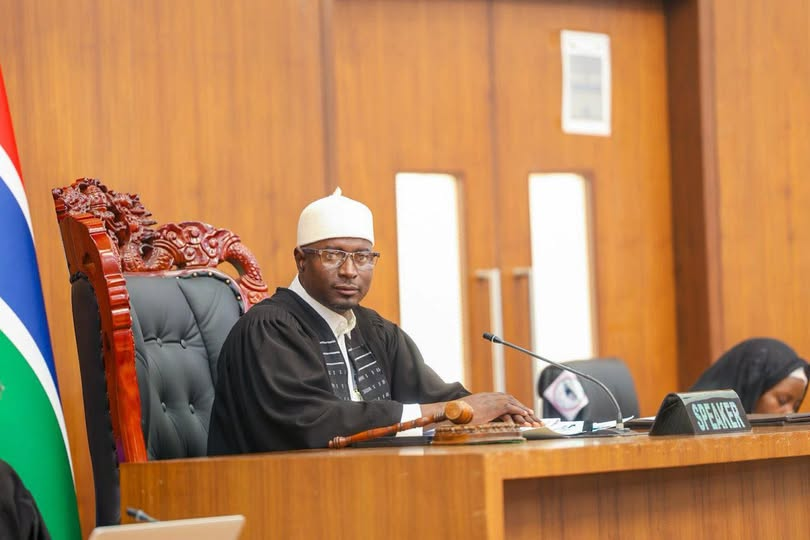
What makes this matter exceptionally grave is that Seedy Njie is not only Deputy Speaker of the National Assembly, but also Chairman of the Defence and Security Committee of Parliament, one of the most sensitive oversight positions in the Republic. That Office demands neutrality, Constitutional maturity, National responsibility, and unquestionable public confidence.
At a time when citizens increasingly hear phrases such as “orders from the top” in relation to Police actions, intimidation, and politically sensitive arrests, these statements raise serious alarm about the politicisation of State Institutions and the potential misuse of Security structures against perceived political opponents.
History has already taught Gambians the dangerous consequences of silence, fear, tribal division, abuse of State power, and the collapse of Institutional independence. We cannot claim to have learned from the past while simultaneously normalising the very behaviours and rhetoric that once pushed this nation into repression and democratic decay.
The National Assembly now faces a defining Constitutional and Moral test. Parliament cannot demand accountability from other Institutions while remaining silent when one of its own Senior Leaders is accused of rhetoric that threatens Constitutional Order, National Unity, and Equal Citizenship. Silence in this moment will not be interpreted as neutrality. It will be interpreted as Institutional Complicity.
We therefore call on the National Assembly to act decisively in defence of the Constitution, Parliamentary Ethics, Democratic Governance, Equal Citizenship, and national cohesion by initiating immediate processes to remove Seedy Njie from his positions as Deputy Speaker and Chairman of the Defence and Security Committee.
Leadership is a Constitutional trust, not a political weapon to intimidate, exclude, divide, or marginalise sections of the population. The credibility of Parliament itself is now on trial before the Gambian people.
The Gambia belongs equally to all Gambians.
By Ndey Jobarteh