
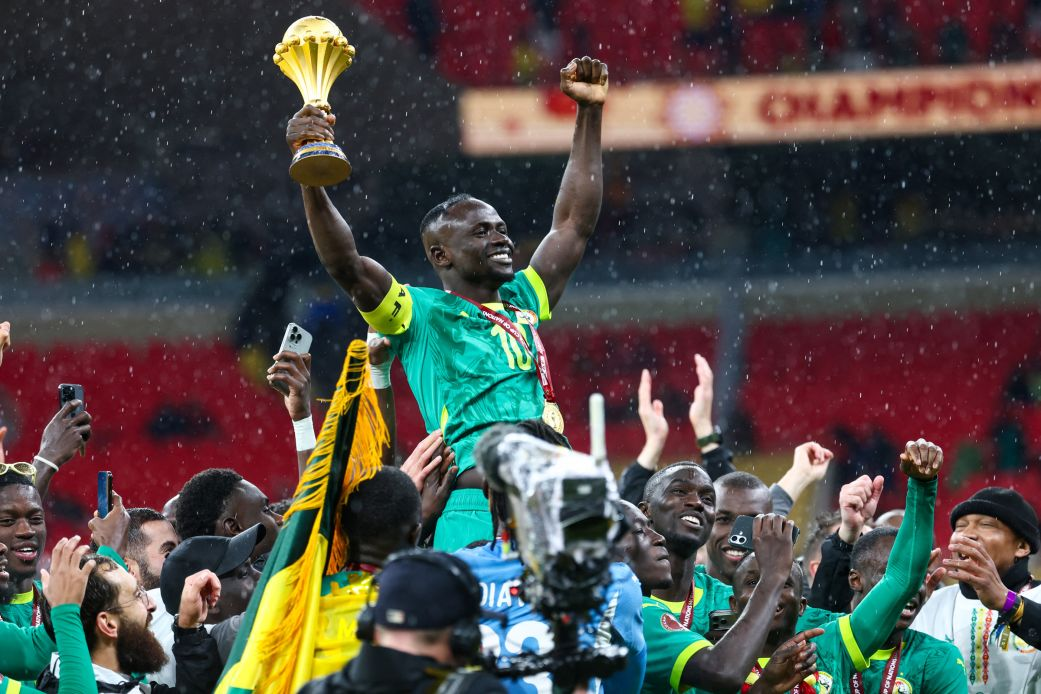
As a proud Gambian supporter of the Lions of Senegal, I watched with pride as our team battled Morocco in the AFCON 2025 final, earning a hard-fought 1-0 victory after extra time. On the field, the Teranga Lions were champions. Off the field, however, the Confederation of African Football (CAF) decided to engage in the unexpected magic trick of reversing the result and awarding Morocco a 3-0 win.
Clearly, under both CAF regulations and the Laws of the Game, the procedure for a team abandoning a match is straightforward. The referee must stop play immediately, document the incident, and submit a report. That report forms the basis for any disciplinary action, including forfeiture. It is a process that begins on the pitch and not months later in an office.
In the January 18 final, the Congolese referee, Jean-Jacques Ndala Ngambo, witnessed Senegal briefly walk off the field, an act of protest, not abandonment. There was no formal termination of the match, no invocation of the forfeiture provisions under the International Football Association Board Laws of the Game. Instead, play resumed, Senegal returned, and the contest reached its natural conclusion with Senegal emerging victorious. And yet, in a move that defies both procedural logic and sporting integrity, CAF later conjured a retroactive forfeiture, as though outcomes can be revised in the quiet corridors of administration long after the final whistle is blown. One is left to wonder whether the authority of the referee on the pitch now yields to the convenience of committees off the terrain.
The absurdity did not merely linger but spiraled. Senegal had a legitimate goal ruled out under highly questionable technical interpretation, raising broad suspicions about the consistency, if not the neutrality, of referee Jean-Jacques N. Ngambo. Meanwhile, he handed Morocco’s Brahim Díaz a stoppage-time penalty, an opportunity that, in the charged atmosphere of such a final, felt like a scripted victory. The prevailing perception, fair or not, was that the machinery of the game had begun to tilt toward a predetermined narrative of a Moroccan victory, irrespective of the organic flow of play. In such circumstances, the match risks being remembered not as a contest decided by skill and resolve, but as a spectacle overshadowed by controversy and the unsettling suggestion of outcomes shaped beyond the touchline.
And yet the ruling was issued anyway, as if the trophy had been waiting patiently on a shelf, longing for Moroccan hands.
CAF’s credibility has been stretched before, from the decades-long Hayatou era to the sanctioned tenure of Ahmad Ahmad, but this latest episode makes previous controversies look antiquated. When a match is decided on the field and then reversed months later in the boardroom, the message is clear that consistency, transparency, and respect for sporting integrity become optional.
Some analysts speculate that CAF’s sudden change of heart may also have been influenced by external pressures, including national and international LGBTQ+ advocacy groups, following Senegal’s recent legislation criminalizing homosexuality. High-profile cases, public health debates, and political pressures apparently have ostensibly infiltrated the football the pitch, because why let facts and rules get in the way of a good game?
Amid this deepening uncertainty, while the footballing world waits to see whether Senegal will accept CAF’s verdict, or instead challenge it through the labyrinth of appeals, perhaps to the Court of Arbitration for Sport, an unexpected voice has cut through the fog. Morocco’s captain, Achraf Hakimi, has stepped forward with a statement that carries both moral weight and disarming clarity. In a moment where institutions appear entangled in procedural gymnastics, Hakimi has rejected CAF’s ruling outright, affirming that Senegal were, on the balance of play and fairness, the rightful champions.
In doing so, Hakimi transcends the conventional role of captain and enters the unusual realm of principled witness, a de facto referee of conscience in a contest where the official mechanisms seem to have faltered. His stance is an act of sportsmanship and an implicit indictment of a system that risks confusing administrative decree with sporting truth. At a time when the trophy itself has become contested terrain, Hakimi’s words restore the measure of clarity that victory is not always defined by what is lifted at the podium, but by what is earned on the pitch.
In short, CAF’s post-match rewriting of history is like handing the championship flag to Balla Gaye 2 before he even steps onto the sand to face Bombardier, a spectacle that turns the victory of wrestling into pure theater before the contest is even fought. Sporting history is decided on the field, or on the sand, not in dusty offices with rubber stamps, lofty chairs, and a flair for the dramatic. The Lions of Senegal earned their victory fair and square. CAF, it seems, merely rehearsed a play for an audience that didn’t even exist.
If nothing else, this episode serves as a cautionary tale that when governing bodies substitute real-time judgment with retroactive reinterpretation, they risk turning football into a circus where the rules exist only to be bent, and the fans are left sipping the popcorn.
And for those wondering who truly won AFCON 2025? Ask anyone who watched the match. The Lions roared and CAF, it seems, merely whispered.
By Lt. Col. Samsudeen Satt (Rtd)
Former Commander of The Gambia National Army