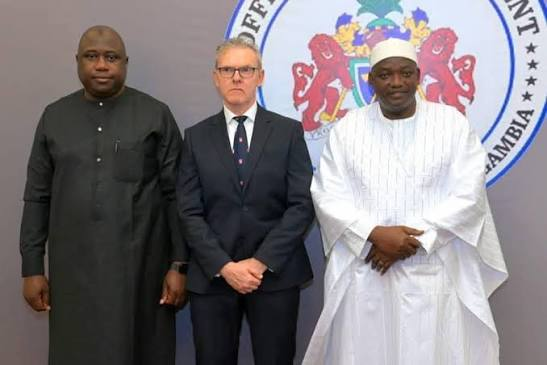
The Gambia’s Special Prosecutor, Martin Hackett, has assured the public that prosecutions arising from the country’s Truth, Reconciliation and Reparations Commission (TRRC) will respect the rights of both victims and accused persons, insisting that accountability must go hand in hand with fair trials.
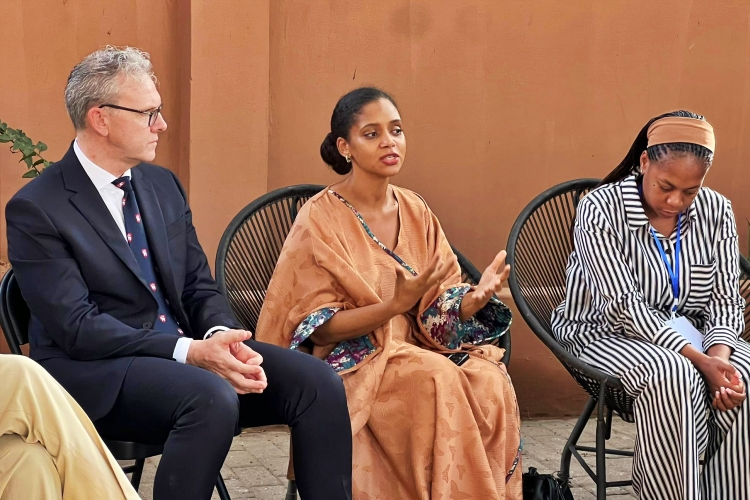
Hackett gave the assurance on Friday during a town hall meeting with legal practitioners at Ocean Bay Hotel in Cape Point. The meeting was part of efforts to engage the legal community as preparations continue for criminal cases recommended by the TRRC and the government’s white paper.
Established under the Special Accountability Mechanism, the Office of the Special Prosecutor is responsible for pursuing criminal cases arising from the transitional justice process.
The gathering brought together representatives of the Attorney General’s Chambers, the special adviser on transitional justice, members of The Gambia Bar Association, senior lawyers, legal practitioners and law students.
Addressing participants, Hackett stressed that successful prosecutions would require close cooperation among all actors in the justice system.
“Work together to deliver justice,” he urged.
He acknowledged that prosecutors, defence lawyers and other legal professionals have different responsibilities, but said they share a common duty to ensure justice for victims while protecting the rights of those facing allegations.
Hackett described The Gambia’s transitional justice process as distinctive because it combines the TRRC’s findings, domestic criminal prosecutions and plans for a special tribunal.
Drawing on his international experience, he said the basic principles of prosecuting serious crimes remain the same across jurisdictions. Investigators must listen carefully to victims, document their accounts, gather credible evidence and build cases without compromising defendants’ legal rights.
Hackett previously served as chief war crimes prosecutor for the European Union in Kosovo and as a senior prosecutor at the Special Tribunal for Lebanon in The Hague. He has also advised Ukraine on prosecutions involving alleged genocide and crimes against humanity.
He explained that the work of his office would involve far more than taking witness statements. It would include protecting witnesses, preserving anonymity where necessary, arranging appropriate courtroom measures, preparing indictments, disclosing evidence to defence lawyers and managing cases through the judicial process.
The Special Prosecutor also referred to his 17 years practising criminal law in Manchester, England, where he said he spent much of his time representing defendants. The experience, he explained, gave him a deeper understanding of the difficulties defence lawyers face and the importance of maintaining professional trust between prosecution and defence teams.
Hackett said prosecutors would be required to prove their cases beyond reasonable doubt, while defence lawyers must have the freedom to represent their clients vigorously. The final decision on whether allegations have been established, he stressed, rests with the courts.
He further emphasised that anyone eventually charged must be treated as a defendant whose guilt has yet to be proved. At the same time, victims must be treated with dignity and respect throughout the proceedings.
President of The Gambia Bar Association, Neneh M.C. Cham, pledged the association’s continued support for the accountability process, noting that the Bar had been involved in the country’s transitional justice efforts from the outset.
Cham said members of the association had contributed to developing the legal framework and participated in a joint technical committee with ECOWAS on the proposed special tribunal.
She said the association’s commitment to human rights and the rule of law had informed its support for accountability. However, she warned that turning the process into meaningful prosecutions would require substantial financial resources.
Good intentions alone would not be sufficient to deliver justice, Cham cautioned, pointing to the importance of continued assistance from international and development partners.
She assured Hackett that the Bar Association would continue to cooperate with his office and encouraged legal practitioners to engage closely with the Special Prosecutor as preparations advance for cases linked to the TRRC.
The meeting comes as The Gambia moves towards prosecuting alleged crimes identified through its transitional justice process, with the challenge being to secure accountability while upholding the principles of fairness and the rule of law.