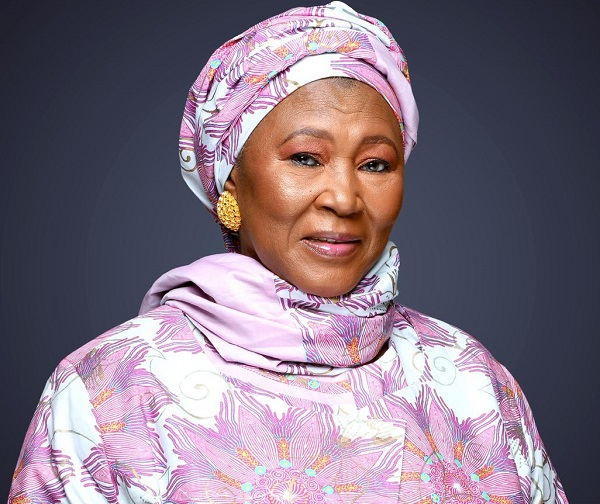
Former Vice President Fatoumatta Jallow Tambajang has formally submitted registration documents for her newly established Democratic Renaissance Party to the Independent Electoral Commission, expressing optimism that the party will be approved ahead of the December presidential election.
Speaking to Kerr Fatou after filing the documents on Thursday, Tambajang said the party had spent five years preparing for registration and had taken extensive measures to ensure that its submission met the IEC’s requirements.
“I know the IEC has a lot of documents to review, but given the quality of our documents and the work we put into them, I hope it will not take much time,” she said.
The former vice president said particular attention had been given to collecting and verifying membership signatures, which she described as one of the most critical components of the registration process.
Tambajang also called for increased institutional support for the IEC, arguing that the electoral body requires additional personnel to effectively manage its growing responsibilities during the pre-election period.
While commending the commission’s work, she said staffing shortages could limit its capacity to efficiently process party registration applications and prepare for the forthcoming polls.
Outlining the DRP’s policy priorities, Tambajang said the party would focus on expanding citizens’ rights, promoting economic empowerment and addressing structural weaknesses within the Gambian economy.
She argued that the country’s economy had underperformed in recent years and raised concerns about the level of public debt, which she said had exceeded acceptable limits.
Among the party’s proposed economic reforms are diversifying the economy, modernising agriculture through digital technology and improving farmers’ access to machinery, fertiliser and other essential resources.
Tambajang described agriculture as the backbone of The Gambia’s economy but said years of poor management had prevented the sector from reaching its full potential. She cited recent audit findings as evidence of weaknesses in the administration of public resources.
She said a DRP-led government would seek greater international financing through institutions and initiatives such as the African Continental Free Trade Area, the African Development Bank, the United Nations and other development partners.
Drawing on her 35 years of experience in government and the private sector, Tambajang said she had developed professional relationships that could be used to attract investment and development opportunities to The Gambia.
The DRP’s broader development agenda, she said, would include promoting climate-resilient agriculture, strengthening the healthcare system, improving the quality of education and providing greater support to indigenous Gambian businesses.
Tambajang also proposed the establishment of a national sovereign wealth fund under the supervision of the Central Bank and the creation of a national think tank that would draw on the expertise of Gambian professionals at home and in the diaspora.
Addressing the issue of public appointments, the former vice president said her administration would prioritise competence, experience and qualifications over political loyalty.
“My government will not focus on who worked in the previous government. What we will look at is anyone who is educated, willing to work, capable and experienced; we will put that person in the right position,” she said.