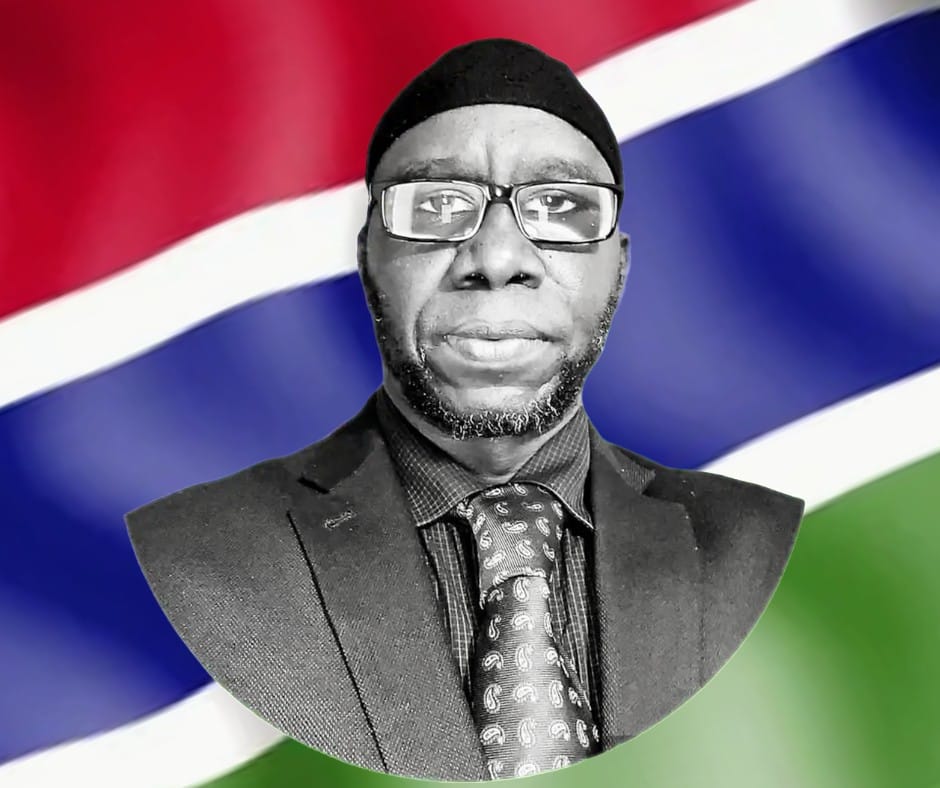
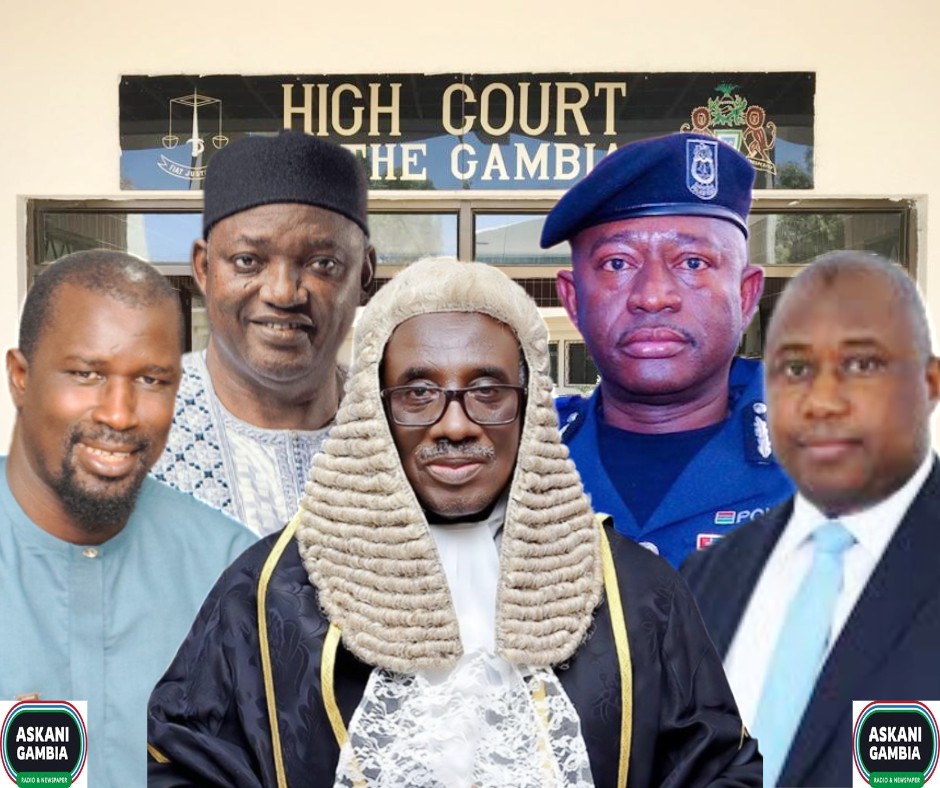
Chief Justice Hassan Hassan B. Jallow has dismissed a preliminary objection filed by the State in the closely watched constitutional case brought by former Auditor General Modou Ceesay.
Ex-Auditor General sues the Attorney General (1st Defendant), the Inspector General of Police (2nd Defendant), and Cherno Amadou Sowe (3rd Defendant). The lawsuit challenges his alleged forcible and unlawful removal from office, citing violations of the 1997 Constitution and the National Audit Office Act, 2015.
The ruling delivered today addresses the State’s challenge to Modou Ceesay’s (Plaintiff) Reply to the State’s (Defendant) Statement of Case.
The Attorney General and the Inspector General of Police filed a Notice of Preliminary Objection on November 13, 2025, arguing that Modou Ceesay’s (Plaintiff) Reply was not provided for in the Supreme Court Rules and that some of its contents were irrelevant, and the Oral submissions were heard on November 25, 2025.
Modou Ceesay’s Reply, consisting of 25 paragraphs, was filed on November 10, 2025, pursuant to a court order issued on October 14, 2025.
In his ruling, Chief Justice Hassan B. Jallow dismissed the preliminary objection, finding it to be inadmissible. Chief Justice held that the absence of a specific provision in the Rules does not strip the court of its authority to issue orders necessary to regulate its procedure and ensure due process and fair hearing.
However, despite dismissing the state’s objection, Chief Justice Jallow noted Modou Ceesay’s (Plaintiff’s) “very lengthy and detailed reply” and, in the interest of justice, granted the State (Defendants) leave to file a rejoinder to the reply, should they wish to do so.
The Supreme Court is set to commence its sitting on the 3rd December 2025 to hear the cases.
Background of the case
Former Auditor General Modou Ceesay filed a lawsuit against the Attorney General and Inspector General of Police on the 3rd October, 2025, invoking the Supreme Court’s original jurisdiction.
The lawsuit centres on the actions taken by the Attorney General and the IGP in allegedly ordering police officers to forcibly remove Modou Ceesay from the National Audit Office (NAO) premises.
Modou Ceesay then filed a lawsuit seeking declarations that his removal was unlawful, null, void, and without effect, and that the actions of the state violated sections 158, 159, 160, and 169 of the 1997 Constitution and sections 3(2), 11, 13, 14, and 16 of the National Audit Office Act, 2015.
Modou Ceesay further alleged that his removal was retaliatory for upholding the independence of the NAO, including his refusal of a ministerial post and declining to delay audits of public institutions.
The State, represented by Solicitor General H. Thomasi and a team of counsel, disputes Modou Ceesay’s account, arguing that Modou Ceesay had effectively vacated his position by accepting the ministerial nomination.
The case is well followed as it will examine the scope of executive power and the constitutional independence of the Auditor General’s office.