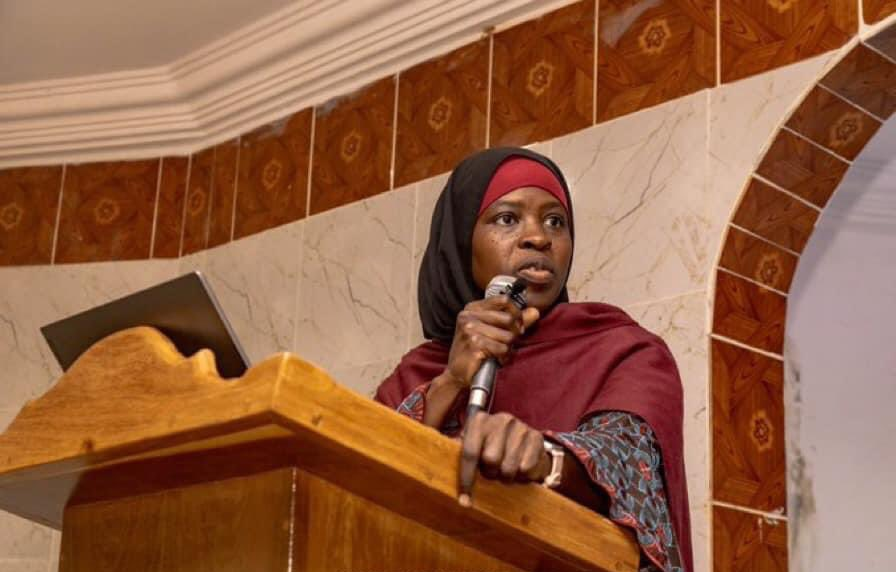
I listened to Dr. Habibatou Drammeh, The Gambia’s Minister of Basic and Secondary Education, on Coffee Time with Peter Gomez on Tuesday, 10 February 2026. She was impressive, clear, confident, and refreshingly honest. When she knew something, she said so. When she did not, she admitted it. In our political climate, that alone qualifies as a rare species.
Then came the topic of local languages in schools, and suddenly the interview sounded less like education policy and more like a tribal ceasefire agreement.
The original plan, the Minister explained, was simple. Use Wolof as the local language of instruction because the materials exist, the foundations are laid, and it could actually work. But then reality intervened, the uniquely Gambian reality where every policy must first survive the Tribal Sensitivity Test.
Some citizens apparently discovered that Wolof is spoken mainly by Wolof people. This revelation turned an education project into an ethnic emergency. Dr. Drammeh admitted she first saw only a practical solution, not a political battlefield. But soon the alarms rang, “What about us?”
And just like that, one language became seven, because nothing says “simplify classroom instruction” like multiplying languages in a country of 2.5 million people.
At this rate, we may soon assign languages according to the teacher’s grandmother.
Tribalism in The Gambia is not dead. It simply attends policy meetings in a suit and tie. We deny it, but the moment language is mentioned, ancestral villages suddenly become relevant again.
In post-colonial Africa, we should be fighting poverty, ignorance, and technological backwardness. Instead, we are fighting over which tribe gets the microphone in Grade One. Meanwhile, English, the language of law, science, medicine, aviation, diplomacy, and WhatsApp quarrels, sits quietly doing all the real work.
This is not our first experiment. When I was a student and later a teacher, Wolof and Mandinka were once piloted in schools. Dedicated pioneers such as Hon. Sedia Jatta and the late Abdoulie Jobe worked tirelessly to make it work. The project died, not from lack of patriotism, but from lack of logic. It was a beautiful idea in search of a purpose.
We also excel at symbolic gestures. Take Radio Gambia, for example. The British arranged the news in English, then Wolof, then Mandinka. Everyone lived peacefully with this until independence produced a new species of a tribalized minister.
One fine day, this minister announced that Mandinka must come first because Mandinkas were the majority. By that logic, English should have been last, since the British had already left. But logic had already missed the bus.
Soon every group demanded its own language. The news became a linguistic relay race: English, Mandinka, Wolof, Fula, Sarahulay, Jola, and more. Development did not increase, poverty did not retreat, and electricity remained allergic to consistency. But at least everyone could hear the bad news in their mother tongue.
Tribal sentiment is powerful. It convinces us that Bathurst (now Banjul) was built by tribes instead of by the British. It forgets that schools, courts, roads, and hospitals were planted in a Wolof- and Aku-speaking settlement simply because that is where the colonizers chose to settle. Had they chosen Basse, we would now be debating Fula as our “natural” national language. In Foni, Jola. In Soma, Mandinka. Geography, not destiny, decided linguistic dominance.
Denton Bridge was built in 1915. Before that, Bathurst might as well have been Europe for people in the provinces. Yet today, we argue as if tribes designed the capital by committee.
Now we are told seven local languages will improve learning. This is touching. Unfortunately, these languages have no standardized alphabets, different counting systems, and no vocabulary for modern science. Pythagoras’ theorem cannot be translated into Manjago without becoming folklore. Quantum physics in Jola would require spiritual consultation.
Yet here we are, preparing to teach modern science with pre-modern tools.
What we actually need are foreign languages-French, Arabic, Chinese-languages that open doors to technology, science, and global trade. Senegal is already flirting with bilingualism. We are flirting with nostalgia.
Gambians who master international languages tend to succeed abroad. Those who master English plus five local languages succeed mainly at family meetings. The evidence is painful but clear.
Education should prepare children for the future, not comfort the past. Policy should be guided by development, not by who might feel offended in the village square.
Seven languages in classrooms may look inclusive, but it is really tribalism wearing academic robes.
If we want progress, we must teach languages that connect us to the world, not languages that divide us inside the compound.
Otherwise, our children will be fluent in seven tongues…
and unemployed in all of them.
By Lt. Colonel Samsudeen Sarr (Rtd)
Former Commander, The Gambia National Army