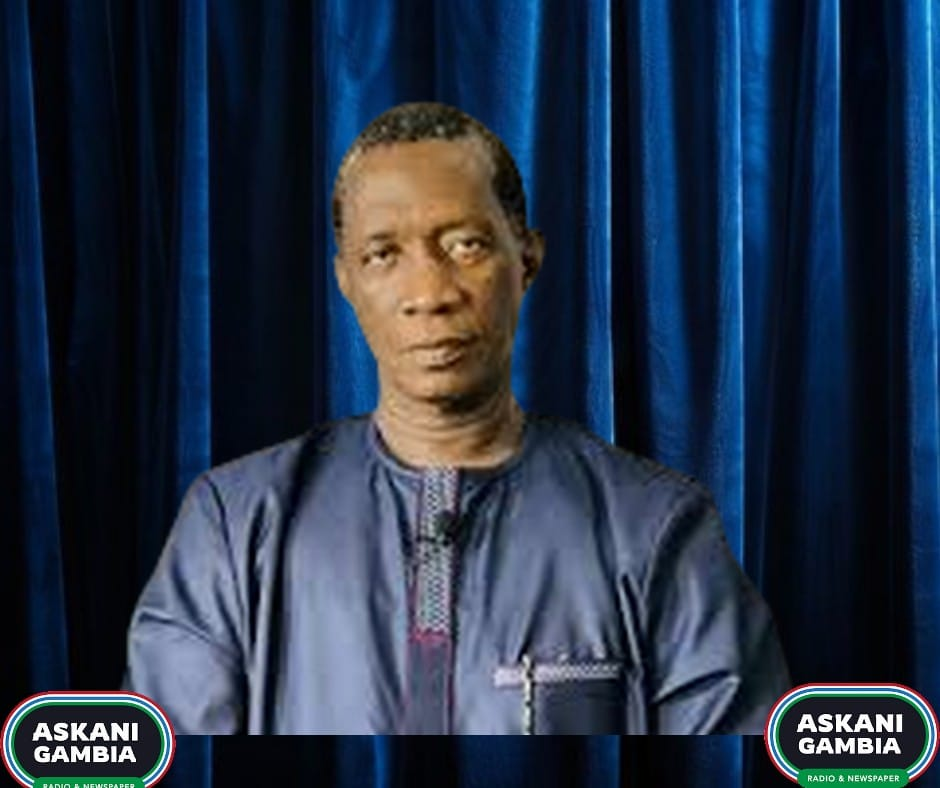

Momodou Satou Dibba, co-chair and interim spokesperson of the Gambia First Coalition, has dismissed claims that he used his role in coalition negotiations to promote the interests of the United Democratic Party, insisting that his proposals were guided by professional judgment and a commitment to fairness.
Dibba, who previously served as deputy chairman of the Coalition Mediation Committee (CMC), responded to the allegations during an interview with Kerr Fatou on Thursday.
He rejected suggestions that his departure from the committee followed opposition to a power-sharing formula allegedly designed to give the UDP an advantage.
“I was not there for the UDP, by all indications,” Dibba said.
According to him, he initially joined the CMC as an observer and understood that the role required neutrality and independence. He said he made it clear from the beginning that he would carry out his responsibilities impartially, while maintaining his constitutional right as a citizen to support and vote for a political party of his choice.
Dibba acknowledged that the UDP was his preferred party at the time, but said he did not formally disclose that preference during the committee’s proceedings and insisted that it had no bearing on the proposals he developed.
As part of the coalition negotiations, Dibba said he prepared a set of criteria intended to guide the distribution of positions in a proposed coalition government. The formula was presented to other members of the CMC, discussed within the committee and later forwarded to the senior negotiating body for further consideration.
He said the UDP did not endorse all aspects of his proposals and, on some issues, failed to provide any response. Dibba argued that this demonstrated that the formula was neither prepared on the party’s instructions nor designed to serve its interests.
Explaining how the proposed arrangement would have worked, Dibba said each of five registered political parties that had never participated in an election would have been guaranteed at least one ministerial position.
The arrangement, he said, was intended to establish a minimum level of representation for smaller parties within a future coalition administration.
Political parties with previous electoral experience would then have received additional positions based on agreed criteria and their respective records.
Dibba said the committee also proposed reserving several cabinet positions for political movements participating in the coalition. Those positions, he explained, would have been filled on merit rather than left entirely to the discretion of the coalition’s eventual presidential flagbearer.
He maintained that an assessment of the proposed distribution showed that the UDP would not have been the main beneficiary.
According to Dibba, smaller political parties stood to receive more positions than they would have secured under a purely weighted formula based on electoral strength, while the UDP would have received fewer positions relative to its political size.
He said the figures therefore contradicted claims that the proposal was structured to strengthen the UDP’s influence.
Dibba maintained that the objective of the formula was to ensure broader participation and a more inclusive distribution of responsibility among coalition partners, rather than concentrating power in the hands of any single political party.