
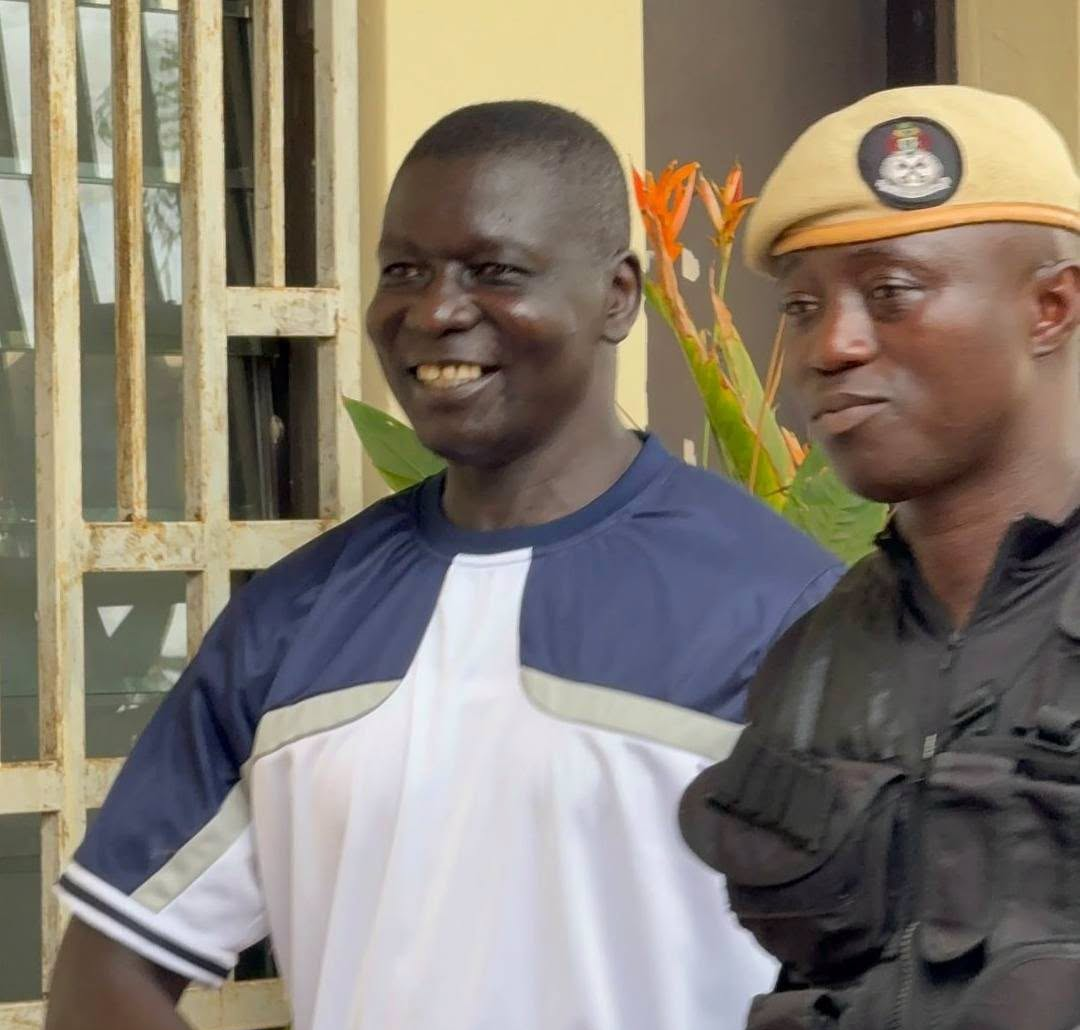
Court overrules Defence objections to murder charge withdrawal; accused pleads not guilty to assault counts. Justice S.K Jobarteh has ruled that the Prosecution may amend the charges against Sanna Manjang, striking the murder counts and replacing them with two counts of assault causing actual bodily harm.
Justice S.K. Jobarteh rejected the Defence’s argument that the amendment would prejudice the accused and determined that the statutory conditions under the Criminal Procedure Act had been satisfied.
Following the amendment ruling, Sanna Manjang pleaded not guilty to both assault charges. The Prosecution closed its case, setting the stage for Defence submissions on whether there exists a case to answer.
When the matter was called, Deputy Director of Public Prosecutions E.R. Dougan informed the Court that the State had filed a further amended information (Charges) dated July 16, 2026, and requested that the accused enter a plea to the new charges.
Defence Counsel S.K. Jobe objected, arguing that the Prosecution had not first sought leave of the Court before amending the information. He noted that the amendment represented yet another amendment in a pattern of successive modifications to the charges.
Counsel Jobe traced the charged history of the case to underscore his prejudice argument. Counsel Jobe argued that Prosecution initially filed a two count indictment for murder in January 2026. In March 2026, it expanded the charges to six counts.
The indictment was later reduced to four counts. Now, with the filing of amendment dated July 16, 2026, the Prosecution sought to replace the remaining murder charges with two assault charges.
Counsel Jobe submitted that the pattern of successive amendments did not reflect prosecutorial corrections but rather “a calculated strategy” undertaken after the Prosecution had failed to produce sufficient evidence to prove the murder charges.
Counsel Jobe advanced two arguments against the amendment.
First, he submitted that had the Prosecution closed its case on the existing indictment without amendment, a no-case submission on the murder counts would likely have succeeded, potentially entitling the accused to acquittal on those counts.
Counsel Jobe added that by allowing the amendment at the late stage after the Defence had prepared to contest the murder allegations and after several testimonies had been heard, the Court would effectively nullify the accused’s right to seek dismissal on insufficient evidence.
Second, Counsel Jobe emphasised that Sanna Manjang had spent nearly seven months in detention largely because of the seriousness of the murder charges. Allowing the charges to be withdrawn at the closing stage of the Prosecution’s case would, in his submission, “undermine the accused’s legitimate expectations and amount to an injustice.”
Counsel Jobe relied on Section 218 of the Criminal Procedure Act 2025, which, he submitted, governs amendments to charges in criminal proceedings. He argued that amendments are permissible only where statutory conditions are met and where they do not prejudice the accused. He urged the Court to reject the State’s application and to proceed with the existing indictment.
Deputy DPP Dougan responded by invoking Section 85 of the Constitution, which, she argued, empowers the Director of Public Prosecutions to institute and undertake criminal proceedings and to amend charges where necessary based on available evidence.
Deputy DPP Dougan maintained that the amendment was made “in the interest of justice” and that the Defence would retain the opportunity to recall witnesses for further cross-examination if required.
She further contended that the Defence’s reliance on Section 218 was misplaced because the amendment was initiated by the Prosecution, not directed by the Court, and therefore Section 218 did not apply. She suggested that the Prosecution’s constitutional prerogative under Section 85 governed the amendment.
In reply, Counsel Jobe argued that prosecutorial powers under the Constitution are not absolute and remain subject to judicial oversight to ensure fairness to an accused person. He reasserted that Section 218 is the applicable provision governing amendments in criminal proceedings and urged the Court to refuse the Prosecution’s request.
In her ruling, Justice S.K. Jobarteh held that the conditions set out under Section 218 of the Criminal Procedure Act had been satisfied and that allowing the amendment would not prejudice the accused.
Justice S.K. Jobarteh ruled that the further amended information had been properly filed and served on the Defence. She added that the Court could not disregard a document regularly before it simply because no separate formal application for amendment had been made.
Justice S. K. Jobarteh granted the Prosecution’s application and proceeded with plea-taking on the further amended information.
Under the amended indictment (charge), Sanna Manjang faces two counts of assault causing actual bodily harm contrary to Section 228 of the Criminal Code.
Count 1 alleges that sometime in March 2006, at the former National Intelligence Agency premises in Banjul, Sanna Manjang, while serving in the Gambia Armed Forces and as a member of the Junglers, assaulted Tamsir Jasseh by beating and kicking him, causing severe injuries.
Count 2 alleges that during the same period, Manjang assaulted military officer Yaya M.S. Darboe by beating him with sticks, pouring molten plastic on his body, tying him in a sack, and winching him up, causing serious injuries and bleeding.
Sanna Manjang pleaded not guilty to both counts. Justice Jobarteh entered pleas of not guilty on his behalf.
Following the plea, the Prosecution applied for all previous proceedings to be adopted and informed the Court that it was closing its case. Justice Jobarteh granted the application and declared the Prosecution’s case closed.
Defence Counsel S.K. Jobe informed the Court that the Defence had not anticipated the Prosecution would close its case on today’s date and sought leave to apply for bail, given that the Court was about to proceed on vacation.
Deputy DPP Dugan requested that the bail application be submitted formally in writing rather than orally. Justice Jobarteh granted the request.
Counsel Jobe also notified the Court of the Defence’s intention to file a no-case-to-answer submission.
The matter adjourned to Monday, July 28, 2026, at 9:30 a.m. for the hearing of the bail application.