
A businessman, Modou Lamin Baldeh, was found guilty of unlawfully converting and stealing five 20-foot containers of ceramic wall tiles valued at US$175,000 (equivalent to D12,075,000) and ordered to pay compensation and a fine.
Modou Lamin Baldeh was convicted after a trial of nearly two years, during which the court determined that he had exceeded his limited authority to facilitate the sale of the goods and dishonestly converted them with the intent to permanently deprive the owner.
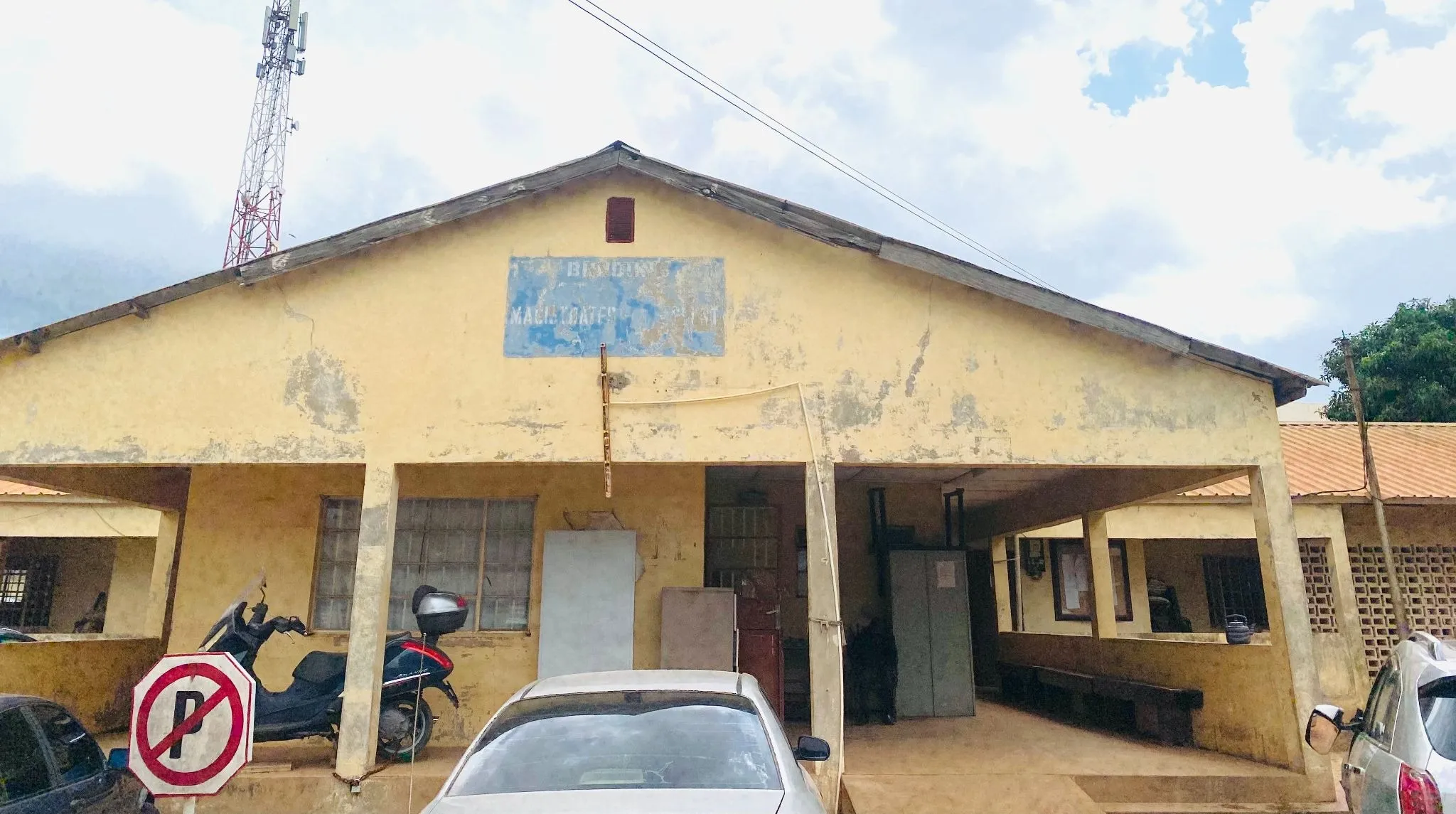
Principal Magistrate Krubally delivered the judgment yesterday, Wednesday 5 August 2026, convicting Modou Lamin Baldeh contrary to Section 252 of the Criminal Code.
When the case was called on 21 August 2024 before the Banjul Magistrates’ Court, the prosecution applied to amend the charge sheet to correct the value of the alleged stolen property to D12,075,000 and to change the complainant’s name to Mam Begay S. Jagne. The court granted both amendments.
The prosecution alleged that between April and July 2024, Modou Lamin Baldeh stole five 20-foot containers of ceramic wall tiles bearing the following details 5 by 20 FSCU3634060/20 24 PACKAGE, 5 by 20 MEDU1395905/20 23 PACKAGE, MEDU2604614/20 24 PACKAGE, MEDU2958259/20 25 PACKAGE, and MSDU1927245/20 24 PACKAGE. The tiles were valued at US$175,000, equivalent to D12,075,000, and belonged to Mam Begay S. Jagne, who was representing her business partner Amadou Ganilla.
After confirming he understood the charge, Baldeh pleaded not guilty. The court admitted him to bail in the sum of D12,075,000, subject to the provision of a leased landed property of equivalent value with two responsible Gambian sureties.
The prosecution called six witnesses. The complainant, Mam Begay S. Jagne (PW1), a hotel front office manager based in Washington, D.C., testified that she represented Amadou Ganilla in relation to the five containers of ceramic wall tiles imported from Spain to The Gambia.
The containers arrived in November 2023 but remained uncleared due to financial disagreements between her business partner and the clearing agent, Suaibou Sanneh.
After travelling to the country in May 2024, PW1 settled the outstanding shipping, customs and port charges to facilitate release of the containers. She appointed her brother, Assan Sinyang, through a power of attorney to oversee the containers in her absence. During this time, Modou Lamin Baldeh was introduced to her by Suaibou Sanneh as someone who could assist in finding buyers for the tiles. After negotiations, PW1 agreed to sell all five containers for US$175,000, with the understanding that any transaction would take place in the presence of her brother Assan Sanyang.
PW1 testified that she became increasingly uncomfortable with Baldeh’s handling of the transaction. She questioned the storage arrangements, costs involved, and manner in which the containers were being handled. When her business partner delayed sending funds to cover storage expenses, Baldeh repeatedly demanded payment.
According to PW1, Baldeh eventually claimed he had sold the tiles. When she confronted him, he initially denied selling all the goods, claiming some remained in storage. However, when her brother attempted to inspect the warehouse, he was denied access. Upon later gaining entry, the warehouse was found to be empty.
PW1 stated that when she demanded either the return of the tiles or payment of US$175,000, Baldeh apologised and repeatedly promised to pay but never fulfilled his promise. She told the court she suffered emotional distress and financial loss as a result and eventually reported the matter to the Police Intervention Unit (PIU).
Suaibou Sanneh (PW2), a clearing agent, corroborated PW1’s evidence. He explained that although the bill of lading bore his name as consignee, the goods belonged to Amadou Ganilla, who had instructed him to clear them. He confirmed that PW1 travelled to the country (Gambia) on behalf of Amadou Ganilla to resolve outstanding issues, paid customs duties and other necessary charges, and successfully secured release of the containers.
PW2 testified that Modou Lamin Baldeh later contacted him after seeing the containers listed for auction. The accused expressed interest in finding buyers for the tiles, and after negotiations, PW1 agreed to reduce her asking price to US$175,000. PW2 informed Modou Lamin Baldeh of the agreed figure, and Baldeh assumed responsibility for handling storage and sale of the tiles, subject to PW1’s condition that any transaction should take place in the presence of her brother. PW2 later withdrew from the transaction, leaving Baldeh to deal directly with PW1.
PW2 stated that sometime afterwards, PW1 telephoned him in distress, alleging that Modou Lamin Baldeh had sold the tiles without paying her. When PW2 confronted Modou Lamin Baldeh, the accused admitted he had supplied the tiles to several customers and was attempting to recover money from them. To PW2’s knowledge, PW1 never received either the proceeds from the sale or the return of the tiles.
Alagie Muhammed Waggeh (PW6), the warehouse owner, testified that Modou Lamin Baldeh personally approached him seeking a warehouse to store ceramic tiles. After agreeing on rental terms, Modou Lamin Baldeh arranged for the containers to be transported to the warehouse and supervised offloading. Throughout the storage period, Modou Lamin Baldeh was the individual who regularly visited the warehouse, brought prospective buyers to inspect tiles and authorised release of cartons whenever sales were made.
Modou Lamin Baldeh initially paid part of the agreed warehouse rent but later accumulated arrears. Despite repeated demands for payment, Modou Lamin Baldeh continued removing cartons without fully settling the storage charges. Eventually, all tiles were removed, yet a balance of rent remained unpaid.
Two individuals testified as purchasers of the tiles from Baldeh. Omar Jeng (PW3) testified that he had previously entrusted Modou Lamin Baldeh with money for newspaper purchases, leaving Modou Lamin Baldeh indebted to him. Modou Lamin Baldeh later proposed that tiles be used to offset the outstanding debt. PW3 stated that Baldeh delivered 2,553 cartons valued at D300 each, and later supplied an additional 866 cartons at D250 per carton, totalling 3,419 cartons. Despite receiving the tiles, Modou Lamin Baldeh still owed PW3 over D900,000.
Abdou Karim Sowe (PW4) testified that through a mutual acquaintance, Modou Lamin Baldeh claimed to have ceramic tiles for sale and urgently needed money. Although PW4 had no initial interest in purchasing tiles, he agreed to assist Modou Lamin Baldeh financially and advanced funds. PW4 estimated he had paid Baldeh approximately D500,000 in relation to the transaction.
Inspector Abdoulie Sabally (PW5), the Investigating Police Officer attached to the Serious Crime Unit, testified that during the investigation, Modou Lamin Baldeh admitted taking possession of the five containers under an agreement to sell them for US$175,000. One condition of the agreement was that Assan Sinyang had to be present whenever any sale took place. However, the investigation revealed that Baldeh disposed of the tiles without Sinyang’s presence or consent. When police visited the warehouse in Kanifing, it was empty, and none of the tiles could be recovered.
In his defence, Modou Lamin Baldeh testified, denying the theft allegation. He claimed his involvement began after he was introduced to the complainant and clearing agent as someone capable of finding buyers for the tiles. According to his account, PW1 was experiencing financial difficulties due to mounting clearing, transporting and storage costs, and he agreed to assist in marketing the tiles.
He maintained that he personally spent substantial sums on transportation, warehouse rental, labour costs and other logistical expenses, all made with PW1’s knowledge. He claimed it was agreed he would recover the expenses from the proceeds of future sales.
Baldeh further testified that PW1 authorised him to sell the tiles and that there was never any restriction preventing him from dealing directly with prospective buyers. He argued the dispute arose from disagreements over ownership, valuation and reimbursement of expenses rather than from a criminal act of stealing.
He called two witnesses in his defence. Maska Suso, a shipping agent who testified regarding the release of the containers from the port, and Bablu Singh Soni, a businessman who testified that he purchased 866 cartons of tiles from Baboucarr for D216,500.
In his judgment, His Worship Krubally found that the prosecution had established beyond reasonable doubt that Mam Begay S. Jagne (PW1) had a sufficient proprietary interest in the five containers. Although she was neither the consignor nor consignee named in the shipping documents, the evidence demonstrated that she acted on behalf of the beneficial owner, Amadou Ganilla, and was entrusted with the management and disposal of the goods. Magistrate Krubally found that PW1 exercised lawful control and possession over the goods despite not being the named consignee.
On the critical question of Modou Lamin Baldeh’s authority, Magistrate Krubally found that while Baldeh was introduced solely to assist in finding buyers, he exceeded that limited authority by selling the tiles independently without consulting PW1’s brother.
Magistrate Krubally stated, “Why in the first place did the Accused independently sell these tiles without consulting the complainant’s brother? When the Accused sold the said tiles, why didn’t he reimburse the proceeds to the complainant? Why didn’t the Accused even inform the said complainant that he had sold the said tiles? Why did the Accused keep the sales to himself until the matter got to the police?”
Magistrate Krubally noted that Baldeh furnished no satisfactory answers to these questions throughout the proceedings.
Magistrate Krubally found that Baldeh clandestinely sold the tiles with the absolute intention of permanently depriving the owner thereof, which constituted theft as defined in Section 245 of the Criminal Code. Magistrate Krubally rejected Baldeh’s characterisation of the matter as a commercial dispute, holding that he could not benefit from his fraudulent and dishonest conduct.
In sentencing, Magistrate Krubally considered that Baldeh was a first-time offender, a fact advanced as mitigation. His counsel submitted that Baldeh was blessed with two spouses and eight children, had established a business employing Gambians, and regretted the events culminating in the case, wishing to turn a new leaf. Counsel further submitted that prosecution had recovered several containers.
However, the Magistrate Krubally remarked that Modou Lamin Baldeh’s role was indeed aggravating, in particular as he denied the victim substantial hardship and economic losses. Magistrate Krubally imposed the following sentence pursuant to the Criminal Offences Act 2025:
A fine of D100,000 Dalasis, in default to serve one year in prison; compensation to Mam Begay S. Jagne of D12,075,000 (equivalent to USD 175,000) pursuant to Section 191 of the Criminal Procedure Act of 2025, in default to serve four years in prison and additional restoration of D500,000 pursuant to Section 196 of the Criminal Procedure Act of 2025.
The sentence terms shall run consecutively.