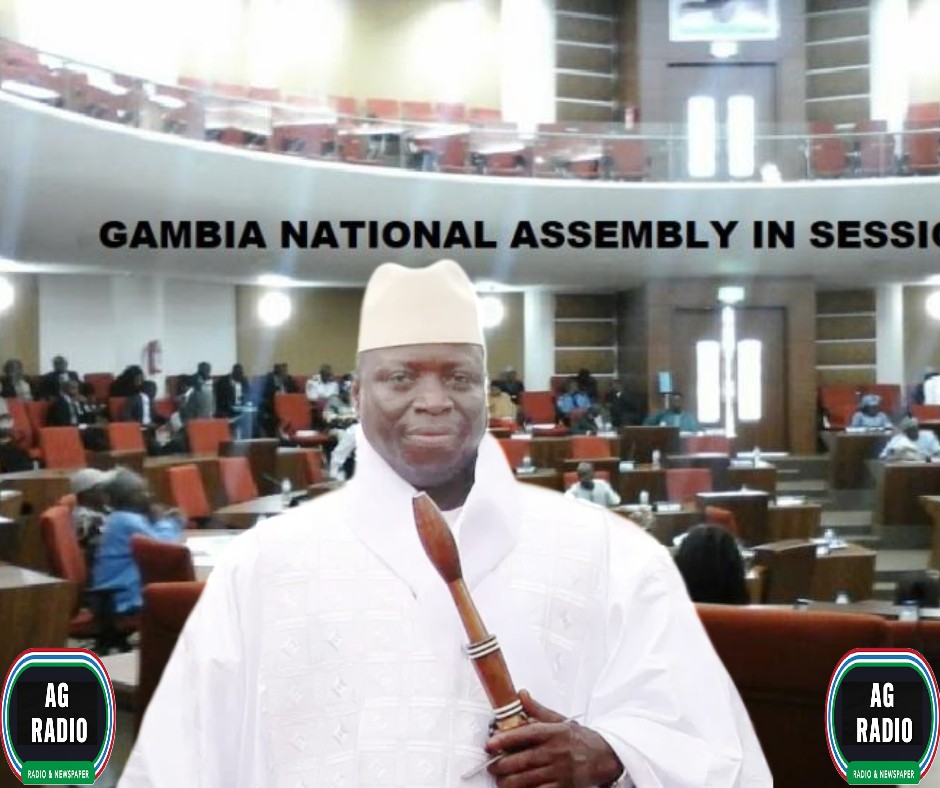
On Wednesday, Hon. Sainey Jawara’s motion regarding former President Yahya Jammeh’s comments sparked a contentious discussion among National Assembly members. The remarks, which were made to his fans via a WhatsApp audio message at a rally in Kanilai on October 26, 2025, stoked rumors that Jammeh would return to the country.
Lawmakers disagreed on whether the worries were mostly political or whether Jammeh’s return would pose a real security threat.
Bakau Constituency Representative Hon. Assan Touray urged a calm and polite approach. “I have the greatest respect for the former head of state, Jammeh, and I will be very much willing to welcome him back to the Gambia, but it has to be channeled through diplomacy,” he said.
On the other hand, Jeshwang’s Hon. Sheriff Sarr contended that any return had to resolve previous issues.
“Jammeh’s coming should be a blessing to the country. What do the victims want? They want justice; if it takes him years to come, now he wants to come back home. He said he was powerful; now he is no more powerful—those powers are twisted. Why should we even talk about it? My concern here is that Jammeh was the leader of this country, and there
are many things that were put on him; whether he was accused or whether they were real, we cannot determine. He must face justice and determine if he is guilty,” he said.
A few legislators dismissed the idea of a security risk. “I disagree with everyone who wants to paint a picture that Jammeh’s coming is an insecurity to this nation,” stated Hon. Musa Badjie, who represents the Tallinding Kunjang Constituency. Brikama North’s Alagie S. Darboe also implied that the worries were more political in nature than security-related. “It’s not a security fear, but perhaps a political one. He is welcome to visit and return to the Gambia; we are ready politically,” he declared.
Others underlined the necessity of aiding those harmed by Jammeh’s 22-year dictatorship. Upper Saloum representative Alagie Mbowe asked the assembly to allow the executive branch to take the required actions.
“If this National Assembly is serious about supporting the victims of the former president, I think now is the time for us to move a motion to clear the path for the executive to do the needful. Every Gambian here, one way or the other, you have been a victim,” he said.
Kantora’s majority leader, Billay G. Tunkara, advised against linking Jammeh to the APRC party. “Honorable Speaker, claiming that Jammeh is the founder of APRC is incredibly deceptive. He said, “Anyone who says, ‘If elected, I’m going to bring Jammeh, you have a claim to answer,’ is insulting to the followers.”
Foni Kansala’s representative, Almami Gibba, questioned the rationale behind Jammeh’s designation as a security risk. “Who is in charge of the Speaker of the National Assembly’s narrative if Jammeh poses a security threat today? Who is in charge as the National Assembly’s deputy speaker if Jammeh poses a security risk? He said, “The security apparatus that Jammeh had left is the same security apparatus that is here if he is a security threat.”
Deep disagreements about how to strike a balance between the political realities of a potential Jammeh return and justice for past crimes are reflected in the debate within the National Assembly and throughout Gambian society.