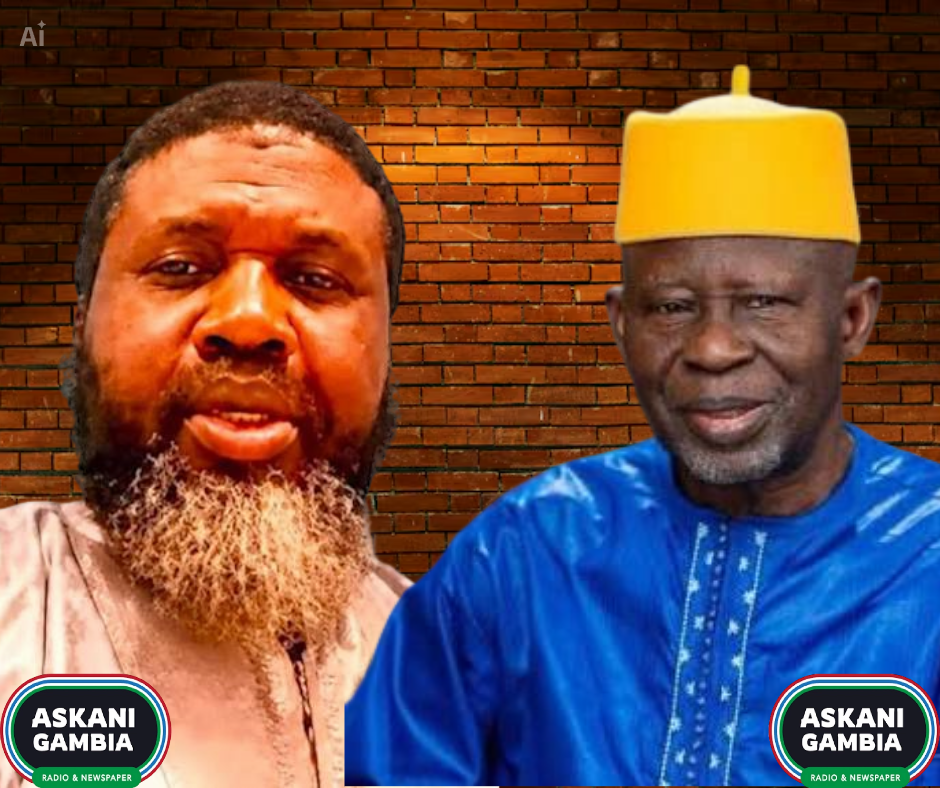
United Democratic Party (UDP) leader Ousainou Darboe has distanced his party from controversial remarks attributed to Imam Daaru Sanyang about Kanifing Municipal Council Mayor Talib Ahmed Bensouda, saying ethnic and ancestry-based attacks have no place in Gambian politics.
Speaking in an interview with Kerr Fatou, Darboe said Sanyang’s comments were his personal views and should not be attributed to the UDP.
Sanyang, who lives in Norway, recently faced criticism after an audio recording circulated in which he questioned Bensouda’s Gambian identity and made remarks about the mayor’s family and his wife’s background.
Darboe rejected the use of ancestry to question Bensouda’s identity.
“If you say the mayor’s wife is from Futa, my mother is from Futa,” Darboe said, adding that such remarks could not represent the UDP.
He also pointed to Bensouda’s family history, noting that his grandfather, Sir Dawda Jawara, led The Gambia to independence and became the country’s first president.
“No one should question the Gambian identity of Bensouda,” Darboe said.
The UDP leader urged Gambians to reject tribal politics, arguing that many citizens have ancestry extending beyond the communities where they live. He warned that using ethnicity, religion or family background as political weapons could deepen divisions and distract from national issues.
Darboe instructed UDP members and supporters to campaign on development, governance and the country’s future rather than identity politics.
He also rejected attempts to define Bensouda solely by his surname or ancestry, saying a person’s identity is shaped by the communities and families in which they are raised.
“He doesn’t have the attitude of a ‘Narr’; he has the attitude of a Mandinka and Wolof because of where he was born and the family he came from,” Darboe said.
The controversy comes as political activity intensifies ahead of the December 5 presidential election, with questions of ethnicity, ancestry and identity increasingly entering the campaign discourse.
Darboe’s comments represent a clear effort to separate the UDP from identity-based attacks and reinforce the party’s stated commitment to national unity ahead of the election.