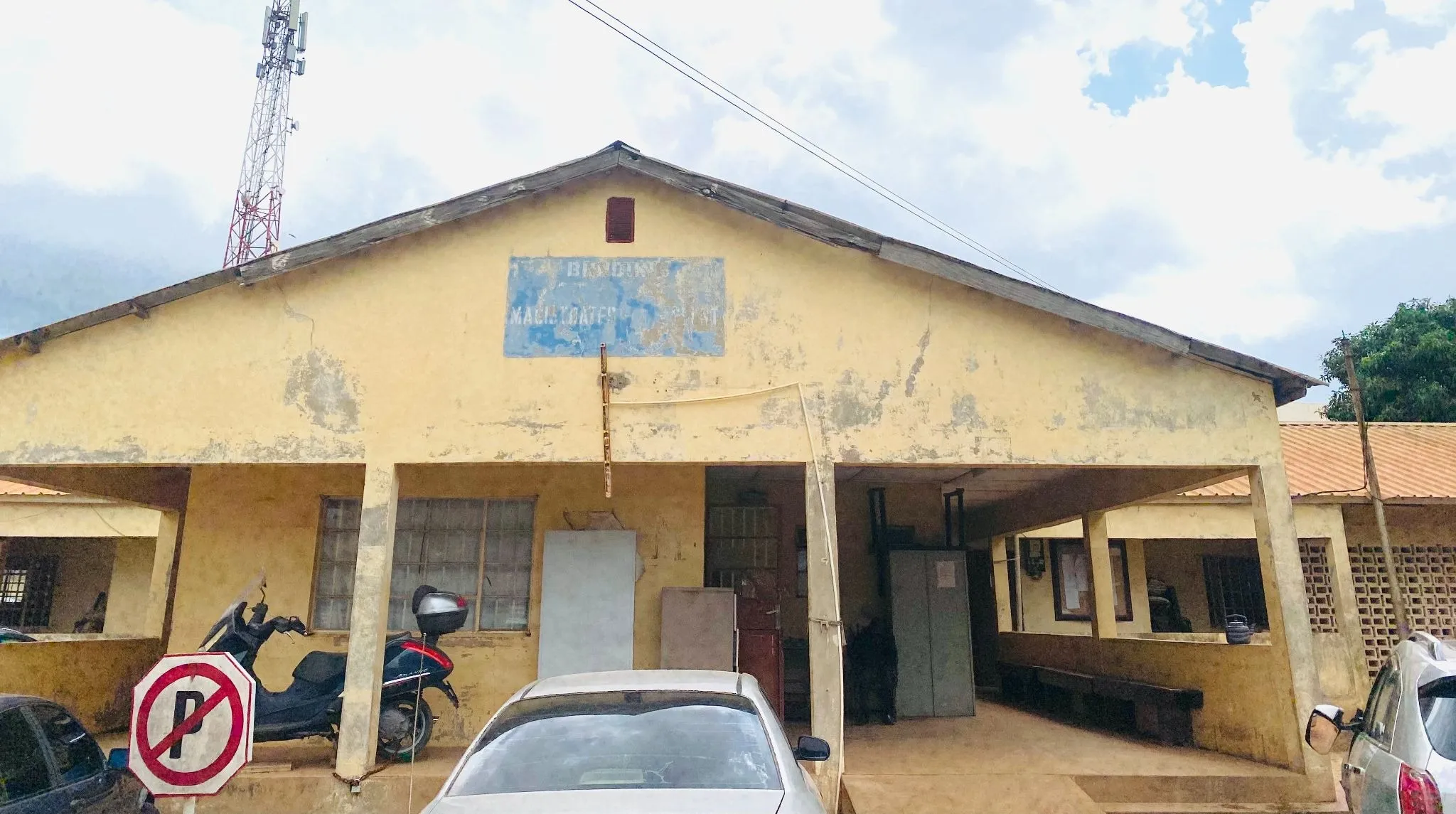

Magistrate A. Manneh rules prosecution is entitled to call the key witness in the corruption trial of the Finance Director and Treasury Manager of NAWEC.
Magistrate A. Manneh of the Magistrate Court has set aside an earlier order foreclosing the prosecution’s first witness in the corruption trial of two senior National Water and Electricity Company (NAWEC) officials, ruling that the interests of substantial justice demand that the witness be restored to the witness box to complete his testimony.
Magistrate A. Manneh delivered the ruling today, Wednesday, in the case of The State v. Cherno Omar Cham and Babou Secka after hearing a motion filed by the prosecution on 6th March 2026 seeking to reverse a foreclosure order made by the same court on 2nd March 2026.
Cherno Omar Cham, the Finance Director of NAWEC, and Babou Secka, its Treasury Manager, are charged with official corruption contrary to Section 86(a) of the Criminal Code and abuse of office contrary to Section 90 of the same Code.
According to the charge sheet filed by Principal State Counsel M.D. Mballow on 25th February 2025, the two accused persons are alleged to have corruptly solicited bribes ranging from GMD 5 to GMD 2 per metre from Dheeraj Vatnan, Manager of DIVYA Trading, on the 17th October 2024, in connection with a contract to supply NAWEC with 476,500 twisted connection cables.
The prosecution alleges that they were at the time conducting an official market survey and cable price negotiation on behalf of NAWEC, and that they abused their positions to solicit the payments in disregard of procurement procedures, acts said to be prejudicial to the interests of the national utility.
The prosecution called only one witness, Prosecution Witness One (PW1), since the charge was filed in February 2025. On 2nd March 2026, when the matter came before the court, State Counsel K. Drammeh offered no explanation for PW1’s absence beyond stating that the witness was unavailable, and raised no objection when defence counsel applied for foreclosure.
The court, acting on the record before it and the history of repeated adjournments caused by PW1’s non-attendance, granted the order foreclosing the witness.
Thereafter, the prosecution filed a motion supported by an affidavit deposed to by Fatou Waggeh, a Legal Clerk at the Ministry of Justice, arguing that PW1 is a material witness, that the foreclosure order was made without full consideration of the history of the case, and that setting it aside was in the interest of justice. The prosecution further contended that the proper procedure should have been for the court to issue a witness summons or bench warrant to compel attendance, rather than to foreclose the witness entirely.
Both accused persons filed affidavits in opposition. Counsel for the first accused, Mrs S. Twum, appearing with M.C. Joiner and L. Sanyang, argued that the prosecution had been indolent in the conduct of the trial, having called only one witness over an extended period despite numerous adjournments granted at its instance.
Counsel S. Twum submitted that the foreclosure order was properly made, that the affidavit in support of the motion misrepresented the facts, and that the court was functus officio and therefore lacked jurisdiction to revisit its earlier ruling. She urged the court to dismiss the application and cited five authorities, including Alhaji Momodou Jobe v. Alh. Abdoulie Dandeh Njie (2010-2012) GSCLR 88, United Democratic Party & Ors v. Attorney General & Anor (2002-2008) 1 GLR 331, and Nigerian Army v. Major Jacob Iyela (2008) 16 NWLR (Pt. 1118) 115.
Counsel for the second accused, L.A. Ceesay, with A.K. Sarr, similarly opposed the application, arguing that it constituted an abuse of court process, that the earlier ruling was final in nature, and that the court could not sit on appeal over its own decision.
Magistrate Manneh identified two issues for determination: whether the court was functus officio and lacked jurisdiction to entertain the application; and whether, in light of section 24 of the 1997 Constitution, the Criminal Procedure Act 2025, and the interests of justice, the foreclosure order ought to be set aside.
On the first issue, the magistrate Manneh held that the doctrine of functus officio applies to final judgments that determine the rights of parties, and not to interlocutory or procedural orders made in the course of ongoing proceedings.
Magistrate Manneh found that the foreclosure order of 2nd March 2026 neither determined the guilt or innocence of the accused persons nor finally disposed of the criminal proceedings, and was therefore an interlocutory order subject to the court’s inherent power to control its own proceedings and prevent injustice. Issue One was resolved in favour of the prosecution.
On the second issue, Magistrate Manneh acknowledged the validity of the defence’s concerns about prosecutorial delay and the history of adjournments. However, Magistrate Manneh held that those concerns had to be weighed against the wider interests of justice.
She noted that PW1 had already commenced giving evidence and had been subjected to partial cross-examination, and that maintaining the foreclosure order would permanently deprive the court of testimony from a witness already before it.
Magistrate Manneh drew on the Nigerian Supreme Court’s pronouncement in Bello v. Attorney-General of Oyo State (1986) 5 NWLR (Pt. 45) 828 that courts exist to do substantial justice, not to enforce technicalities.
Magistrate Manneh further reasoned that restoring PW1 to the witness box would enhance rather than diminish fairness, since the accused would still have the full opportunity to cross-examine the witness. By contrast, maintaining the foreclosure would risk the case being determined without the benefit of all relevant evidence.
Having resolved both issues in favour of the prosecution, Magistrate Manneh made the following orders: the foreclosure order of 2nd March 2026 is hereby set aside; PW1 is restored to the witness box for the continuation and completion of his testimony and cross-examination by the defence; the prosecution shall ensure the attendance of PW1 on the next adjourned date, failing which sanctions or consequential orders may be imposed; and the matter shall proceed expeditiously to safeguard the rights of all parties and avoid further delay.
Parties were advised that they retain the right to appeal against the ruling. The case adjourned to 28th July, 2026.