Since the 2021 presidential election, debate has intensified over the need for a political “third force” capable of challenging President Adama Barrow and veteran opposition leader Ousainou Darboe.
Supporters of the idea have argued that Gambian politics needs a new direction, with voters offered an alternative beyond what some describe as the traditional contest between Barrow and Darboe.
Although Coalition 2026 was not initially conceived specifically as a vehicle for a third force, recent developments suggest that it may be evolving into one.
When the coalition was launched, its primary objective was to unite the opposition under a single platform against the incumbent. However, weeks of negotiations exposed deep disagreements among opposition stakeholders.
The difficulties eventually resulted in the withdrawal of several registered political parties, leaving UNITE and APP-Sobeyaa as the principal registered parties associated with the coalition at one stage.
The situation became more complicated following the withdrawal of Essa Mbaye Faal’s APP-Sobeyaa, which cited concerns including alleged “delegate inducement” and disagreements over the ratification of a running mate.
The coalition’s convention was further disrupted when Mediation Committee Chairman Professor Yerro Mballow and former vice president Fatoumatta Jallow-Tambajang walked out after their proposal to postpone the proceedings by two weeks to investigate the allegations was rejected.
Despite the divisions, delegates proceeded with the convention and selected Kanifing Municipal Council Mayor and UNITE leader Talib Ahmed Bensouda as the coalition’s presidential candidate.
Since the convention, Coalition 2026 has sought to rebuild and broaden its ranks. Mballow and other stakeholders subsequently returned, while additional movements joined the coalition.
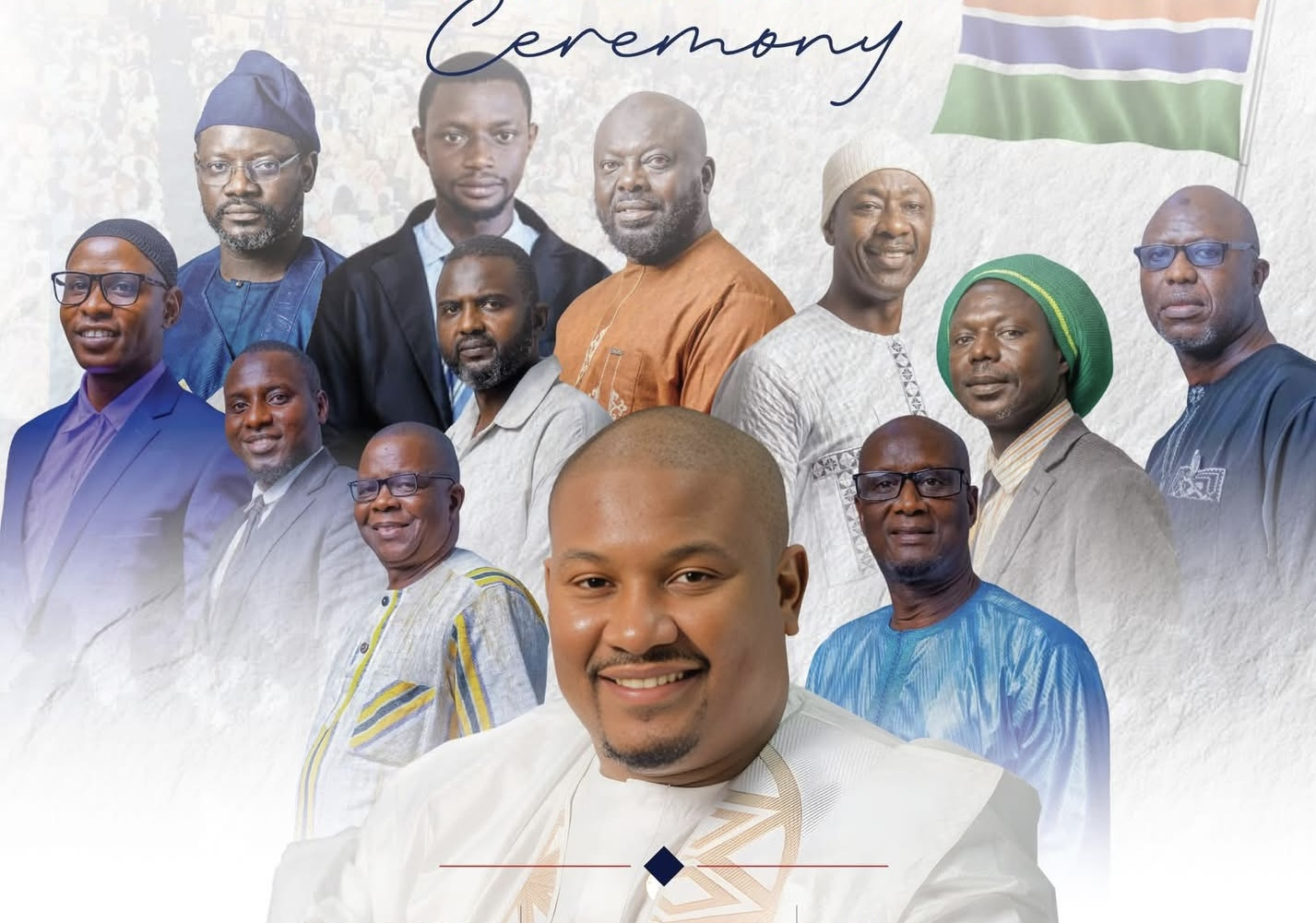
At a memorandum of understanding signing ceremony on August 20, the coalition presented a broader group of stakeholders, with UNITE emerging as its dominant political force.
UNITE’s Rapid Rise
Since its split from the United Democratic Party in late 2025, the United Movement for Change, now operating as UNITE, has rapidly established itself as one of the newer and more visible political forces in the country.
In less than a year, the party has built structures across several regions and increased its grassroots presence, activities and public profile.
Its growth appears to have been driven by organizational strategy, political mobilization and resource deployment. The party has also invested heavily in establishing grassroots structures and supporting its coordinators with the logistical resources needed to operate effectively.
UNITE has also placed considerable emphasis on political communication and branding.
Its use of social media and other digital platforms has enabled the party to communicate directly with supporters and promote its message across multiple channels. The strategy could prove particularly important in reaching younger Gambians, many of whom are increasingly engaged in politics through online platforms.
Bensouda Factor
Beyond the party itself, UNITE enters the presidential race with a candidate who has already secured two terms as mayor of Kanifing Municipal Council.
Bensouda’s political campaign has increasingly focused on his record at KMC, with the party presenting his tenure as an example of the type of governance he could offer at the national level.
His supporters highlight issues including accountability, integrity, development initiatives and his approach to municipal governance.
These factors appear to have contributed to the growth of Bensouda’s national political profile.
According to the latest Gambia Participates poll cited in the analysis, Bensouda’s projected support has increased substantially, rising from 2 percent in the previous year to 19 percent in the latest survey.
He nevertheless remains behind President Barrow, who recorded 32 percent, and Ousainou Darboe, who registered 25 percent.
For a relatively new entrant to national presidential politics, however, the increase represents a significant shift in the political landscape.
The Challenge Facing UNITE
Despite its growing profile, UNITE faces significant challenges.
The party remains relatively new to national electoral politics and has yet to demonstrate its ability to convert political momentum into votes across the country.
The December 5 presidential election will therefore provide the first major test of whether the party’s organizational structures, messaging and grassroots mobilization can translate into a nationwide electoral performance.
Political momentum can develop rapidly around a new movement or political personality, but sustaining that momentum over time is considerably more difficult.
The experience of the Gambia Democratic Congress (GDC) in 2016 offers a useful comparison. The party emerged as a major political force during that election before its momentum subsequently declined.
UNITE will therefore need to continue strengthening its structures, maintaining grassroots engagement and clearly articulating the policies and programmes it intends to implement if elected.
Coalition 2026’s Broader Stakeholders
Coalition 2026 differs from some previous opposition alliances because a significant portion of its membership consists of political movements and organizations that are either new or not yet registered as political parties.
Among the stakeholders associated with the coalition are the Patriotic Progressive Alliance (PPA), Pastef Gambia, Defending the Gambian Interest (DGI), People’s Right Party (PRP), Forward Gambia (FORGAM), National Reform Congress (NRC), Gambia Movement for Progress (GMP), Save The Gambia Movement (STGM), National Democratic Association (NDA), Patriotic Nationalist Platform (PNP) and Movement of National Unity (MONU).
Some of these organizations have limited national visibility, making their individual electoral strength difficult to assess.
However, dismissing them entirely could prove premature, particularly in an election in which relatively small voting blocs could influence the outcome.
Many of the movements have roots in specific communities and may command support among sections of the electorate who are dissatisfied with the established political parties.
Their collective contribution could therefore become important to Coalition 2026’s performance.
The movements may also provide the coalition with access to independent and undecided voters, a potentially crucial constituency in a closely contested presidential election.
NUP Alliance
Although the National Unity Party (NUP) is not an official member of Coalition 2026, its alliance with UNITE could nevertheless strengthen the coalition’s electoral prospects.
NUP remains a relatively small political party but has experience participating in presidential elections. In 2021, it secured approximately 1 percent of the national vote.
The party has since undergone a leadership change and increased its political activities.
Its experience, combined with UNITE’s growing organizational structure and Bensouda’s rising national profile, could give Coalition 2026 an additional platform as it seeks to establish itself as a credible alternative in the 2026 presidential contest.
Ultimately, the December 5 election will determine whether Coalition 2026 can transform the current political momentum surrounding UNITE and Bensouda into a genuine third force capable of disrupting the longstanding dominance of the major political camps.
For now, the coalition has succeeded in putting a new political possibility on the table: a presidential contest that extends beyond the traditional Barrow-Darboe rivalry.