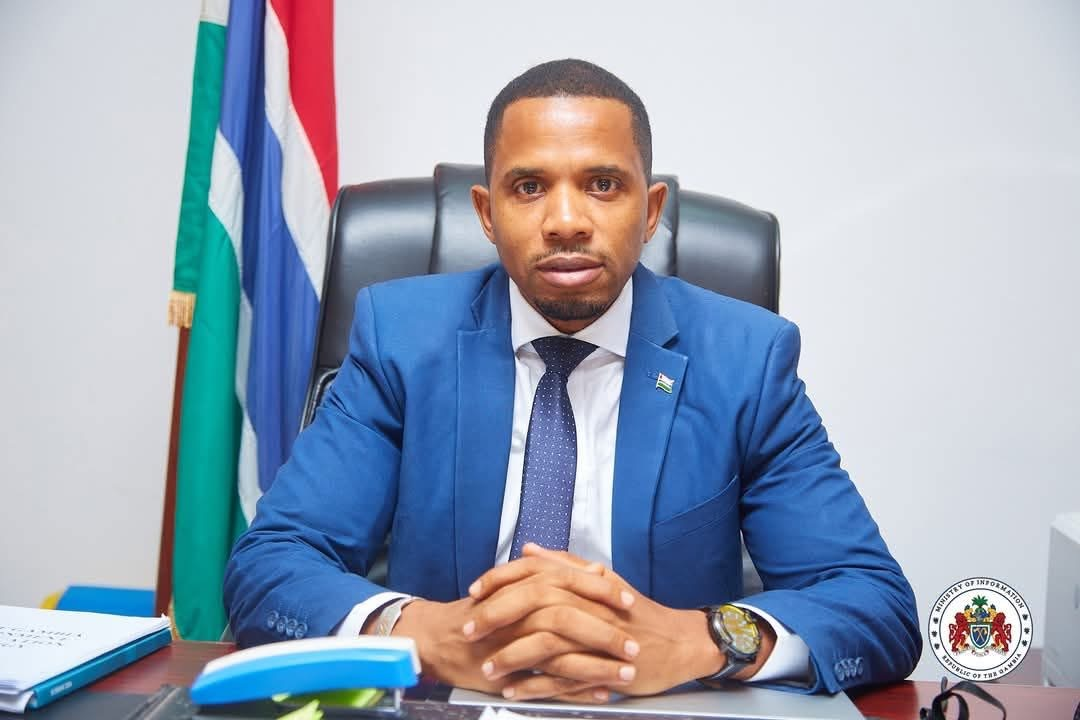
Information, Media and Broadcasting Services Minister Dr. Ismaila Ceesay has pushed back against suggestions that The Gambia’s worsening electricity crisis could cost President Adama Barrow and the ruling National People’s Party (NPP)-led alliance the December 5 presidential election.
Speaking on QTV, Dr. Ceesay defended the government’s record and argued that voters would consider the administration’s wider performance rather than allow the electricity crisis to determine their electoral choice.
“Of all the investments and achievements the president has done, I don’t think a single challenge should really cost us the elections,” Dr. Ceesay said. “Gambians are smarter than that.”
The minister’s comments come at a politically sensitive time, with prolonged electricity outages generating public frustration, protests and renewed criticism of the government’s management of the National Water and Electricity Company (NAWEC).
While acknowledging the seriousness of the crisis, Dr. Ceesay argued that the Barrow administration had significantly expanded electricity access, particularly in communities that had historically remained without power.
“Gambians know, for the first time in the history of this country, we have stable, guaranteed electricity in this country,” he said.
Dr. Ceesay maintained that voters should also consider the government’s broader development record, pointing to investments in infrastructure and public services.
He cited Banjul as an example of what he described as significant development under President Barrow and highlighted projects in rural communities, including Kabada, where he said residents had gained access to roads, health facilities, schools, ambulances and electricity after years of limited services.
Nianija and other previously underserved communities were also cited as examples of areas that, according to the minister, had benefited from government investment.
POWER CRISIS BECOMES ELECTION ISSUE
The minister’s defense comes as electricity increasingly takes centre stage in the political debate ahead of the December election.
Opposition politicians and activists have criticized the government over recurring and prolonged outages, while recent demonstrations have brought public anger over electricity supply into the streets.
Dr. Ceesay argued, however, that voters understood that governments inevitably faced difficult challenges and would assess how the administration responded to them.
He said President Barrow had accepted responsibility for the electricity situation, apologized to Gambians and taken measures intended to improve power supply.
The minister also invoked The Gambia’s history of limited electricity access, noting that many citizens had lived without reliable power for decades while continuing to participate in elections.
His argument places the electricity crisis within a wider electoral question: whether voters will primarily judge the Barrow administration by the recent deterioration in power supply or weigh the crisis against its broader record of infrastructure and service delivery.
With the December 5 presidential election approaching, electricity has emerged as one of the issues likely to shape the political debate, putting the government under increasing pressure to demonstrate that its efforts to address the crisis can translate into more reliable power for households and businesses.