

The enduring legacy of commissions of inquiry Part 1

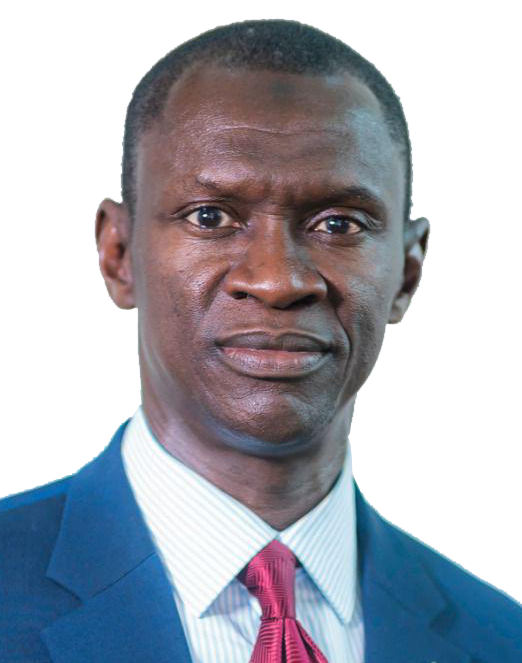
By Omar F M’Bai
Few constitutional mechanisms shape the institutional memory of a nation more profoundly than a commission of inquiry. Properly understood, such commissions are not merely instruments for establishing facts, apportioning responsibility, or recommending sanctions. They are constitutional mirrors through which nations critically examine the quality of their governance, the resilience of their public institutions, and the integrity of those entrusted with the stewardship of public resources.
The conclusion of the various commissions of inquiry in The Gambia marks a significant chapter in the country’s democratic and governance journey. Public discourse has understandably focused on the findings, recommendations, accountability measures and possible legal consequences arising from these inquiries. While these outcomes are important, they should not obscure a more enduring and transformative lesson.
The greatest value of any commission of Inquiry lies not in the punishment it may recommend, but in the institutional reforms it inspires.
History demonstrates that nations do not become stronger merely by exposing past failures. They become stronger by cultivating the wisdom, courage and institutional discipline to learn from those failures and to implement reforms that reduce the likelihood of their recurrence. Indeed, the world’s most respected institutions are not those that have never experienced governance failures. Rather, they are institutions that have responded to failure with honesty, humility and an undeterred commitment to continuous improvement.
It is therefore essential that the findings of The Gambia’s various commissions of inquiry be viewed not only through the prism of accountability for past conduct but also through the broader and more enduring objective of institutional renewal. Their true legacy should be measured not by the number of individuals held accountable, but by the extent to which they contribute to building stronger public institutions, improving governance frameworks, enhancing financial stewardship and restoring public confidence in the administration of public affairs.
This distinction is fundamental. Accountability looks backwards. Governance looks forwards.
A mature democracy must embrace both.
One ensures that misconduct is addressed. The other ensures that similar misconduct becomes progressively less likely. The ultimate purpose of governance is therefore not merely to identify failures after they occur but to establish systems, cultures and institutions capable of preventing those failures in the first place. This is where the discipline of financial governance assumes critical importance.


Unfortunately, financial governance is frequently misunderstood. Many associate it exclusively with accounting, budgeting, auditing or financial reporting. While these disciplines are indispensable components of sound financial management, they represent only part of a much broader governance architecture.
Financial governance encompasses the policies, systems, internal controls, leadership behaviours, ethical standards, oversight mechanisms, accountability structures, risk management frameworks and organisational culture that collectively determine how financial resources are acquired, managed, protected and ultimately accounted for.
It is the invisible framework that determines whether public institutions command confidence or invite suspicion.
Whether governments inspire trust or cynicism.
Whether investors perceive opportunity or risk.
Whether development partners view institutions as credible custodians of public resources.
Whether citizens believe that those exercising public authority are acting as faithful stewards rather than temporary custodians of power.
At its core, financial governance is not about numbers.
It is about stewardship.
It is about accountability.
It is about institutional integrity.
Above all, it is about trust.
Trust is the invisible currency upon which every successful institution depends.
Citizens entrust governments with public resources collected through taxation.
Investors entrust corporations with their capital.
Depositors entrust financial institutions with their savings.
Shareholders entrust boards with protecting their investments.
Development partners entrust governments with development assistance intended to improve the lives of ordinary people.
Future generations entrust today’s leaders with preserving institutions that they themselves will one day inherit.
Without trust, no governance framework, however sophisticated, can function effectively.
Without trust, transparency becomes performative.
Without trust, accountability becomes selective.
Without trust, even the strongest legal and regulatory frameworks gradually lose legitimacy.
As Warren Buffett said: “It takes twenty years to build a reputation and five minutes to ruin it.”
Although directed at business, the principle applies with equal force to governments, regulators, public institutions and indeed entire nations. Institutional credibility is accumulated patiently over many years through consistent ethical conduct, professional competence and sound governance. Yet it can be eroded with alarming speed by a single episode of misconduct, weak oversight or failed leadership.
Rebuilding lost confidence is invariably more difficult than preserving it.
For this reason, governance should never be viewed as a compliance exercise or an administrative obligation. It is a strategic national asset. Strong governance strengthens investor confidence, promotes economic resilience, safeguards public resources, reinforces democratic legitimacy and contributes directly to sustainable national development.
International experience reinforces this reality. The world’s most resilient economies and most trusted public institutions share one defining characteristic: they are underpinned by robust systems of governance rather than dependence upon exceptional individuals. Effective institutions do not emerge by accident. They are deliberately built through ethical leadership, sound legal frameworks, effective oversight, prudent financial management and a culture that prizes accountability over convenience.
This philosophy is reflected in internationally recognised governance standards, including the principles promoted by the Organisation for Economic Co-operation and Development, the Committee of Sponsoring Organisations of the Treadway Commission Internal Control Framework, the standards of the International Organisation of Supreme Audit Institutions and the governance guidance issued by the International Federation of Accountants. While developed in different contexts, these frameworks are united by a common philosophy: institutions flourish where accountability is embedded, transparency is valued, risks are effectively managed and leadership is exercised as a public trust rather than a personal privilege.
Ultimately, this is the enduring lesson that should emerge from The Gambia’s Commissions of Inquiry. Their greatest contribution will not lie solely in documenting what went wrong, but in inspiring a national commitment to ensuring that the institutional conditions which permitted those failures are fundamentally and permanently strengthened.
For nations are not remembered by the crises they encounter.
They are remembered by the institutions they build in response to those crises.
About the author
Omar FaFa M’Bai is a legal practitioner, a governance advocate, and a parent based in Dubai, UAE. He writes regularly on institutional integrity, leadership, and education across Africa, Middle East, and Asia.
Author’s reflection
This article is more than an academic reflection on financial governance and institutional integrity. It is also a deeply personal tribute to values that I witnessed throughout my life.
My late father, Alhaji FaFa Edrissa M’Bai, believed that public office was a sacred trust and that no nation could achieve lasting prosperity without strong institutions, accountability and respect for the rule of law.
At a time when strengthening financial discipline and promoting institutional accountability required exceptional courage, he championed reforms, including commissions of inquiry, in the belief that public confidence in government could only be sustained through transparency and accountability. Those convictions were not without personal cost. His commitment to principle attracted determined opposition from powerful interests resistant to reform, The Mafia. Although those struggles ultimately resulted in his departure from public office, they never diminished his belief that institutions must always be stronger than individuals and that integrity should never be sacrificed for convenience or political expediency.
Time has a remarkable way of revealing truth. Positions of authority are temporary. Public opinion evolves. Those who once opposed reform may later acknowledge its necessity. Yet principles endure. Integrity endures. Service endures. Legacy endures.
As I reflected on the themes explored in this article, I was reminded that governance is ultimately about character. It is about doing what is right, even when doing so comes at personal cost. It is about leaving institutions stronger than we found them. Those were principles my father lived by, and they remain the values that continue to inspire my own writing on governance, leadership and institutional integrity.
When my father passed away during the blessed month of Ramadan, I expressed my reflections in a poem. It remains a personal reminder that while truth may be challenged and those who defend it may endure hardship, a life dedicated to principle ultimately outlives both adversity and opposition.
The Mafia’s plan failed, because purpose cannot be buried.
Truth outlives power.
Integrity outlives office.
And a life lived in faithful service to Ya Allah (SWT) and country can never be crucified.
May Ya Allah (SWT) grant him Al-Jannahtul Firdaws and accept his lifelong service to The Gambia as an act of enduring charity. Ameen Yarab