
President Adama Barrow has once again praised Saudi Arabia for its development partnership with The Gambia, as the government moves to secure financing for the final phase of the 50-kilometre OIC road projects.
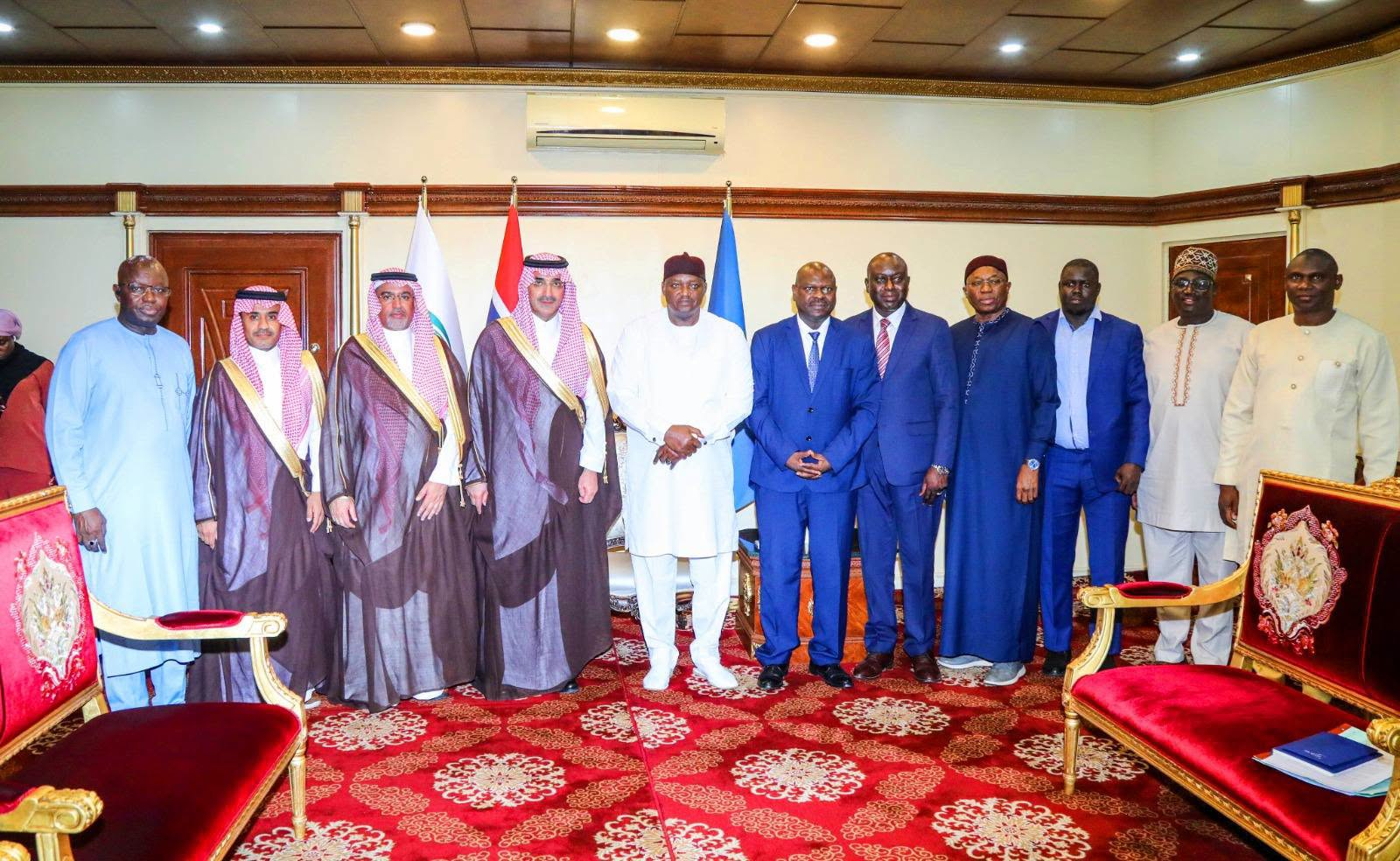
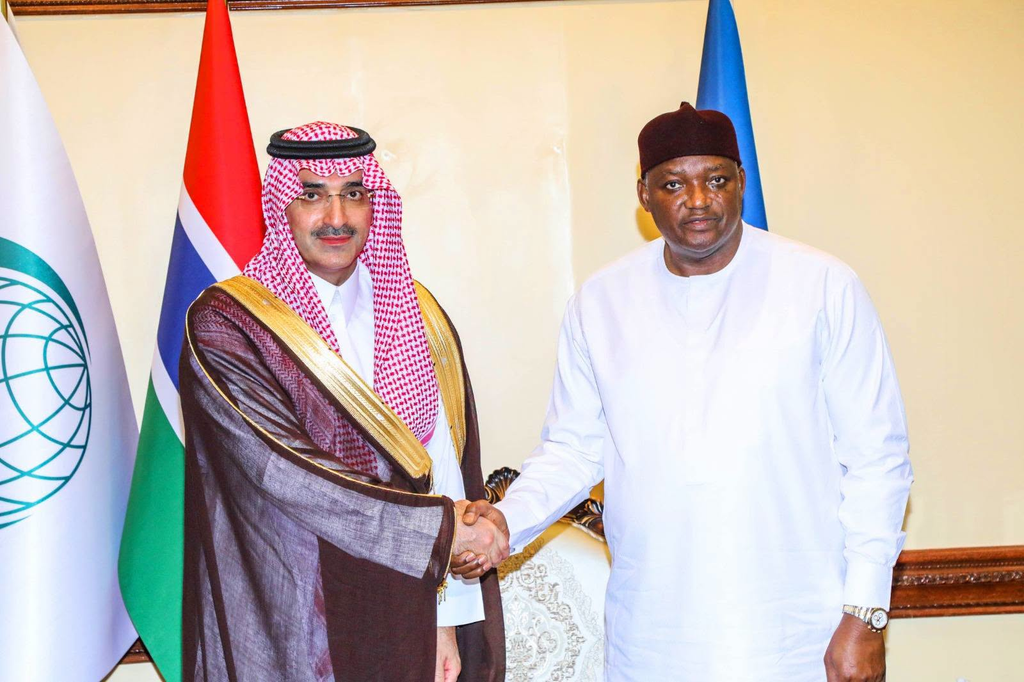
President Barrow received Saudi Fund for Development (SFD) Chief Executive Officer Sultan Abdourahman Almarshad and his delegation at State House, where discussions centred on the completion of the OIC-funded road programme and possible financing for a range of new projects.
The visit was presented by the government as another sign of the strong relationship between Banjul and Riyadh. But beneath the language of development cooperation lies a more difficult question: how long can The Gambia continue to depend on borrowed money and external financing to fund its development ambitions?
The government has frequently presented foreign-funded infrastructure projects as evidence of its development record. Roads, drainage systems, telecommunications infrastructure and other projects are undoubtedly important. Yet the growing reliance on loans and external development financing raises concerns about the country’s ability to finance its own priorities from domestic resources.
Development Through Borrowing
During the meeting, President Barrow described the Saudi Fund as a “reliable partner” and highlighted the impact of the OIC roads across the country.
He argued that the roads have reduced travel times, eased congestion and helped stimulate investment along the newly developed corridors.
There is little doubt that improved roads can produce significant economic benefits. Better connectivity can reduce transportation costs, improve access to markets and services and encourage private investment.
But the government’s development narrative often stops at the construction itself.
The more important question is how much these projects cost, how they are being financed, what repayment obligations they create and whether the economic returns will be sufficient to justify the debt being accumulated.
A road is an asset, but a loan used to construct that road remains a liability until it is repaid.
The Borrowing Question
The latest engagement with the Saudi Fund comes against a backdrop in which The Gambia continues to rely heavily on development partners to finance major infrastructure programmes.
Instead of demonstrating that the government has built sufficient fiscal space to fund a greater share of national development from domestic revenues, successive announcements continue to emphasise external partners, loans and development financing.
This raises a fundamental policy question: is The Gambia developing a self-sustaining economy, or is it simply expanding its infrastructure through increasingly expensive external financing?
The distinction matters.
Government officials can point to kilometres of roads completed, new hotels, buildings and other infrastructure. But citizens ultimately have to consider the other side of the balance sheet — debt repayment, interest costs and the opportunity cost of borrowing.
Every dalasi committed to servicing debt is a dalasi that cannot simultaneously be spent on health, education, agriculture, social protection or other domestic priorities.
Saudi Support Expands Beyond Roads
The Saudi delegation reportedly expressed interest in receiving proposals for additional projects, including modern drainage systems, payment systems, submarine cables, telemedicine and sports infrastructure.
These are potentially valuable areas of investment.
However, the government’s response should not simply be to produce another list of projects for external financing.
The critical issue should be which projects can generate economic returns, which should be funded through grants, which can be commercially financed and which The Gambia can realistically afford to borrow for.
There is a danger that governments become preoccupied with securing financing rather than determining whether a project is economically sustainable in the first place.
Barrow’s Road Figures Need Scrutiny
President Barrow also claimed that The Gambia had only about 800 kilometres of paved roads before 2017 and that at least 1,500 kilometres of tarred roads have been constructed under his administration.
He further said development approval had been granted for another 1,200 kilometres beyond 2026.
These are significant claims and, if independently verified, would represent a major expansion of the country’s road network.
But figures of this magnitude deserve greater transparency.
The public should be able to see which roads have been completed, their individual costs, their sources of financing, the terms of the loans and the total outstanding liabilities associated with them.
It is not enough for government to measure development in kilometres of asphalt.
Citizens also need to know the financial price attached to every kilometre.
Who Ultimately Pays?
The government’s celebration of international partnerships is understandable. Countries such as The Gambia cannot finance every major infrastructure project entirely from domestic revenues.
Development partners have an important role to play.
But partnership should not become a euphemism for permanent financial dependence.
The Gambia’s economic challenge is not simply a shortage of roads or infrastructure. It is also a shortage of fiscal capacity.
If government continues borrowing to build while domestic revenue remains insufficient to finance basic public expenditure without substantial external support, the country risks creating a cycle in which new infrastructure is accompanied by new debt.
The question therefore should not be whether Saudi Arabia is a good development partner. Clearly, the relationship has produced projects that the government considers valuable.
The harder question is whether The Gambia is getting itself into a position where it can eventually finance more of its own development rather than repeatedly returning to foreign lenders whenever a major project is proposed.
Beyond the Politics of Ribbon-Cutting
Infrastructure projects are politically attractive because they produce visible results.
A newly paved road can be photographed. A bridge can be inaugurated. A new building can be opened with speeches and ceremonies.
Debt, however, is less visible.
It appears later in budget documents, debt-servicing obligations and reduced fiscal space.
That is why the government’s development record should not be judged solely by the number of roads constructed or the number of foreign-funded projects announced.
It should also be judged by the quality of the contracts, the cost of borrowing, the economic returns generated, the transparency of procurement and, most importantly, whether future generations will inherit productive assets or simply inherit the bills used to pay for them.
Saudi Arabia’s willingness to support The Gambia may be welcomed. But the government must also answer a question that goes beyond diplomacy and development ceremonies:
At what point does a country stop borrowing for development and start developing the capacity to pay for development itself?