For 34 years, I have worked in the media, government, international organizations, and civil society, where I have spent most of my professional life. Since beginning my career in 1992, I have participated in countless meetings, conferences, workshops, training programs, lavish ceremonies, and policy engagements across the Gambia and around the world.
From the State House in Banjul to Basse Area Council, from village outreach programs to international conferences, I have sat in boardrooms, classrooms, hotels, and community centers discussing governance, development, public policy, capacity building, monitoring, evaluation, and reform. Like many professionals in these spaces, I received hefty sitting allowances, per diems, fuel coupons, phone credits, gift bags, and other incentives. The common objective of all these engagements was ostensibly national development.
Today, after more than three decades of such work, I have paused to reflect on what has truly been achieved.
One uncomfortable reality stands out. The greatest success story has been the success of individuals, including myself, rather than the success of the country.
Personally, I have been able to build a home and provide a decent life for my family. Many of my colleagues have also succeeded in far greater ways. Some became ministers, managing directors, ambassadors, CEOs, executive directors, and senior public officials. There is nothing wrong with personal success. This is not an indictment of anyone. It is simply an observation of reality.
But when I look around the country, I see a different picture.
I see widespread poverty and deprivation. I see poor roads, poor and inadequate infrastructure, and struggling communities. I visit hospitals, courthouses, police stations, schools, and local government offices and find dilapidated facilities, poor working conditions, and citizens enduring endless frustrations simply to access basic services.
At the same time, I remember the billions of dalasi approved in national budgets. I recall the millions of dollars received in grants and loans. I remember the countless development projects that have been launched over the years. I see taxes increasing while public services remain inadequate. And I ask myself a simple question: Where has all the money gone?
How can a country of barely three million people, occupying just 11,000 square kilometres of largely flat and fertile land, with a river running through its heart, still be burdened by such widespread poverty, deprivation, frustration, and hopelessness in 2026?
Whenever I travel to Boraba and beyond, I look at the communities along the highway and feel a deep sense of guilt and shame. In those villages, I see the consequences of a system in which people like myself spent decades attending meetings, producing reports, drafting policies, and receiving incentives in the name of development, while the masses continued to live in conditions that no human being should accept. The land is fertile. The climate is favorable. There are no significant natural barriers to development. Yet the Gambia remains classified among the world’s heavily indebted poor countries.
What is the problem? It is certainly not a lack of knowledge.
The people who have managed our institutions of governance and development since independence are well-educated, experienced, and well-exposed. They cannot claim ignorance. The country has produced countless policies, strategies, laws, and development plans. Many of them are sound documents that, if faithfully implemented, would have transformed our society.
In 1996, even the tinpot dictator Yaya Jammeh launched Vision 2020, whose objective was:
“To transform The Gambia into a financial centre, a tourist paradise, a trading, export-oriented agricultural and manufacturing nation, thriving on free market policies and a vibrant private sector, sustained by a well-educated, trained, skilled, healthy, self-reliant and enterprising population and guaranteeing a well-balanced ecosystem and a decent standard of living for one and all under a system of government based on the consent of the citizenry.”
Yet by 2017, three years before the target date, poverty, corruption, indebtedness, and dictatorship had deepened rather than diminished. Why?
After years of reflection, I have come to a simple conclusion. The solution to the Gambia’s problems does not lie in creating another law, another institution, another policy, or securing another loan or grant. If workshops, seminars, study tours, conferences, and beautifully written reports could develop a country, the Gambia would already rival Singapore.
The missing ingredient is accountability. That is the fundamental deficit. Why is the Gambia still not energy sovereign? Why are we not food sovereign? Why are we not technologically advanced? Why do our health and education systems remain inadequate? Why do our public institutions consistently underperform?
The answer is not a lack of resources or capacity. The answer is the absence of consequences.
Public officials and institutions rarely pay a price for corruption, abuse of office, inefficiency, negligence, or failure. Equally, citizens have too often failed to organize effectively and consistently to demand accountability.
Throughout my career, I have met countless public servants, development practitioners, and civil society actors who genuinely wanted the best for this country. I believe most people enter public service with good intentions. I certainly did. But good intentions are not enough.
Without accountability, good intentions become excuses. Without accountability, laws become mere words on paper. Without accountability, development becomes an industry rather than a mission. This realization is precisely why I founded the Edward Francis Small Centre for Rights and Justice (EFSCRJ).
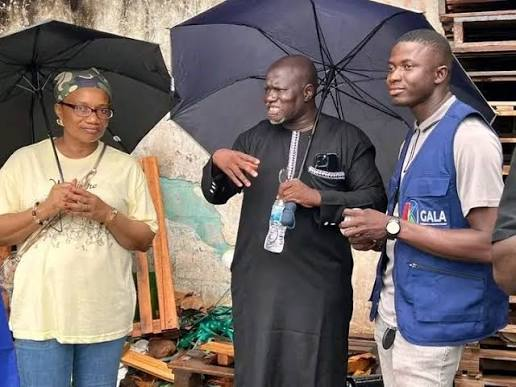
EFSCRJ is, first and foremost, an activist organization. Its central mission is accountability because accountability is the foundation upon which transparency, human rights, rule of law, and effective public service delivery rest. Today, I am encouraged not only because EFSCRJ exists, but because organizations such as GALA, Team Gom Sa Bopa, and other citizen movements have emerged with a similar conviction.
Their path is the correct path. Their path is the path of activism. The Gambia will not be transformed by politicians alone. Nor will it be transformed by technocrats, donors, consultants, or elites who are comfortable within the existing system. Some benefit from it. Others have learned to survive within it. Many recognize its failures but are unwilling or afraid to sacrifice their privileges, comforts, relationships, and status. They complain in corners, but that’s all.
As Amílcar Cabral called it, they are unwilling to commit “class suicide.” Yet every society that has achieved meaningful transformation did so because ordinary citizens organized, resisted, protested, and demanded accountability. That is why I believe the future belongs to activists.
To those who gain no personal benefit. To those who risk arrest, detention, harassment, imprisonment, and even death. To those willing to be insulted, isolated, denied opportunities, and labelled troublemakers simply because they insist on justice. I stand with them.
Long ago, I made peace with the possibility of losing privileges, comforts, and associations in pursuit of the public interest. More members of our elite and middle class must do the same. If they do, the Gambia’s transformation will come far sooner than many imagine. That is precisely what Edward Francis Small did in 1919 when he challenged colonial authority despite the risks. More than a century later, his legacy remains alive because he chose principle over comfort.
The same choice confronts us today. Until then, I salute GALA and its allies.
The road they are taking is neither new nor radical. It is the same path that has expanded freedom, secured justice, defeated oppression, and transformed societies throughout history.
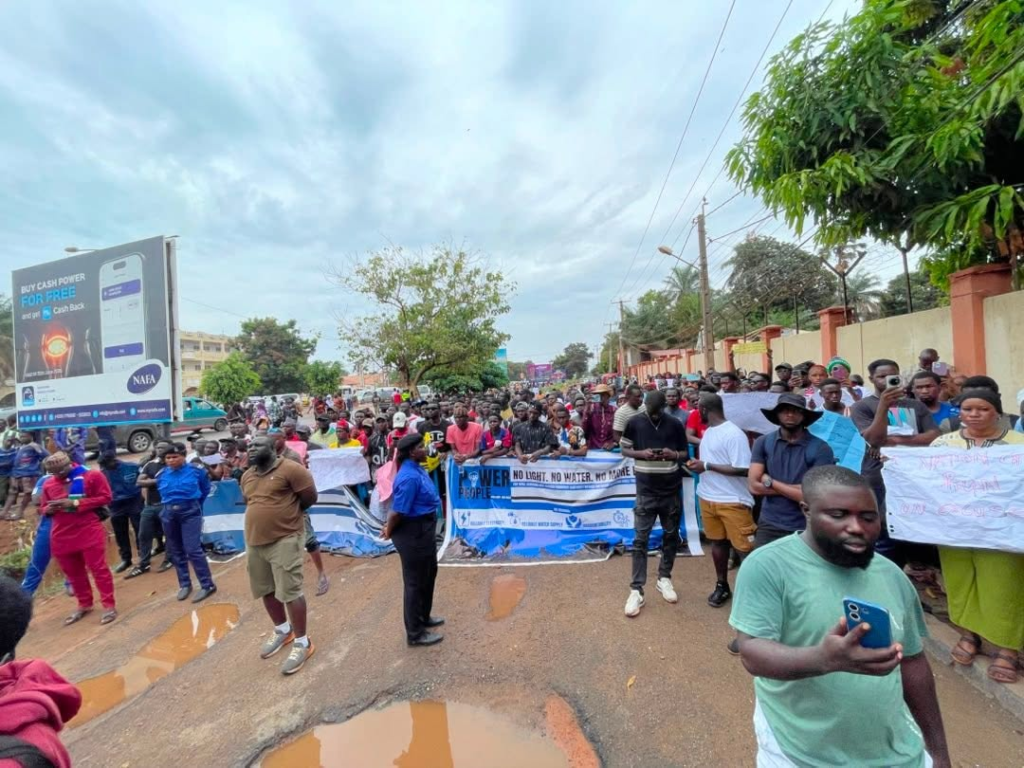
Peaceful protest remains the most powerful democratic tool available to ordinary citizens. It is through organized civic action that accountability is demanded, rights are protected, and nations progress.
For The Gambia, Our Homeland.