
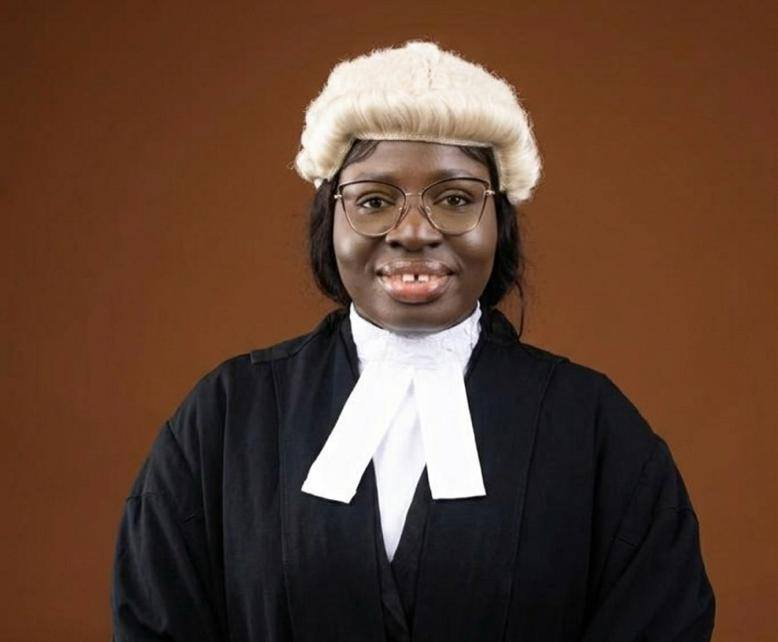
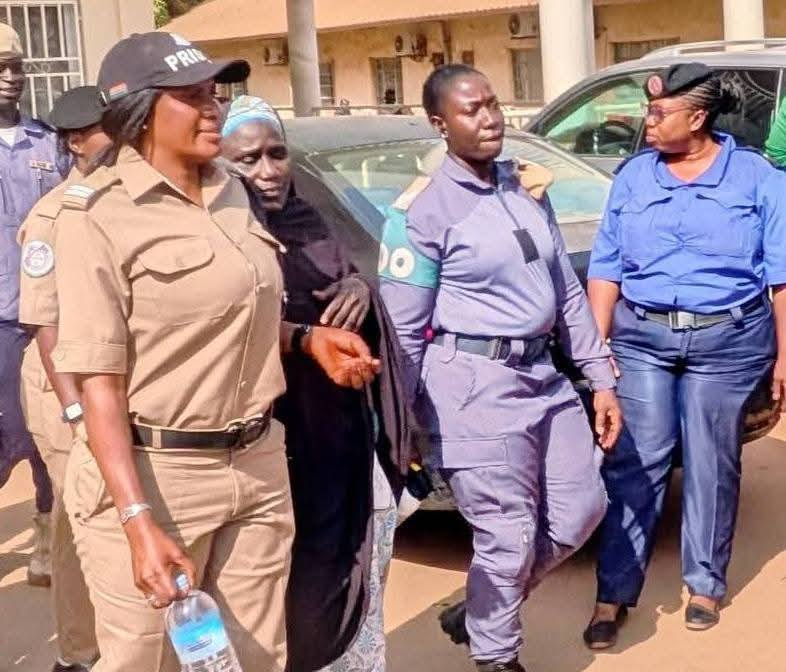
Justice I. Janneh of the Bundung High Court has acquitted and discharged three women accused of performing a female circumcision/female genital mutilation (FGM) procedure that allegedly led to the death of a one-month-old infant.
The defendants Fatou Camara (1st Accused), Hawa Conteh (2nd Accused), and Oumie Sawaneh (3rd Accused) walked free today, after the court upheld a “No Case to Answer” submission. Justice Janneh ruled that the prosecution had failed to establish a prima facie case, rendering a defence unnecessary.
The trio faced four counts built on the allegation that on September 8, 2025, at Wellingara, the accused persons conspired and performed FGM on Baby Sarjo Conteh, resulting in her death from external haemorrhage.
The state arraigned Fatou Camara (1st Accused) charged with conspiracy and performing the procedure, and Hawa Conteh (2nd Accused) charged as an accomplice for requesting and providing means for the procedure. and Oumie Sawaneh (3rd Accused), the child’s mother, charged as an accomplice for failing to inform authorities. Count 1 (All Accused) conspiracy to commit a felony.
To prove these charges, the state called 11 witnesses, primarily police officers and medical personnel. Key evidence included photographs of the deceased (Exhibits A1–A4), hospital admission forms (Exhibits B and C), and an autopsy report (Exhibit D).
Following the close of the prosecution’s case, defence counsels Kaddijatou Jallow and Fakebba Darboe of Dabanani chambers on behalf of Senior Counsel L.J. Darboe filed a submission under Section 245 of the Criminal Procedure Act 2025. They argued that the state failed to establish a prima facie case meaning the evidence was so “weak, discredited, or insufficient” that no reasonable tribunal could convict on it.
In their No Case Submission, the testimonies of all 11 witnesses were dismantled by defence counsel K. Jallow and Fakebba Darboe.
They highlighted that Police Testimonies (PW1–PW3) Sergeant Amie Joof and Sub-Inspector Zainab Sonko admitted their knowledge of the incident was based on information from superiors or the mother of the deceased, rather than direct observation of the act.
Officer Omar Joof (PW3) revealed he heard about the case from a businessman friend. (PW5–PW6) The officers testified only to taking photographs or making arrests, providing no substantive link between the accused and the alleged crime.
The most damaging blow to the state’s case was the court’s rejection of the “cautionary and voluntary statements” of the 1st and 3rd accused persons.
Investigating officer Mam Fatou Saidy (PW4) admitted that an independent witness was not present when the statements were initially recorded.
Justice Janneh threw the evidence for non-compliance with the Evidence Act which requires an independent witness during the actual recording and signing to ensure the statements are voluntary.
The defence counsels in their submission successfully argued that the state’s medical exhibits were internally contradictory and inconclusive
Exhibit B (Brought-In-Dead Form) it record listed the cause of death as “unknown” and makes no mention of FGM or genital cutting, Exhibit C (Triage Form) while mentioning “circumcision,” the defence noted that a history provided by the parents, not a clinical medical finding, making it inadmissible hearsay.
Exhibit D (Autopsy Report) Pathologist Professor Ogun (PW11) admitted under cross-examination that he could not identify the instrument used or even confirm the exact cause of the lacerations. He acknowledged that his conclusion on “genital cutting” was influenced by the police narrative provided to him before the examination.
In her ruling, Justice Janneh sharply criticised the investigative process. She observed that the failure to comply with statutory safeguards “deprived the Court of potentially critical evidence”.
“Investigative lapses of this nature not only weaken the prosecution’s case but also undermine the administration of justice,” Justice Janneh stated. She concluded that the evidence was “so weak, discredited, or insufficient” that no reasonable tribunal could ground a conviction on it.
Invoking Section 245 of the Criminal Procedure Act 2025, Justice I. Janneh upheld the “no case” submission and ordered the immediate discharge of all three women. Justice I. Janneh reminded the prosecution of its right to appeal the decision.