The Supreme Court has declared that the Minister of Finance and Economic Affairs violated the Constitution by failing to submit the 2025 Budget Estimates within the mandatory timeframe.
However, the Supreme Court ruled that the violation did not prevent the National Assembly from considering and approving the budget.
The case was filed by civil society actors Sait Matty Jaw, Madi Jobarteh, Coach-Pasamba Jow and Baboucarr Sufism Nyang Al-Tijani represented by Counsel A. Fatty and Counsel Sal Taal against the Clerk of the National Assembly, Minister of Justice and the Minister of Finance for submitting the budget late, violating Section 152(1) of the Constitution.
Under Section 152(1) of the 1997 Constitution, the President is required to cause the Minister of Finance to lay the Estimates of Revenue and Expenditure before the National Assembly “at least sixty (60) days before the end of the financial year”.
The Minister submitted the estimate of Revenue and Expenditure only six weeks before the end of the year, missing the deadline.
The Plaintiffs Sait Matty Jaw, Madi Jobarteh, Pa Samba Jow, and Baboucarr Nyang argued that the delay was not merely a procedural lapse but a violation of the Constitution.
During the proceedings, the Minister of Finance admitted to the delay but argued that the delay was due to ongoing negotiations with the World Bank and the International Monetary Fund (IMF).
In its judgment, Justice E.F. M’Bai rejected Minister Keita’s defence, stating that a consultations do not provide a legal justification for not tabling the budget estimates on time.
“It is the view of the Court that the said consultations do not provide a legal justification for not tabling the budget estimates on time.” The Supreme Court held.
The Supreme Court decision stated that the executive convenience or external negotiations cannot override constitutional mandates.
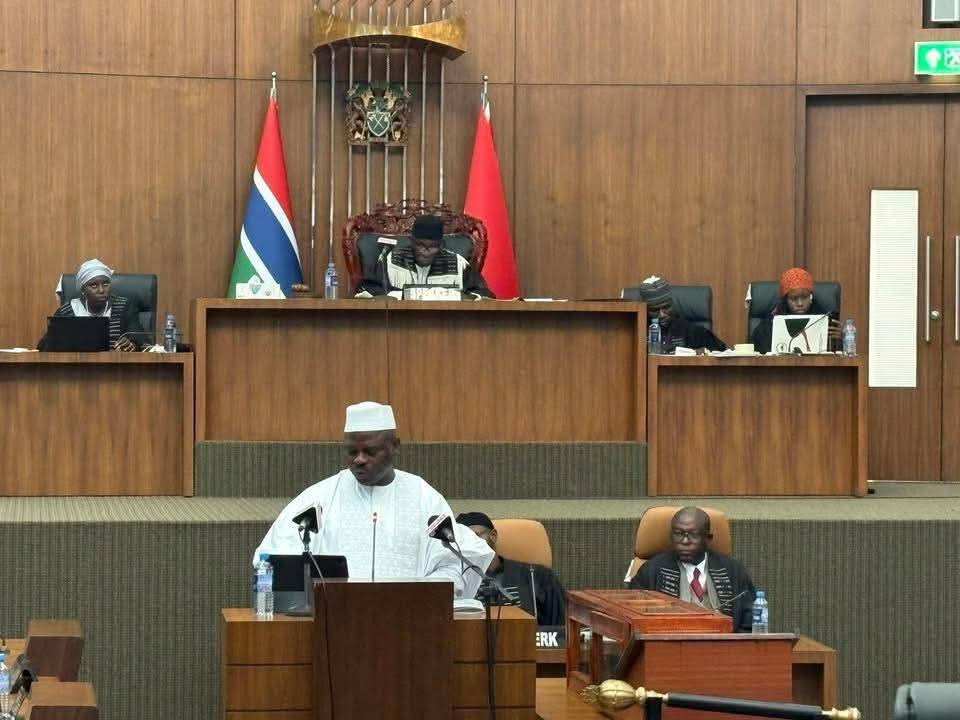
Following the late submission, the Speaker of the National Assembly allowed the tabling of the estimates, citing Standing Order 8 and the lack of specific constitutional consequences for missing the deadline.
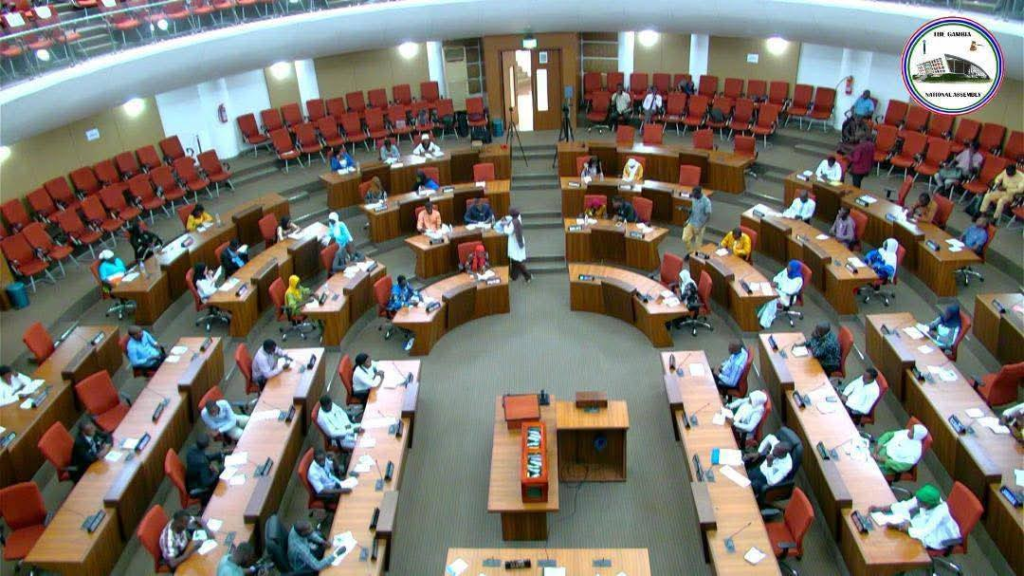
The Supreme Court also addressed whether the National Assembly had the power to accept the late budget.
When the delay occurred, Alhagie S. Darboe and other members raised that the Parliament cannot entertain a late budget submission, the Speaker of the National Assembly ruled that the Assembly could proceed, citing Order 8 of the Standing Orders to resolve the procedural issue.
The defendant argued that under Section 108 of the Constitution, the Assembly regulates its own procedure, and the Courts should not intervene.
The Plaintiffs contended that the Speaker and the Assembly lacked the discretion to extend this mandatory period.
While the Supreme Court agreed the Constitution was violated, it clarified that the National Assembly was still duty-bound to act.
The Supreme Court disagreed with the Defendants’ attempt to shield the action from judicial review. Citing the supremacy of the Constitution, Section 4, the Court affirmed that while the Assembly has independence, it cannot use its Standing Orders to legitimise a violation of the Constitution.
However, the Supreme Court distinguished between the Minister’s violation and the Assembly’s duty. The Supreme Court noted that once the estimates were laid (even late), the National Assembly was “duty-bound to act on the budget estimates within thirty days” under Section 152(1A).
The Supreme Court ruled that the Minister’s contravention did not prevent the National Assembly from considering the budget estimates upon its presentation.
“The contravention by the Executive did not preclude the Legislature from doing its work,”
In a strategic move during the trial, the Plaintiffs abandoned their request to have the 2025 Budget declared null and void (Reliefs 2 and 3).
Counsel A. Fatty for the Plaintiffs stated they had “no desire or wish to shut down government processes but equally to hold government to account according to the Supreme Laws of the land”.
The Court acknowledged the abandonment of relief 2 and 3, noting that since the reliefs were abandoned, it was unnecessary to rule on the validity of the Appropriation Bill itself. This allowed the 2025 Budget, which was approved by the Assembly on 16th December 2024, to stand despite the illegality of its submission.
The Supreme Court declared that the Minister of Finance violated Section 152(1) of the Constitution by submitting the budget late and the negotiations with financial institutions are not valid legal grounds for violating the Constitution.