
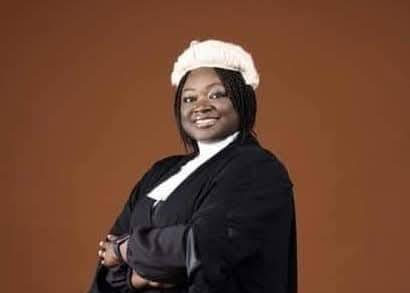
The High Court presided by Justice S.K. Jobarteh delivered a ruling in the criminal case of The State v. Salifu Keita, upholding a no-case submission by the defence Counsel, T.B. Jallow and ordered the acquittal and discharge of the accused person.
Salifu Keita, the accused, was arraigned on an amended one-count charge of manslaughter, contrary to section 186 of the Criminal Code, for allegedly causing the death of Abdoulie Badjie in February 2025 at Kuloro Village.
The prosecution alleged that the accused caused the deceased’s death by engaging in a fight with him, during which Abdoulie Badjie fell and sustained a severe spinal cord injury. The accused pleaded not guilty, and the prosecution called six witnesses and tendered three exhibits.
At the close of the prosecution’s case, the defence Counsel, T.B. Jallow, filed a no-case submission, arguing that the State failed to establish a prima facie case against Salifu Keita. Defence counsel contended that the prosecution did not lead any credible evidence linking the accused to the charge, the essential ingredients of manslaughter were not proven, and the case was “riddled with gaps, contradictions and unreliable testimony”.
The prosecution, in reply, maintained that the evidence was sufficient to require the accused to open his defence, asserting that only a prima facie case, not conclusive proof, was required at that stage.
Justice S.K. Jobarteh relying on the principle established in the locus classicus case of R v. Galbraith (1981), had to determine whether the prosecution’s evidence, taken at its highest, was such that a properly directed jury could convict.
The essential ingredients the prosecution was required to prove for manslaughter were:
A) That the Accused person performed an unlawful act.
B) That the unlawful act caused the death of the deceased.
C) That the unlawful act was an omission or culpable negligence tending to the preservation of life or health.
Justice Jobarteh established as a fact that the death of Abdoulie Badjie, caused by a C5 spinal fracture and associated spinal cord injury, was proven by the post-mortem report (Exhibit B) and the primary focus then shifted to the first two ingredients: whether the accused performed an unlawful act and whether that act caused the death.
Justice Jobarteh noted that the only eyewitnesses to the incident were PW4 and PW5. Stating that PW4 testified he saw the Accused and deceased “grappling with each other” and both fell to the ground, with the accused rising but the deceased remaining down.
While PW5 stated that a “push-and-pull situation” ensued after the deceased refused to leave the accused’s house. He and others intervened, and it was during this process of separation that both men slipped and fell. The deceased’s head struck a concrete surface. PW5 insisted that neither party beat the other, and the fall was a slip that occurred during the intervention.
Justice Jobarteh found that the testimonies of the two eyewitnesses, PW4 and PW5, were “clear, consistent, and remained unshaken under cross-examination”.
Justice Jobarteh concluded that the witnesses confirmed that the two men grabbed each other in what could be described as a fight, but “neither of them struck, hit, or intentionally applied unlawful force on the other,” adding that the fall was “mutual and simultaneous and the fatal fall was a consequence of an “accidental slip occurring during the effort to separate them”.
“The evidence did not suggest that the accused performed an unlawful act that led directly or indirectly to the death,” Justice Jobarteh established.
Justice Jobarteh stated that the prosecution had failed to establish an act by the accused that caused or even accelerated the deceased’s death, and the evidence reveals no malice, no intent and no unlawful action.
Ultimately, Justice Jobarteh was persuaded that the evidence was so weak that “no reasonable jury properly directed could convict on it”.
The application of the defence succeeds, and the Accused, Salifu Keita, is accordingly acquitted and discharged.