
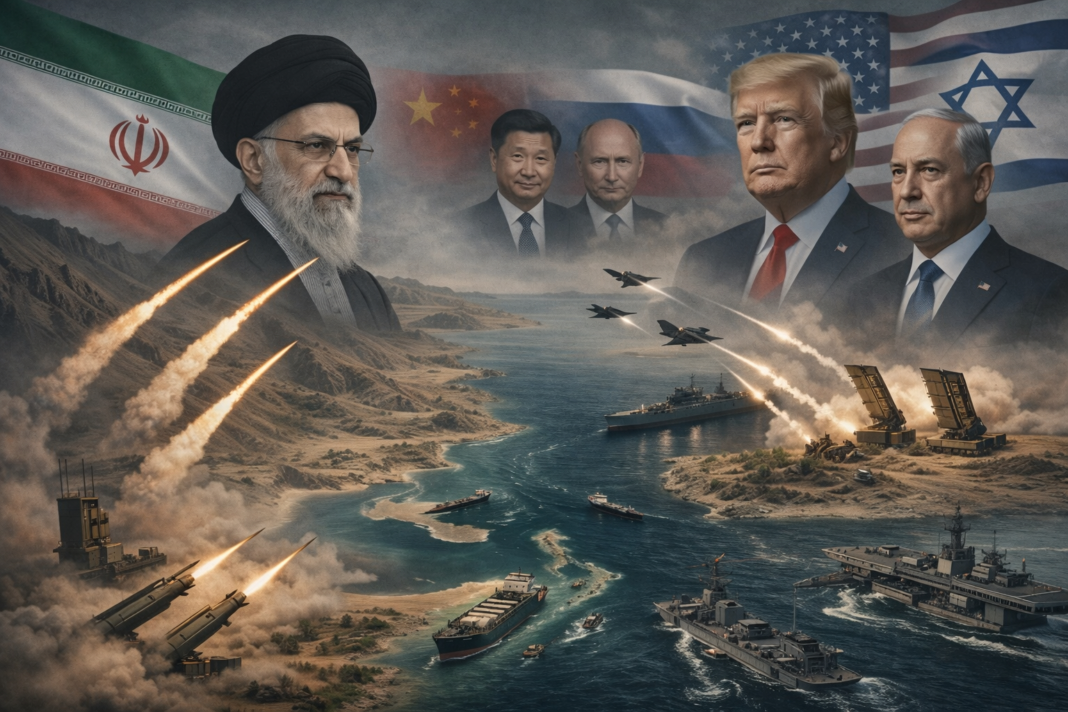
The ongoing war involving the United States, Israel, and Iran has entered a dangerous new phase, marked by intensified military confrontation, rising humanitarian costs, and growing global economic disruption. Now in its sixth week, the conflict shows little sign of immediate resolution, despite diplomatic efforts and claims from political leaders that an end may be in sight.
The war began on February 28, 2026, when joint U.S. and Israeli strikes targeted Iranian military, nuclear, and government infrastructure. Iran responded swiftly with missile and drone attacks on Israel, U.S. bases, and allied countries across the Middle East, widening the conflict into a regional crisis.
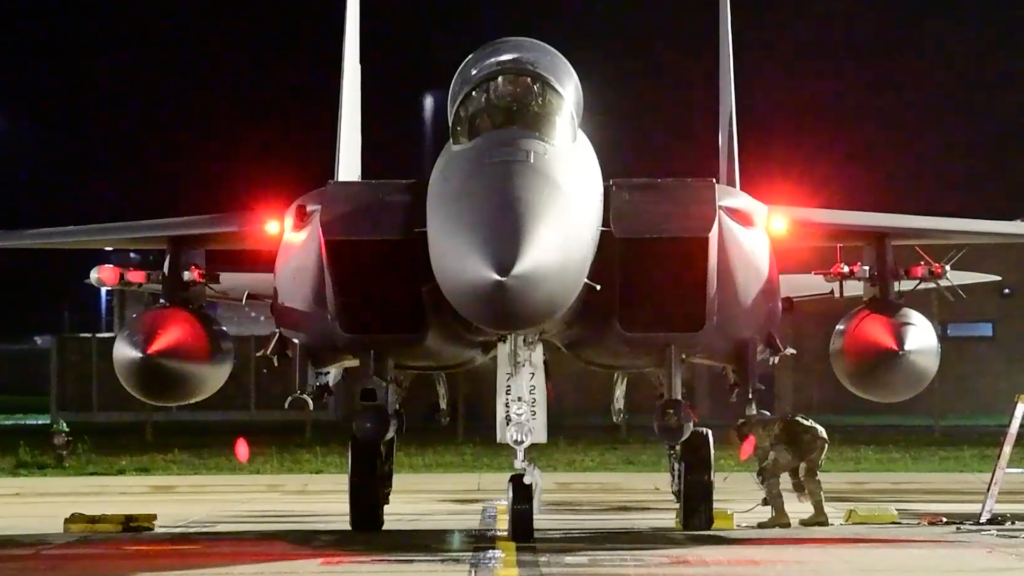
In recent days, hostilities have escalated sharply. Iran claimed it successfully shot down a U.S. F-15 fighter jet using a new air defense system, marking one of the most significant military setbacks for U.S. forces since the conflict began. A second American aircraft was also damaged during rescue operations, while one pilot remains missing, prompting an urgent multinational search effort.
At the same time, Israel has intensified its airstrikes in Lebanon, targeting Hezbollah-linked infrastructure. These operations have contributed to mounting casualties and mass displacement, with over a thousand reported deaths in Lebanon alone since the war began.
The conflict has also taken a devastating humanitarian toll. According to recent reports, hundreds of children have been killed and more than a million displaced across the region. Schools, hospitals, and critical infrastructure have been damaged or destroyed, raising fears of a long-term humanitarian catastrophe affecting an entire generation.
Meanwhile, tensions between Washington and Tehran continue to intensify. U.S. President Donald Trump has issued a 48-hour ultimatum demanding that Iran reopen the Strait of Hormuz—a critical global oil route—or face “devastating” military consequences. Iran has rejected the ultimatum, warning of further escalation and signaling its willingness to continue the conflict.
The partial closure of the Strait of Hormuz has already begun to disrupt global energy markets. Oil prices are rising sharply, and supply chain disruptions are spreading across industries, from aviation to agriculture. Economists warn that prolonged conflict could trigger a broader global economic crisis, with inflation and shortages affecting countries far beyond the Middle East.
Domestically, the war is also reshaping U.S. politics. President Trump is reportedly considering a cabinet reshuffle amid declining approval ratings and growing public dissatisfaction with the handling of the conflict. Critics argue that the administration has failed to articulate a clear end strategy, further fueling uncertainty at home and abroad.
Despite these challenges, some U.S. officials have expressed cautious optimism, suggesting that the “finish line” of the war may be approaching. However, continued missile exchanges, regional instability, and unresolved political demands indicate that a swift resolution remains unlikely.
As the conflict deepens, the stakes continue to rise—not only for the countries directly involved but for the broader international community. With military escalation, humanitarian suffering, and economic fallout all intensifying, the US–Israel–Iran war is rapidly becoming one of the most consequential global crises of 2026.