
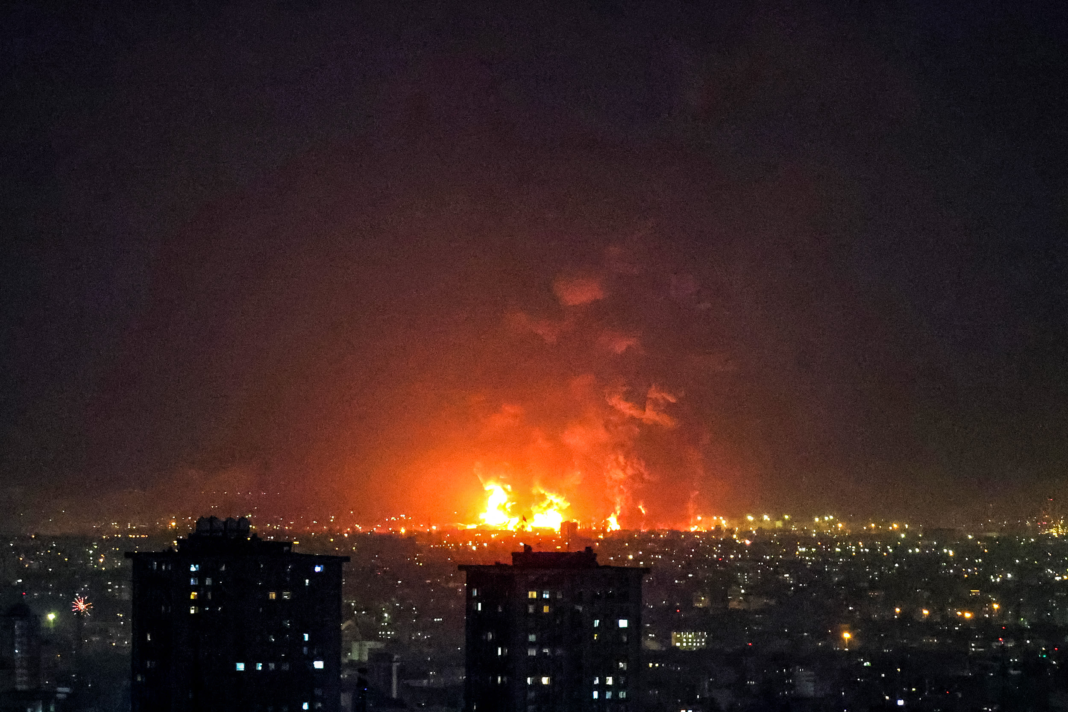
The rapidly escalating war between the United States, Israel, and Iran has entered its second week, raising fears of a wider regional conflict and major economic disruption across the globe.
The conflict began on 28 February 2026, when U.S. and Israeli forces launched coordinated air and missile strikes on Iranian military infrastructure in what Israeli officials described as a pre-emptive operation to neutralize Iran’s missile and nuclear capabilities. The offensive targeted command centers, air defenses, and strategic facilities across major cities including Tehran and Isfahan. The strikes reportedly killed Iran’s Supreme Leader, Ayatollah Ali Khamenei, and several senior officials, dramatically reshaping Iran’s leadership structure and escalating tensions across the Middle East.
Iran responded swiftly with a wave of missile and drone attacks against U.S. military bases and allied targets across the region. Projectiles and drones were launched toward Israel and toward facilities in Qatar, Bahrain, the United Arab Emirates, Jordan, and Saudi Arabia. Several Gulf states reported intercepting missiles, though some infrastructure damage and civilian injuries were recorded.
The conflict has quickly expanded beyond the immediate combatants. Iranian-aligned groups, including Hezbollah in Lebanon, opened additional fronts by firing rockets and missiles toward northern Israel, prompting Israeli retaliatory strikes in Beirut and southern Lebanon. The widening battles have displaced hundreds of thousands of civilians in Lebanon and intensified fears of a full-scale regional war.
Civilian casualties are mounting. Reports indicate that more than a thousand people have been killed in Iran since the start of the strikes, while hundreds more have died in Lebanon as airstrikes and missile attacks hit urban areas and infrastructure. Oil depots, desalination plants, and other critical facilities have also been damaged, raising humanitarian and environmental concerns.
World leaders have urged restraint as diplomatic efforts struggle to gain traction. The United States has stated that the campaign aims to dismantle Iran’s military capabilities and prevent it from developing nuclear weapons, while Israeli leaders have signaled that further operations may continue for weeks. Iranian officials, however, have rejected calls for “unconditional surrender” and vowed to intensify resistance if attacks continue.
Beyond the battlefield, the war is already affecting the global economy. Tensions around the Strait of Hormuz—a critical chokepoint for roughly one-fifth of the world’s oil supply—have driven sharp increases in energy prices and raised concerns about global inflation and economic slowdown. Analysts warn that prolonged fighting could push oil prices dramatically higher and disrupt international trade routes.
International reactions have been divided. Some European officials have questioned the legality of the initial strikes, arguing they may violate international law, while others have focused on preventing further escalation. Calls for ceasefire negotiations have come from the United Nations, the Arab League, and religious leaders worldwide.
As military operations continue and regional actors weigh their responses, the conflict shows little sign of immediate resolution. Analysts warn that the coming weeks may determine whether the war remains a limited confrontation or spirals into a broader Middle Eastern conflict with global consequences.
By Staff Reporter