
The dramatic escalation this weekend — a coordinated military offensive by the United States and Israel against Iran — represents one of the most dangerous foreign policy decisions in decades. What was once a simmering geopolitical dispute over nuclear enrichment and regional influence has now erupted into open conflict, with profound consequences not only for the Middle East but for global stability, diplomacy, and the future of international law.
Proponents of the strikes argue that crippling Iran’s nuclear and missile capabilities was necessary to prevent a potential threat. Yet this justification collapses under scrutiny: diplomatic channels were still active days before the bombardment, with indirect negotiations in Oman reportedly making tenuous progress toward reducing Iran’s nuclear stockpile. Instead of allowing these talks a chance to succeed, the offensive was launched — a choice that suggests reckless prioritization of military action over peaceful resolution.
Moreover, framing the operation as pre-emptive self-defense does little to obscure its offensive nature. The strikes targeted Iran’s military infrastructure and leadership, including the compound of Supreme Leader Ayatollah Ali Khamenei, who state media later confirmed had been killed in the assault. Such actions blur the distinction between defensive action and regime change — and cement a pattern of U.S. foreign policy that has time and again substituted coercion for constructive engagement.
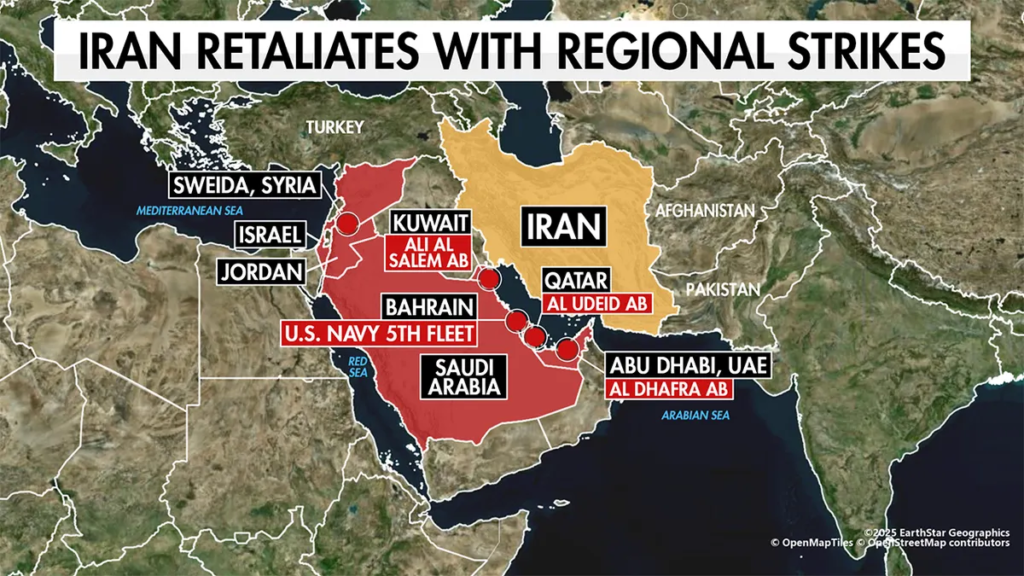
The consequences of this misstep are already unfolding. Iran’s retaliation has been swift and widespread, extending to attacks on U.S. and allied military positions throughout the region. The specter of an all-out regional war now looms large, threatening to engulf Iraq, Syria, the Gulf states, and beyond. Global energy markets are in turmoil as fears of disruption in the Strait of Hormuz — a vital artery for international oil shipments — drive prices higher, with ripple effects for economies already struggling with inflation and supply chain challenges.
Even the United Nations has recoiled at the scale of the violence. In an emergency session, U.N. Secretary-General António Guterres condemned both the U.S.–Israeli attacks and Iran’s counter-strikes, warning that escalating hostilities risk a broader conflagration. This should be a sobering reminder that unilateral military action rarely solves complex geopolitical issues — and often worsens them.
Beyond the immediate human and economic toll, the crisis erodes longstanding norms of international law. Military interventions that bypass multilateral institutions and ignore established diplomatic frameworks undermine the very order that has, imperfectly, maintained relative global peace since World War II. Allowing such precedents to stand threatens to normalize might over right, inviting future conflicts justified by ambiguous security rationales.
Critically, this war also undermines the genuine aspirations of the Iranian people, many of whom have been protesting domestic repression and economic collapse long before the outbreak of hostilities. Rather than supporting these voices for peaceful reform through engagement, the U.S. has amplified the narrative of external threat, strengthening hardliners who resist both domestic and international pressures for change.
In a world already strained by climate anxiety, economic inequality, and rapid technological change, the last thing we need is a major new war in one of the most volatile regions on earth. Diplomacy — not bombs — remains the only sustainable path forward. The United States must urgently pursue ceasefire initiatives, accept multilateral mediation, and commit to negotiations that address both security concerns and Iran’s legitimate interests. Anything less is a dereliction of leadership with costs that will be paid in lives and livelihoods for years to come.