Senegalese people will elect their deputies on Sunday, eight months after opting in the presidential election for a radical change in the way the country is run.
What is at stake?
The 7.3 million registered voters can confirm their March choice by giving a parliamentary majority to President Bassirou Diomaye Faye and his Prime Minister Ousmane Sonko.
Forced cohabitation with a hostile parliamentary majority has shown for several months that, without the support of the legislature, the executive would have difficulty keeping its promise to transform the state, establish social justice, fight corruption and restore the independence of a country with diversified political and economic partnerships, but which, according to them, had sold out its interests abroad.
The president dissolved the Assembly as soon as he could, in September.
The scale of the victory is also at stake. The executive needs a three-fifths majority to revise the Constitution, as promised, without going through a referendum. The same goes for impeaching former President Macky Sall.
The opposition warns against the danger of entrusting hegemonic power to a power that they consider extremist or incompetent.
“We are facing a system that is not yet dead,” said Ousmane Sonko at a meeting on Wednesday evening.
Who will win?
The Senegalese historically confirm their vote in the presidential elections in the legislative elections, analysts recall.
“The presidential election was for or against Macky Sall; here it will be for or against Ousmane Sonko,” says research professor El Hadji Mamadou Mbaye. However, “Ousmane Sonko continues to ride on his popularity from the presidential election, and people have understood that it is necessary to give them the majority to be able to implement public policies.”
The opposition is dispersed. However, a part has managed to form coalitions, notes Maurice Soudieck Dione, professor of political science.
The opposition trumpets that in eight months Mr. Sonko has talked a lot and done little.
Unemployment is over 20%, life is expensive. Hundreds of Senegalese continue to try to reach Europe in canoes. Public accounts are in the red and the International Monetary Fund has just suspended an aid program. Various projects are blocked and the private sector is waiting for the payment of state debts.
“There may be a warning from the voters,” considers Mr. Dione.
Who are the protagonists?
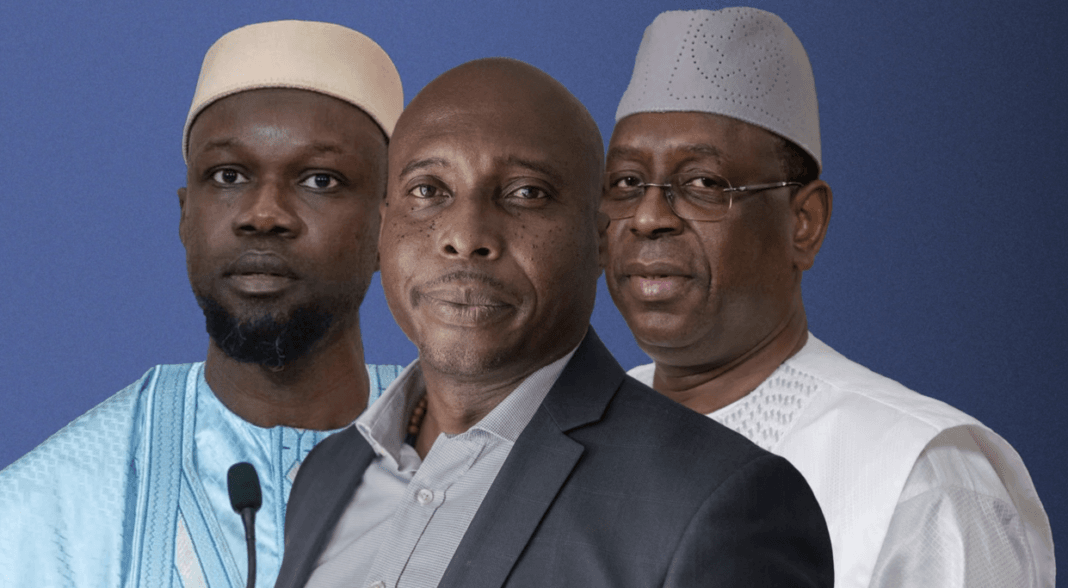
– Ousmane Sonko, Prime Minister, head of the Pastef list, his party. He could have been president if his candidacy had not been invalidated after three years of confrontation with the government. He had Mr. Faye elected. In a historically hyper-presidential system, he is a potential super vice-president. He continues to fan the flames, as when he calls in the middle of the campaign to avenge his attacked activists, before relenting.
– Macky Sall , former president (2012-2024). He left ingloriously in April for Morocco. He broke with the custom of post-presidential reserve by accepting the head of the Takku Wallu Senegal coalition. He is campaigning remotely. His return in extremis, despite the risk of being worried by his successors, would have a considerable impact.
– Amadou Ba , Mr. Sall’s last Prime Minister and his designated successor in the presidential election, defeated in the first round. At the head of the Jamm Ak Njariñ coalition, he distanced himself from Mr. Sall and a camp in which some had undermined his chances in the presidential election and others had followed him in this campaign.
– Barthélémy Dias , mayor of Dakar, head of the Samm Sa Kaddu coalition list. A former ally of Mr. Sonko, he became his adversary and helped electrify the campaign by exchanging insults with the Prime Minister. He claims to have a gun license and was sentenced in 2022 to prison in a homicide case.
How do you vote?
Senegalese people are called upon to elect 165 deputies for five years. One hundred and twelve are elected by majority vote in a single round in the departments and abroad (for 15 of them) and 53 others by proportional representation on a national list.
There are 41 lists. All lists must respect gender parity. No women are at the top of the list.
The polls open at 8:00 a.m. and close at 6:00 p.m., unless special circumstances require them.
Reliable projections of the new Assembly could be available Monday morning.