The International Monetary Fund (IMF) has praised Senegal for its efforts to enhance transparency in public debt management, indicating its willingness to initiate a new financial support program almost a year after halting the country’s prior credit line.
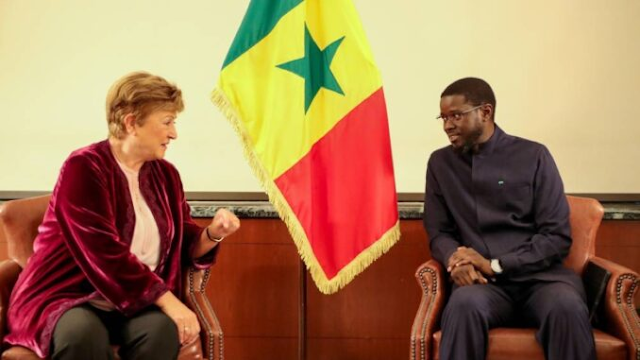
On Friday, IMF Managing Director Kristalina Georgieva stated that Senegalese authorities have achieved “significant progress” in rectifying previous financial data and tackling the misreporting that resulted in budget deficit miscalculations in recent years.
“The Fund welcomes the government’s commitment to transparency and the steps taken to identify all public debt obligations, as well as its close cooperation with IMF staff,” Georgieva said, according to Agence France-Presse.
The IMF halted a $1.8 billion credit facility for Senegal last year upon uncovering misleading fiscal data from the tenure of former President Macky Sall.
A team from the IMF that visited the country in March verified that there were inaccuracies in the reported figures for the budget deficit and public debt from 2019 to 2023, which has raised concerns regarding the reliability of official statistics.
The scandal undermined investor confidence and increased borrowing costs, compelling the government to focus on restoring the trust of international lenders by implementing structural reforms and enhancing fiscal transparency.
Georgieva expressed her approval of Senegal’s official request to initiate a new IMF-supported program, highlighting that “conditions are now in place to move swiftly on all fronts.”
Official negotiations are scheduled to commence in mid-October at the IMF and World Bank Annual Meetings, indicating a steady recovery of confidence in Senegal’s economic management.
The new arrangement aims to enhance public debt management, reinforce expenditure oversight, and increase revenue efficiency, all designed to lower debt levels and improve financial stability.
Senegal stands out as one of West Africa’s most vibrant economies, supported in recent years by significant energy and infrastructure initiatives, yet weighed down by increasing external debt.
Experts indicate that the revitalized collaboration with the IMF signifies a pivotal moment in Dakar’s fiscal recovery, potentially bolstering investor confidence in its capacity to draw foreign investment and maintain long-term economic growth.