The Gambia’s electricity crisis has reached a point where even lawmakers are demanding answers, accountability and stronger parliamentary scrutiny of the National Water and Electricity Company (NAWEC), as prolonged blackouts continue to frustrate citizens and fuel street protests.
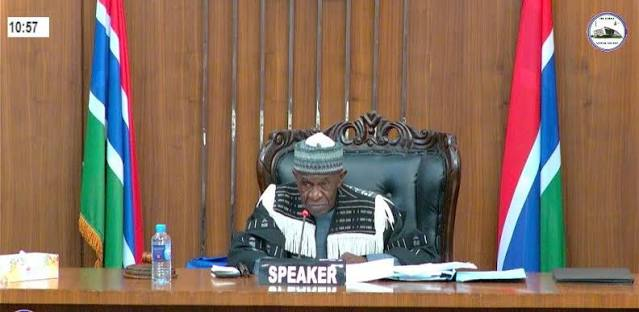
The issue dominated proceedings at the National Assembly on Wednesday after Banjul Central NAM Abdoulie Njai brought the country’s worsening electricity situation before lawmakers as a Matter of the Day.
What followed was more than another parliamentary discussion about power cuts. It exposed growing concern over how NAWEC is being managed, how public resources committed to the electricity sector are being used, and why years of government intervention have failed to deliver reliable electricity to Gambians.
Jeshwang NAM Sheriff Sarr acknowledged the widespread frustration, saying the crisis affects citizens across the country and requires a collective response. However, while recognising the public’s right to express its grievances, he cautioned against demonstrations, particularly those held at night, warning that the conduct of some recent protests could have damaging consequences.
But the frustration expressed inside Parliament reflects an even bigger problem outside it: Gambians are increasingly asking how long they are expected to endure a power system that repeatedly fails them.
Nianija NAM Amadou Camara said lawmakers themselves are experiencing the same blackouts as their constituents. He urged MPs not to turn the crisis into a partisan confrontation, but instead to use Parliament’s oversight powers to examine NAWEC’s problems and demand concrete answers.
That call raises an uncomfortable question: if Parliament has a responsibility to oversee public institutions, why has NAWEC’s persistent crisis been allowed to continue for so long without stronger scrutiny?
Foni Kansala NAM Almameh Gibba put the issue even more directly. He questioned why NAWEC remains in such difficulty despite receiving billions of dalasis in government and development support since 2017.
His question goes to the heart of the growing public debate. Where has the money gone, what has it achieved, and who is ultimately accountable when billions are committed but citizens continue to sit in darkness?
Mr Gibba also called on President Adama Barrow to visit NAWEC facilities and speak directly to junior employees. His argument was that workers on the ground may have a more accurate understanding of the utility’s daily failures than senior officials sitting behind desks.
That suggestion deserves serious consideration. If the government is confident that NAWEC’s problems are being properly addressed, there should be little reason to avoid direct engagement with the workers who operate and maintain the system.
The Kombo East representative also warned against waiting for formal consultations before citizens speak out about national problems.
“You don’t need to be consulted for a national problem,” he said. “National problems are our problems. We should shout it out, blow the whistle.”
His warning against viewing every national crisis through a partisan lens is equally significant. Political point-scoring may produce headlines, but it will not restore electricity. Nor will blaming citizens for protesting resolve the failures that brought them onto the streets in the first place.
The immediate challenge for the government is therefore not simply to calm public anger, but to explain why the crisis persists, what has been done with the enormous resources committed to the sector, and what has gone wrong inside NAWEC.
The demonstrations have brought the electricity crisis into the streets. The parliamentary debate has now brought it into the heart of government.
What Gambians need next is not another promise of improvement. They need answers, figures, timelines and accountability.
After years of investment and repeated assurances, the fundamental question remains: why are Gambians still paying for a power system that so often fails to deliver power?