Washington / Tehran — A sweeping and unprecedented military confrontation has erupted between the United States, its ally Israel, and the Islamic Republic of Iran, marking a dramatic escalation in Middle Eastern hostilities that began on February 28, 2026. The crisis entered a new phase on Sunday as battles intensified, leadership structures in Iran were shaken, and global diplomatic alarm mounted.
The conflict ignited when joint U.S. and Israeli military forces launched a large-scale air and missile campaign against strategic Iranian military, nuclear, and command targets across several cities, including the capital, Tehran. The offensive — described by some U.S. officials as a pre-emptive move to neutralize perceived threats from Iran’s nuclear and ballistic missile programs — has continued through the weekend.
Iranian state media and multiple international outlets have confirmed the death of Iran’s Supreme Leader, Ayatollah Ali Khamenei, in the initial strikes. Alongside him, senior Iranian military commanders and key leaders of the Islamic Revolutionary Guard Corps were reportedly killed. The sudden leadership vacuum has triggered an emergency power transition, with senior clerical and state figures temporarily assuming control.
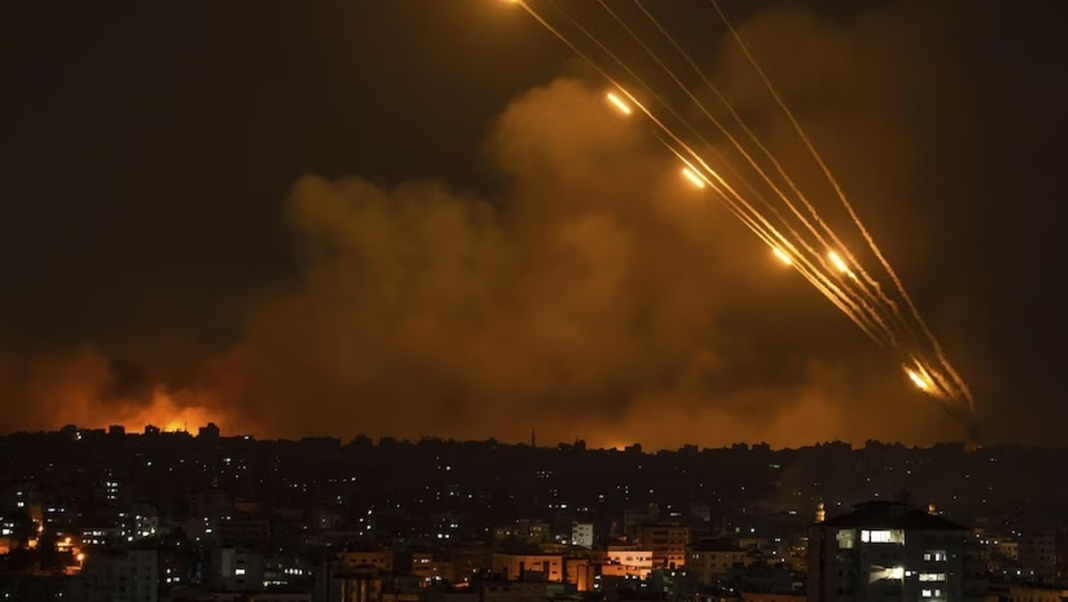
In response, Iran has launched coordinated missile and drone attacks against American and Israeli forces stationed across the Middle East, including in Bahrain, Qatar, Kuwait, Saudi Arabia, and the United Arab Emirates. Reports indicate that civilian areas have been struck, and defensive systems in several countries have been activated amid fears of further escalation.
One of the most tragic and controversial incidents so far has been a missile strike on a primary school in Minab, southern Iran. Iranian authorities claim at least 148 children and civilians were killed, a figure that has provoked international outrage and allegations that the attack amounts to a war crime. The U.S. military has acknowledged reports of civilian casualties and ordered an investigation, while Israel has denied involvement at that specific location.
Amid rising tensions, the United Nations Security Council convened an emergency session on Sunday. UN Secretary-General António Guterres condemned both the joint U.S.–Israeli strikes and Iran’s retaliation, urging all parties to cease hostilities and return to diplomacy before the situation spirals into a wider regional war. Russia and China echoed calls for de-escalation, while several European nations stressed the need to protect civilians.
Within Iran, state officials have vowed further retaliation against what they describe as “crimes against humanity,” warning the United States and Israel of force “never experienced before” if the attacks continue. Iran’s new leadership council has urged global Muslims and allied groups to support resistance against the offensive.
The United States government, meanwhile, stands by its actions, insisting the military campaign is aimed at eliminating imminent threats and curbing Tehran’s nuclear ambitions. Domestically, reactions are sharply divided, with political leaders split over the legality, necessity, and future ramifications of direct military intervention against Iran.
As of this evening, no ceasefire or diplomatic breakthrough has been reached, and fears of a wider Middle East conflagration continue to grow, with global markets, travel advisories, and world capitals reacting to the deteriorating security environment. Humanitarian groups have warned of mounting civilian suffering as the conflict enters its second full day.