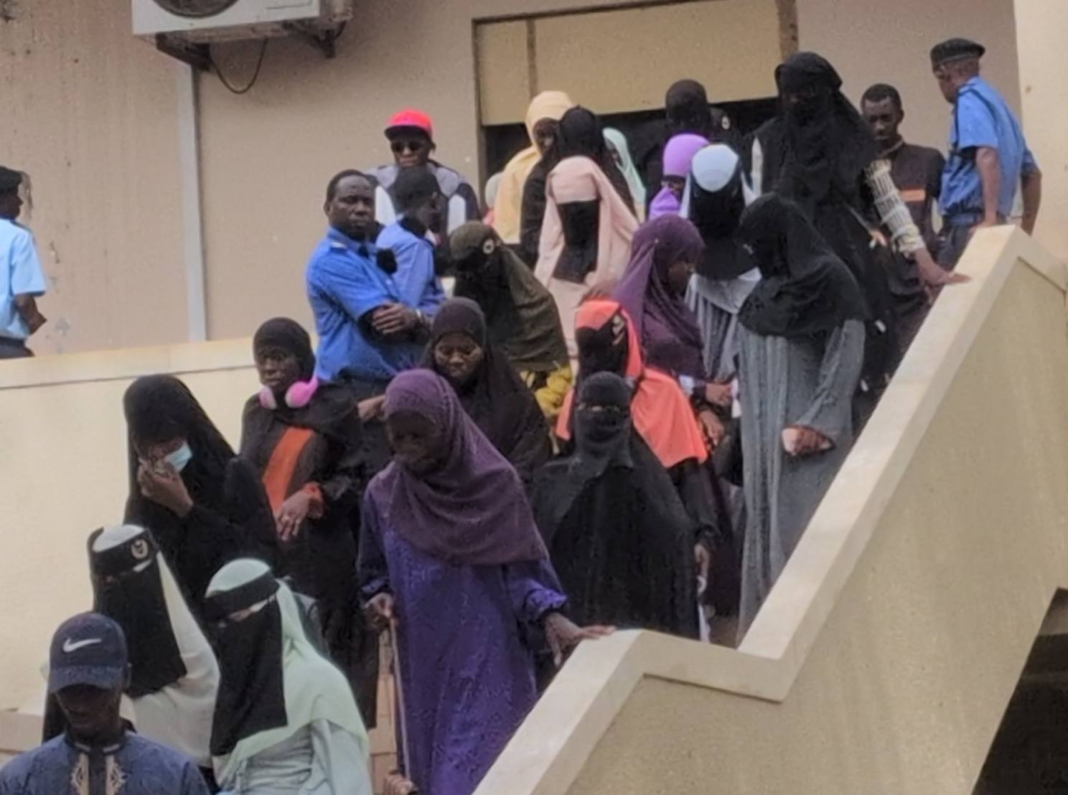
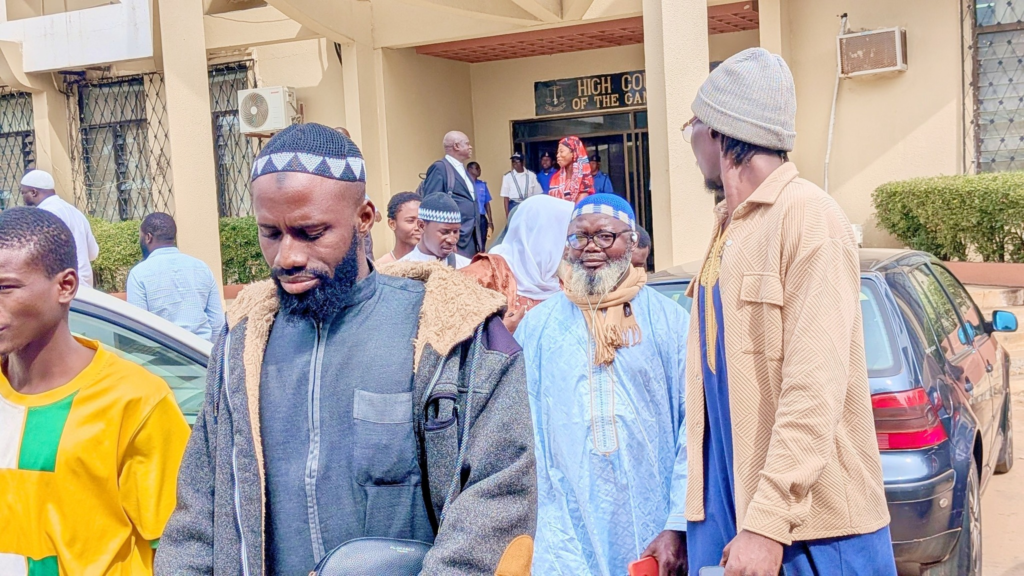
Constitutional challenge to the ban on female circumcision, Supreme Court before a five-panel of Judges led by Chief Justice Hassan B. Jallow.
The plaintiffs seek to challenge the legal prohibition of female circumcision in the country, arguing that the practice is rooted in religious Sunnah and cultural heritage.
The witness, Mariama Njie, a former circumciser (Nyansinba) with 15 years of experience, testified that she stopped the practice only due to the current ban.
She maintains that the procedure, as she performed it, carries religious and health benefits without the complications alleged by medical experts.
When the case was called Counsel J Darboe informed the court of their second witness in support of female circumcision.
Mariama Njie, a former circumciser (Nyansinba), took the stand and took an oath to speak the truth.
Counsel J. Darboe: Where do you live and what is your profession?
Mariama Njie: I live in Fajikunda. I am a housewife, and I was a circumciser before.
Counsel J. Darboe: Do you know why you are here today?
Mariama Njie: Yes.
Counsel J. Darboe: Do you know anything about female circumcision?
Mariama Njie: Yes, I know something about it because I was doing it before. The law did not accept it; that is why I stopped practicing Female circumcision.
Counsel J. Darboe: Have you experienced any problems with female circumcision?
Mariama Njie: I never had a problem with it.
Counsel J. Darboe: Did you find it in your family?
Mariama Njie: Yes, I found it in my family. My grandmother did it and passed it to my mom, and my mom passed it to me.
Counsel J. Darboe: Have you found any usefulness in Female circumcision?
Mariama Njie: Yes, I know the benefits and the importance.
Counsel J. Darboe: Can you tell the court what you know about female circumcision and its importance?
Mariama Njie: The importance that I know is that I found it to be important in Islam, and we know that it is part of raising our children. I found my elders doing it, Islam does not disgrace it, and it has benefits. I went through FGM and I have seven children. I only had one at the hospital during birth, but I never experienced a problem that FGM caused.
Even my family experienced the same thing, and nothing happened to them. That is why we were surprised when we heard it was banned, and that is why we came to the law to ask why it was banned. It was a surprise to us, and we always think that if it is in the Sunnah and in our deen (religion), why should it be banned?
Regarding the methodology, my parents taught me that any human being, if the person is a woman, usually has a clitoris. In those days, if you wanted to circumcise your child, you would say, “I want to perform the circumcision for my child.” You would buy a blade and take it to the circumciser; the children do not use the same blade.
In doing so, they just cut a small part of it. If you cut that part of the clitoris, a small clot comes out; that is how I was trained, and that is the way I practised it. If you do that to the child in the morning, she will be playing before midday; it does not affect her.
After that, we begin to train that child about life what to do and what not to do. We teach them that they should not call their elders by their names, and this brings many benefits to us. It is not only the cutting that makes life easy, but the training they go through. If there are difficulties, it is only now that we are hearing about them, but I did not know of any difficulties with it.
Cross-Examination by Counsel Okeke Counsel Okeke:
Counsel Okeke: Are you speaking for yourself or other people?
Mariama Njie: I am speaking on behalf of all women, not only myself.
Counsel Okeke: How long have you been in that practice?
Mariama Njie: I spent about 15 years in this practice, and during Jammeh’s time, I stopped.
Counsel Okeke: Did you hear about anyone who died during the practice?
Mariama Njie: I have never heard of it. I only heard recently that a child died.
Counsel Okeke: Do you know that some children sustained injuries?
Mariama Njie: Yes, because you cannot remove anything from a human body without injury.
Counsel Okeke: I put it to you that some people died from that practice.
Mariama Njie: Maybe, but I have never seen it.
Counsel Okeke: Do you know that the state is the only authority that can protect children?
Mariama Njie: Yes, I know.
Counsel Okeke: Do you know why the state banned that practice?
Mariama Njie: No, I do not know.
Counsel Okeke: You said you were born into it and Islam does not ban it. Can you tell the court what benefit you got from that practice?
Mariama Njie: I know the deen makes it important, and it is our culture.
Counsel Okeke: What benefit does the child have when it is practised?
Mariama Njie: It does not disturb the child. It has benefits. When a child is sick all the time, if you take the child for female circumcision, she gets better. I am a doctor because my parents taught me. I do not have a certificate, but I have the knowledge.
Counsel Okeke: What instrument do you use?
Mariama Njie: A razor blade.
Counsel Okeke: What do you do with the blade?
Mariama Njie: I take it, boil it, and set it aside until it cools.
Counsel Okeke: Can you say the same for other people who practice it?
Mariama Njie: I do not know.
Counsel Okeke: Have people died due to this practice?
Mariama Njie: It might happen, but I have never seen it.
Counsel Okeke: What is the difference between a child who went through it and one who did not?
Mariama Njie: If you do not remove it, the lady will complain that something on her body is disturbing her.
Counsel Okeke: Do you know who is representing you in parliament?
Mariama Njie: Yes, I know.
Counsel Okeke: Was there any consultation with the community?
Mariama Njie: There was a time when all the women went out with representatives to talk about this issue.
Cross-Examination by Counsel Y. Senghore
Counsel Y. Senghore: Is it correct that when FGM is done, there is a ceremony?
Mariama Njie: That was before.
Counsel Y. Senghore: How old are the girls who go through it?
Mariama Njie: It is up to you. When a child is born, you can circumcise her, or wait until she is older. Our culture does not allow a girl to grow old without it. By age ten, she will feel shy.
Counsel Y. Senghore: As a circumciser, do you know the different types?
Mariama Njie: I only know one type, which is what I do.
Counsel Y. Senghore: Are you the only one doing it?
Mariama Njie: No, it is done in different places.
Counsel Y. Senghore: How many children do you take in a batch?
Mariama Njie: Sometimes 30 to 40 children in a day.
Counsel Y. Senghore: Do you wear gloves?
Mariama Njie: In those days, gloves were not common. They used plastic bags to cover their hands. Now we use gloves.
Counsel Y. Senghore: Were you paid for the service?
Mariama Njie: Yes.
Counsel Y. Senghore: Were the elders who trained you medically trained?
Mariama Njie: No, they were not medically trained.
Cross-Examination by Counsel L.K. Mboge
Counsel L. Mboge: Where do you live?
Mariama Njie: I live in Fajikunda, but I was born in Jarra Jeffeh.
Counsel L. Mboge: Do you know that this matter has been deliberated in parliament?
Mariama Njie: Yes.
Counsel L. Mboge: Are you aware of the negative effects of FGM on the child?
Mariama Njie: I am not aware of them.
Counsel L. Mboge: Did the girl child give consent?
Mariama Njie: No.
Counsel L. Mboge: How many people did you circumcise?
Mariama Njie: I cannot tell.
Counsel L. Mboge: Can you tell the court how many children you circumcise in a month or year?
Mariama Njie: I cannot tell because I have no records.
Counsel L. Mboge: You will agree with me that what you do harms the child.
Mariama Njie: How? I do not know if you do not tell me, because the one I practice does not harm.
Counsel L. Mboge: Are you sure the razor blade does not cause harm to the person?
Mariama Njie: Yes, it does, but that is our right. Do they not circumcise the boys?
Counsel L. Mboge: You will agree with me that it is different for boys.
Mariama Njie: Yes, it is different, but they must go.
Counsel L. Mboge: I put it to you that circumcising women is not mandatory.
Mariama Njie: Even if it is not mandatory, it is a Sunnah a very strong Sunnah.
Counsel L. Mboge: Are you aware of the harm this causes to the girl child?
Mariama Njie: I am not aware. Maybe if you tell me, I will know.
Counsel L. Mboge: I am putting it to you that even the “Type One” you claim to practice causes harm to women.
Mariama Njie: It may be possible, but I have never experienced it, and I have never seen it affect those I know, and they have all been through Female circumcision.
Counsel L. Mboge: I am putting it to you that you did not consult every woman and you do not have the authority to speak on their behalf. Do you know the third defendant in this case, GAMCOTRAP?
Mariama Njie: No, I do not know GAMCOTRAP.
Counsel L. Mboge: I am putting it to you that GAMCOTRAP’s work is to ensure that no girl goes through FGM and other harmful traditional practices.
Mariama Njie: I knew about that before today. Fatou Baldeh is seated here. We have done a lot of work on the rights of women, and she has consulted me a lot about Female circumcision.
What they told me about the effects of FGM, I have never seen or experienced. So, we did not agree on that.
Counsel L. Mboge: Do you know how widely it has been practised?
Mariama Njie: No, I do not know.
Counsel L. Mboge: I am putting it to you that currently, 27 countries have banned this practice across Africa and Asia.
Mariama Njie: I have heard that. Those people agreed to ban it, but we do not agree. That is why we want the government to allow those who want to practice to do so, and those who do not want to practice to be free.
We are not going to do it by force; we are just pleading with the government.
Counsel L. Mboge: At the time you take these children, you do not seek their consent.
Mariama Njie: No. When I was taken, my consent was not sought, so I will also not seek their consent.
Counsel L. Mboge: So you were forced?
Mariama Njie: Yes, we have to obey our elders.
Counsel L. Mboge: You agree with me that the creation of the Almighty is perfection.
Mariama Njie: Yes.
Counsel L. Mboge: Now, I am putting it to you that there is no religious commandment in any religion, including Islam, about female circumcision.
Mariama Njie: Islam commands it.
Counsel L. Mboge: You will agree with me that the practice of FGM existed even before Islam.
Mariama Njie: It might be.
Counsel L. Mboge: On the issue of the benefits of FGM, it is alleged that it prevents promiscuity.
Mariama Njie: It might be possible, but we do not do it for that purpose.
Counsel L. Mboge: Can you tell the court its purpose?
Mariama Njie: The first is that we love it for its cleanliness, and it is a Sunnah which our religion permits.
Counsel L. Mboge: I am asking about the benefits because you have been through it.
Mariama Njie: The benefit is that what is cut from the girl child should not be there; if it remains, it bothers her.
Counsel L. Mboge: You cannot differentiate between a child who has been circumcised and one who has not in terms of their health. I am putting it to you that the majority of those who are circumcised deal with many health issues in their adolescence or marriage.
Mariama Njie: That is what I want to know.
Counsel L. Mboge: It affects them during menstruation, and in childbirth, they develop complications as well as issues in their sex life.
Mariama Njie: I do not know about these effects because I have gone through it and I did not experience them.
Counsel L. Mboge: From your experience as a circumciser, do you want to tell the court that you do not know about the different types of FGM?
Mariama Njie: I do not know about them.
Counsel L. Mboge: Do you know that in Type Two, the cutting is excessive? I am putting it to you that in many cases of childbirth, circumcised women lose their children or their lives because the natural elasticity of the woman has been tampered with.
Mariama Njie: That would worry me. How is that possible? If it does that, it is serious, but I do not know anything about that.
Counsel L. Mboge: Can you tell this court how many women you have circumcised?
Mariama Njie: I cannot tell. I can only tell the duration.
Counsel L. Mboge: Can you tell this court how many people you circumcised in a month or a year?
Mariama Njie: I do not know that.
Counsel L. Mboge: So, you cannot tell this court because you have no records of the children you circumcised?
Mariama Njie: I am uneducated, so I cannot tell as I don’t keep records.
Counsel L. Mboge: So it is correct to say that you cannot tell this court how many children you have circumcised and how many children other people have also circumcised?
Mariama Njie: I cannot remember mine, let alone other people’s.
Counsel L. Mboge: So you cannot tell this courtthat many people has problem
Mariama Njie: I can swear, even if you bring the Quran, that no girl child said they have experienced any of these things you have mentioned.
Counsel L. Mboge: So, can you recall if any child had a problem due to circumcision?
Mariama Njie: Since I started circumcision, I have never seen any girl who has been circumcised have a problem, either from me or anyone else.
Counsel L. Mboge: You didn’t know some circumcisers were doing the circumcision in secret?
Mariama Njie: I don’t know.
At this point, Counsel L. Mboge had no further questions, and the witness was discharged.
Counsel J. Darboe informed the Supreme Court that they have filed a summary of evidence and would like to call a doctor to testify.
Chief Justice Hassan B. Jallow stated that Counsel J. Darboe has to come before the court formally. The Chief Justice informed the parties that all the defendants have to call a witness.
The case has been adjourned to the next term as the court is set for Christmas break