While the world, and indeed many of us in The Gambia, remained transfixed by the spectacle of the unfolding Gulf war, something far more immediate, far more dangerous, and far less televised crept quietly to our doorstep. On the 16th of March 2026, armed conflict erupted along our shared border with Casamance in southern Senegal that did not dominate headlines but is real and painfully so.
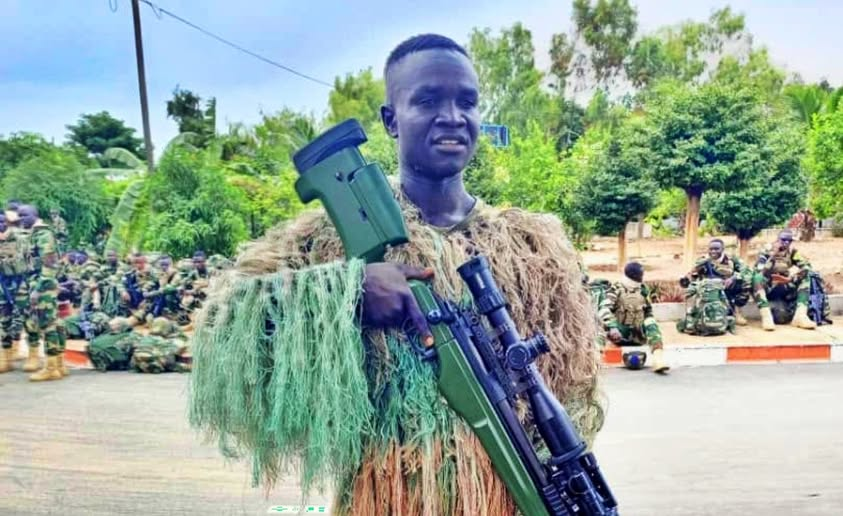
By the following day, after conducting my own modest inquiries, I confirmed what many would rather ignore, that there had been deadly clashes. Among the casualties was a Senegalese paratrooper, Sergeant Nfally Sonko. His death, tragic and sobering, is a reminder that while the world obsesses over distant wars, ours simmers just beneath the surface.
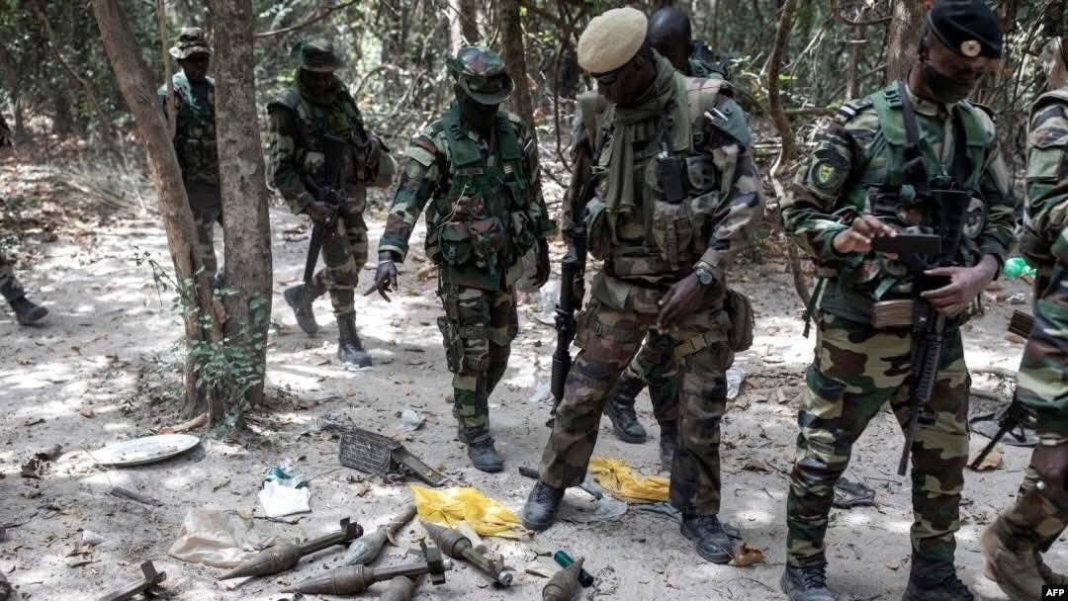
Reports from journalist Mustapha Jarju painted a grim picture of Senegalese forces launching operations targeting MFDC separatists, advancing into contested zones and reportedly dismantling rebel bases and cannabis fields. Heavy artillery exchanges sent shockwaves, literally and figuratively, into nearby Gambian villages such as Jifanga and Jakine. Some reportedly landed on Gambian soil, sending civilians fleeing in panic.
Even official briefings, cautious and measured as they tend to be, acknowledged escalating tensions. Reports of troop movements, evacuations, and emergency relocations from border communities such as Jakine to safer Gambian settlements underscored the simple truth that this is not just Senegal’s problem but ours too.
Yet, for students of history, this is hardly surprising.
The Casamance conflict, driven by the MFDC since 1982, is one of Africa’s most enduring insurgencies. Its most violent chapters were written between the late 1980s and early 2000s, with countless failed peace agreements punctuating its long and weary narrative. Even as recently as February 2025, a “historic” peace deal raised hopes of closure. But as events now remind us, hope in Casamance is often provisional.
Today, the conflict is less about ideology and more about fragmentation, survival, and, let us be honest, commerce. Timber, cannabis, and other illicit trades now sustain what remains of the rebellion. Reintegration efforts have made progress, but the stubborn residue of armed factions continues to threaten stability.
And then, just when one imagines the situation could not be further trivialized, along comes a self-styled “strategic thinker” to enlighten us.
One Madi Ba Dobo, whose academic credentials appear as elusive as peace in Casamance, has chosen this delicate moment to resurrect a most curious argument; that Senegal made a mistake in not annexing The Gambia in 1981. According to him, the recent clashes somehow revive this supposed “strategic debate.”
One must pause here, not in agreement, but in disbelief.
A debate? In whose chambers? Among which policymakers? Or perhaps, more accurately, in which imaginative faculty?
To suggest that Senegal’s contemporary security challenges could have been resolved by swallowing The Gambia whole is not merely simplistic, but is in defiance of history. It ignores the complex realities of the region, including Guinea-Bissau’s own entanglements in the conflict, particularly during the 1998 civil war involving Nino Vieira and Ansumana Mané. By Mr. Dobo’s logic, should Senegal have annexed Guinea-Bissau as well, just to be thorough?
History, inconvenient as it may be, refuses to cooperate with such tidy fantasies.
Successive Senegalese leaders, from Abdou Diouf to the present, chose diplomacy over domination. The Senegambia Confederation, though short-lived, was an attempt at cooperation, not conquest. Its failure was not an invitation for annexation, but a lesson in the complexities of sovereignty and partnership.
Equally, Gambian leadership, yes, including Yahya Jammeh, navigated this conflict with varying degrees of success and suspicion. Allegations of external support for MFDC factions have long circulated, involving multiple actors across borders. Yet, even with these shifting dynamics, the conflict endured because it is not a problem that yields to crude territorial solutions.
Mr. Dobo, however, seems undeterred by such subtleties. In his dogmatism, porous borders are the central villain. And his remedy is not enhanced cooperation, not intelligence sharing, not regional diplomacy, but the retroactive annexation of a sovereign state.
It is the kind of argument that might impress in a village bantaba, where storytelling thrives on exaggeration and applause is generous. But in serious discourse, it collapses under the weight of its own absurdity.
More troubling, however, is the subtle arrogance embedded in such thinking. It is the suggestion that The Gambia’s sovereignty is negotiable, its existence an inconvenience in Senegal’s strategic calculus. This is not analysis but a provocation disguised as scholarship.
At a time when both nations are striving, however imperfectly, for deeper cooperation and mutual respect, such commentary is, at best, unhelpful and, at worst, too reckless.
The real lesson from the recent clashes is not that borders should be erased, but that they must be better managed. Security cooperation, intelligence sharing, and diplomatic engagement are not optional luxuries but necessities. The enemy is not geography, but instability.
As for our “professor,” one suspects that relevance, rather than reason, may be his true objective. In attempting to sound sincere, he has instead exposed a curious blend of historical amnesia and intellectual vanity.
In the end, while soldiers confront real dangers on the ground, it appears some battles are being fought elsewhere, on paper, in imagination, and unfortunately, without discipline.
And those, perhaps, are the easiest wars to win.
By Lt. Colonel Samsudeen Sarr (Rtd)
Former Commander of The Gambia National Army