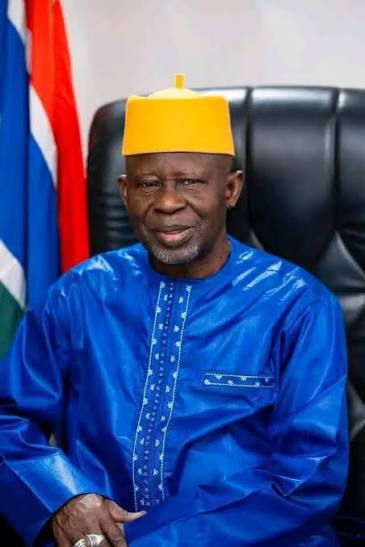
United Democratic Party (UDP) leader Ousainou A.N.M. Darboe has pledged to introduce a new constitution that would limit presidential powers, strengthen Parliament and protect key institutions from political interference if his party wins the next election.
“The president should not be a king over you,” Darboe told supporters at a fundraising event organised by the UDP GASH Chapter in Switzerland.
He said a UDP government would pursue sweeping constitutional reforms designed to ensure that presidential authority is subject to stronger checks and balances.
Under his proposal, the president would retain the power to nominate cabinet ministers, but the National Assembly would have to vet and confirm their appointments before they could take office. Lawmakers, he said, should assess nominees on their competence, character and commitment to the country.
“That is the kind of power the legislature should have,” Darboe said.
He also called for greater independence for the security services, particularly the office of the Inspector General of Police. Under the proposed reforms, an IGP appointed and confirmed by the National Assembly could not be removed at the president’s sole discretion.
Darboe argued that requiring parliamentary approval for such a dismissal would help prevent the police from becoming an instrument of political control.
“The police will become mere tools,” he said. “And it is very easy to turn workers into tools if the power given to you is unchecked.”
The UDP leader also proposed changes to the appointment of members of the Independent Electoral Commission (IEC), rejecting both the existing system of presidential appointments and an arrangement in which political parties select their own representatives.
“If the UDP chooses someone, that person will only look after the UDP’s interest,” he said.
Instead, Darboe proposed giving established civil society and professional organisations a role in selecting electoral commissioners. He named the Supreme Islamic Council, the Gambia Christian Council, the Gambia Press Union and the Gambia Bar Association among the bodies that could nominate representatives.
Under the arrangement he outlined, the president would appoint the IEC chairman, while other commissioners would be nominated by civil society organisations. Their removal would require the consent of the bodies that selected them.
Darboe said the proposal was intended to shield the electoral commission from political influence and strengthen public confidence in the electoral process.
He insisted that the reforms were not designed to target President Adama Barrow personally, but to establish safeguards that would apply to future administrations.
Responding to what he described as Barrow’s objections that constitutional changes could weaken the presidency excessively, Darboe said the proposed restrictions would apply regardless of who occupied the office.
“When we say president, we do not mean Barrow,” he said. “You can make laws that will govern tomorrow and the near future. Gambian people, give me five years and I will bring you that kind of law.”
Darboe also pledged to repeal provisions of the Public Order Act that require political parties and other groups to obtain police permission before holding public meetings.
He questioned why citizens should need authorisation from the Inspector General of Police to exercise their constitutional right to peaceful assembly.
“If the Constitution says you have the right to freedom of assembly, why should I need someone’s permission to exercise that right?” he asked.
The UDP leader accused the Barrow administration of retaining the provisions because they give the government leverage over political opponents by restricting their ability to organise public gatherings.
The proposed changes form part of Darboe’s wider vision for a political system in which presidential authority is more tightly regulated, Parliament has stronger oversight powers, and independent institutions are better protected from interference.
His proposals would require legislative and constitutional changes to be implemented, but he presented them as central to his commitment to strengthening democratic governance in The Gambia.