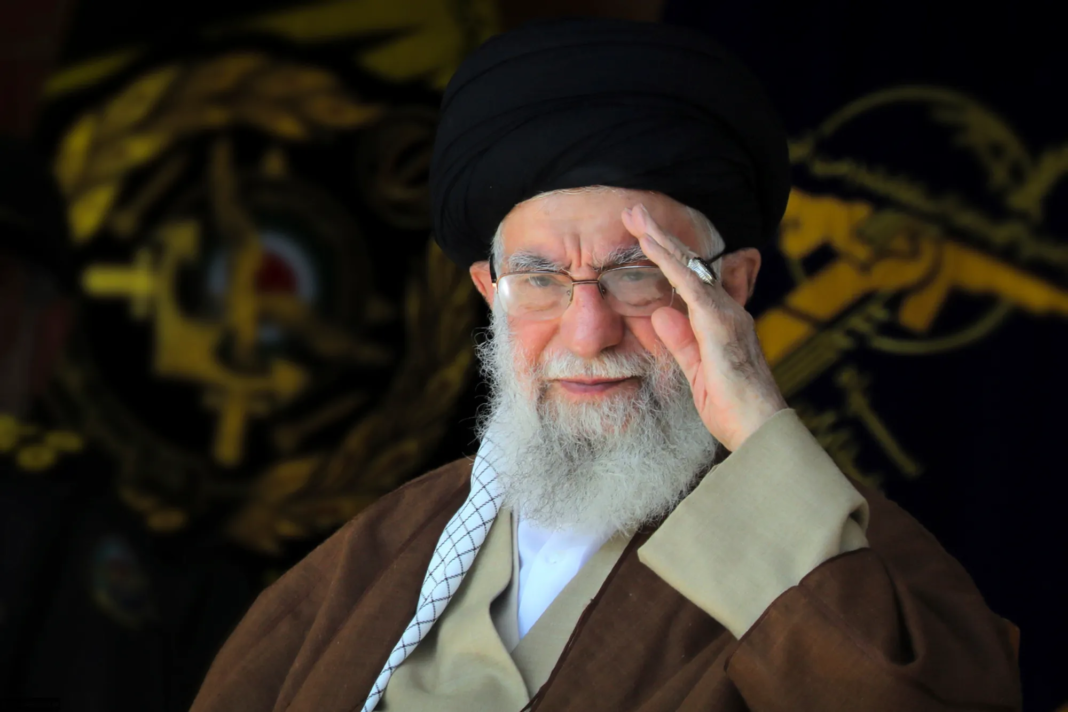
In the turbulent aftermath of the strike that reportedly killed Iran’s Supreme Leader, Ali Khamenei, a dramatic narrative has begun circulating in international media. According to this account, Khamenei was warned that a devastating U.S.-Israeli strike was imminent but refused to leave the compound, declaring that if the Iranian people had no safe place to hide, neither would he.
It is a stirring story and evokes the image of a leader choosing solidarity with his people over personal survival.
But when examined carefully, the story begins to unravel under the weight of its own contradictions.
If credible intelligence truly existed that a major attack was imminent, then the responsibility for the Supreme Leader’s protection rested squarely with his security apparatus. No professional security commander entrusted with guarding the most important political figure in a country would simply accept such a refusal and fold his arms. The protection of a national leader is not a matter of personal preference but a matter of duty and state survival.
Indeed, from The Gambia, thousands of miles away from Tehran, I publicly predicted in an article that an attack could occur around the 28th of February or the 1st of March. If such an assessment could be made from afar by an outside observer, it is difficult to believe that Iran’s own intelligence services were completely in the dark.
But an even more troubling question emerges.
If Khamenei knowingly refused to relocate to safety, why were so many of Iran’s most senior military and strategic figures gathered at the same location at the same moment?
Among those reportedly killed alongside him were:
- Major General Mohammad Pakpour, Commander of the Islamic Revolutionary Guard Corps.
- Major General Abdolrahim Mousavi, Chief of the General Staff of the Iranian Armed Forces.
- Brigadier General Aziz Nasirzadeh, Minister of Defence and Armed Forces Logistics.
- Brigadier General Mohammad Shirazi, Head of the Military Office of the Supreme Leader.
- Hossein Jabal Amelian, Head of the Organization of Defensive Innovation and Research.
- Reza Mozaffari-Nia, former head of the same strategic research organization (SPND).
- Mohsen Darrebaghi, Deputy for Logistics and Support of the Armed Forces General Staff.
- Gholamreza Rezaian, Commander of Iran’s Police Intelligence Organization.
- Bahram Hosseini Motlagh, Head of Operations Planning of the Armed Forces General Staff.
- Saleh Asadi, Chief of Intelligence at the Khatam-al-Anbiya Central Headquarters.
Members of the Supreme Leader’s immediate family and entourage were reportedly killed as well.
Are we seriously expected to believe that all these men, commanders, ministers, intelligence chiefs, were aware that a devastating strike was imminent and simply chose to remain in place, calmly awaiting their fate?
Such a scenario stretches logic to the breaking point.
From a religious perspective, the narrative also raises difficult questions. In Islamic teaching, knowingly exposing oneself to certain death when protective measures are available raises serious moral concerns, as the Qur’an clearly warns believers not to throw themselves into destruction.
A far more plausible explanation may be far less romantic but considerably more realistic.
Iran’s leadership may simply have been caught off guard.
Another possibility is that they placed too much faith in the diplomatic process that had recently begun with the United States in Geneva and was reportedly scheduled to continue in Vienna on 2 March 2026. If negotiations appeared to be gaining momentum, Iranian leaders may have convinced themselves that a large-scale strike would not occur at such a sensitive moment.
Alternatively, Tehran may have relied too heavily on its air-defense systems, systems that, if reports are accurate, initially failed and continue to do so in spectacular fashion.
History offers a sobering reminder. During negotiations over the same issue in June 2025, Israel launched a surprise attack that escalated into what observers described as “the twelve-day war”. If that happened once in the middle of diplomatic talks, why would anyone assume it could not happen again?
In times of war, narratives are often crafted quickly. Governments and supporters alike search for stories that transform tragedy into heroism and defeat into martyrdom.
The image of a leader refusing safety in solidarity with his people certainly fits that mold.
But symbolism should not be mistaken for truth.
By Lt Colonel Samsudeen Sarr (Rtd)
Former Commander of The Gambia National Army