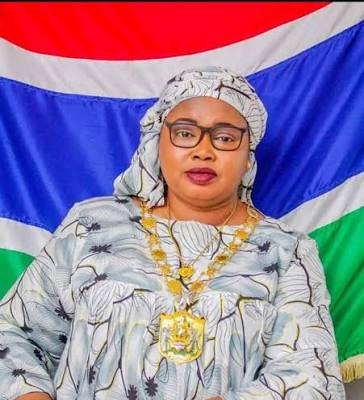
Banjul Mayor Rohey Malick Lowe has called on Gambian women to play a central role in the United Democratic Party’s (UDP) campaign to win power, arguing that women have been instrumental to the party’s three-decade political journey.
Lowe made the remarks on Saturday during the UDP’s 30th anniversary celebration held at Brikama SSP, where she paid tribute to women who helped establish and sustain the party during its early years.
Among those she recognized were Soffie Conteh, Sukai Dahaba, Nogoi Njie and Ramou Jallow. Lowe said their contributions had helped lay the foundation for the party and inspired subsequent generations of women to remain engaged in its political activities.
She noted that some of the party’s early female supporters may not live to see the UDP form a government, but said their sacrifices had created a legacy that younger generations could carry forward.
The Banjul mayor also expressed confidence in the UDP’s electoral prospects, predicting that party leader ANM Ousainu Darboe would win the December presidential election with the support of coalition partners.
“On the 5th of December, Darboe will be declared the winner,” Lowe told supporters.
A significant part of her address focused on the economic difficulties facing Gambian women. She highlighted persistent electricity shortages as one of the challenges affecting women involved in farming, gardening and petty trading.
According to Lowe, many women depend on refrigeration to preserve tomatoes and other perishable goods, meaning prolonged power outages can result in financial losses for small-scale traders and farmers.
She also linked electricity shortages to challenges facing students, arguing that children often struggle to study at night when households are without power.
Lowe cautioned against placing responsibility for poor academic performance solely on teachers, saying wider socioeconomic challenges, including unreliable electricity, should also be taken into account.
On economic empowerment, Lowe pledged that a UDP-led government would seek to expand opportunities for women, particularly through greater participation in public procurement.
She argued that women currently receive only a limited share of government procurement opportunities and urged them to use their political influence and votes to demand greater access to the country’s economic resources.
Lowe also addressed concerns within the agricultural sector, citing alleged delays in payments to farmers in Jokadou as an example of what she described as weaknesses in the government’s support for farmers.
She argued that agriculture could become a major source of wealth for Gambians if farmers had better access to modern machinery, financing and other resources.
However, she said many farmers continue to operate with inadequate equipment and limited institutional support.
As the UDP prepares for the December presidential election, Lowe urged party supporters, particularly women, to remain calm, united and focused.
She said the party’s long political history, combined with the continued involvement of women at grassroots level, could play an important role in determining its electoral prospects.
The remarks come as political parties and alliances intensify their preparations for the December 5 presidential election, with women voters expected to remain a critical constituency in the campaign.