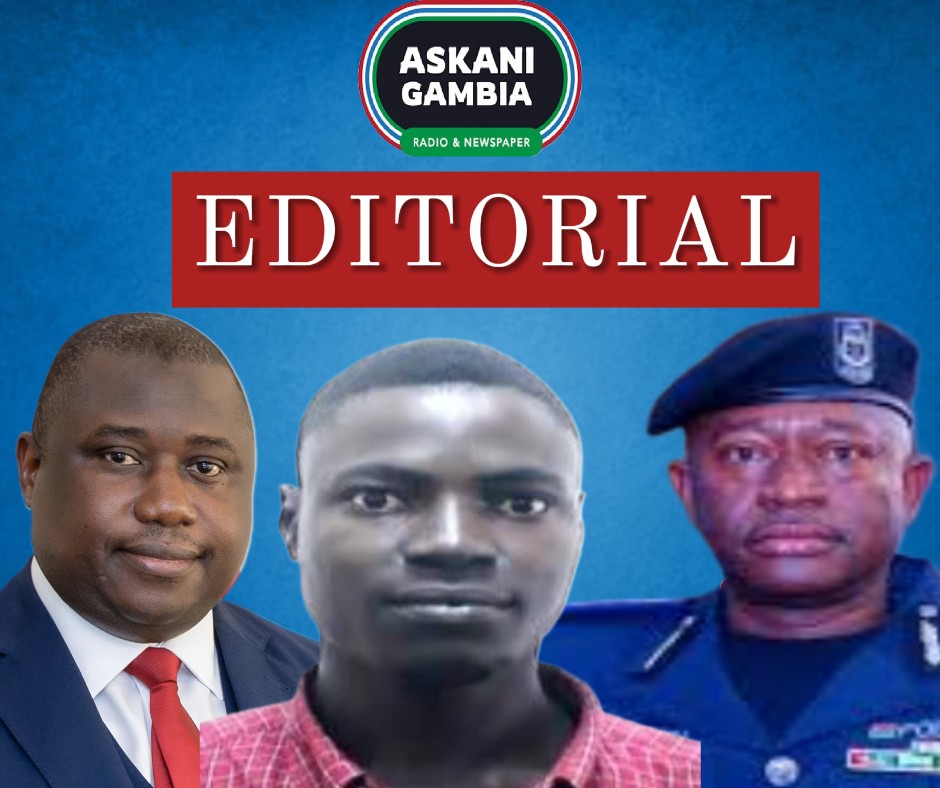
The rearrest of Ousainou Bojang and Amie Bojang, few hours after their acquittal by the High Court, represents one of the most alarming assaults on the rule of law in The Gambia in recent years. What should have been a moment of relief and vindication has instead exposed a troubling pattern of executive overreach and disregard for judicial authority under the administration of Adama Barrow.
A court of competent jurisdiction examined the evidence, heard the arguments, and delivered its verdict: the Bojangs were not guilty. That decision should have been final. It should have marked the end of their ordeal and reaffirmed public confidence in the justice system. Instead, their immediate rearrest sends a chilling message—that even when the courts speak, the state may simply choose not to listen.
Responsibility for this deeply troubling episode cannot be avoided. At the center of it stands Seedy Touray, the Inspector General of Police, whose office must account for the actions of the officers who carried out the rearrest. In any functioning democracy, such a blatant contradiction of a court ruling would trigger swift accountability. Yet, so far, there has been only silence and evasion.
This is unacceptable. Seedy Touray must resign immediately. His continued tenure in office undermines the credibility of the police force and raises serious concerns about its independence and professionalism. If the police can detain citizens without clear legal justification—even after a court has declared them free—then the very foundation of justice is at risk.
Equally troubling is the deafening silence from the Barrow administration. President Adama Barrow, who has repeatedly positioned himself as a champion of democratic reform and rule of law, now faces a defining test of leadership. Words about justice and accountability ring hollow when actions on the ground suggest the opposite. The government must explain, in clear and unequivocal terms, the legal basis for the Bojangs’ rearrest—or admit that a grave error has been made.
This incident is not just about two individuals. It is about the integrity of the entire legal system. If court rulings can be so easily disregarded, what protection do ordinary Gambians have against arbitrary detention? What assurance exists that justice, once delivered, will be respected?
Civil society organizations, legal professionals, and concerned citizens have already begun to raise their voices. Their demands are simple and justified: the immediate and unconditional release of Ousainou and Amie Bojang, full transparency بشأن the circumstances of their rearrest, and accountability for those responsible. Anything less would signal a dangerous normalization of impunity.
The Barrow government cannot afford to treat this as a minor controversy. It is a crisis that strikes at the heart of governance and democratic legitimacy. The international community, which has closely watched The Gambia’s post-authoritarian transition, will also be paying attention. Incidents like this risk undoing years of progress and damaging the country’s reputation as a reforming democracy.
Ultimately, the path forward is clear. The Bojangs must be released without delay. Seedy Touray must step down or be removed from his position. And the government must recommit itself—through concrete actions, not just rhetoric—to upholding the rule of law and respecting the independence of the judiciary.
Anything short of these steps would not only deepen public distrust but also set a dangerous precedent: that in The Gambia, freedom granted by the courts can be taken away just as quickly by the state. That is a precedent no democracy can afford to accept.