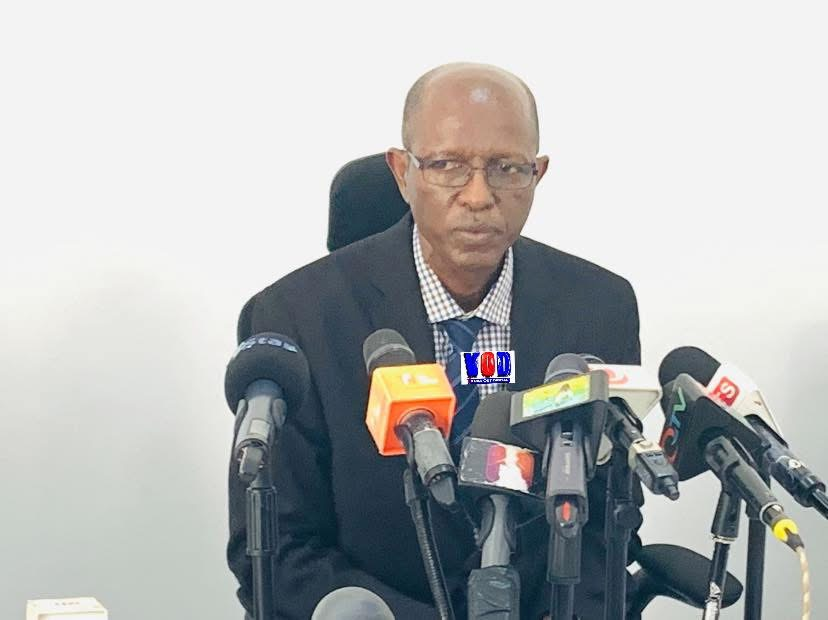
Gallo Saidy, the managing director of the National Water and Electricity Company, warned on Tuesday that power cuts could get worse. He told Gambians to be ready for the “worst-case scenario” as tensions in the Middle East continue to disrupt energy supply chains.
At a press conference, Mr. Saidy said that the current power outages are temporary but their length is unknown. He said that these outages are caused by global pressures that the country cannot control. He was sure that things would eventually settle down, but he also knew that there was no clear timeline for when that would happen.
“But to be honest, we Gambians need to be ready for the worst-case scenario.” “We put in place risk management processes, and this load shedding is part of that,” he said.
He said that the government was acting quickly and that NAWEC was working closely with the executive branch to put in place steps to lessen the impact of the crisis.
Mr. Saidy stressed how much The Gambia depends on electricity from other countries. He said that while this dependence isn’t necessarily bad, it does make the country vulnerable to shocks from outside. He said that the company’s long-term plan is to bring back domestic generation capacity so that the country doesn’t have to rely on imports as much and, eventually, become a potential energy exporter.
He said that NAWEC needs to focus on managing its current resources before it can reach that goal. He said, “Gambia doesn’t have a lot of resources.” “We don’t have any oil or anything else; the only resource we have is people.” We have to get energy from other countries.
He said that the problems The Gambia is facing right now are not unique to the country, but are part of a larger global energy crisis. He said that consumers shouldn’t expect a steady supply of electricity until there is more certainty about the situation in the Middle East.
“It won’t happen.” “We’re going to try to lessen the risks that come with global problems, and this is one of them,” Saidy said. “We need to get the public ready to understand that most of this is out of our hands.”
He told people to use electricity more wisely and work with the government as they try to stabilize the system and lessen the effects on homes and businesses.
“What we can do is try to lessen the effects on our communities and make sure the public knows about it and works with us to use the electricity they are getting more effectively.”