
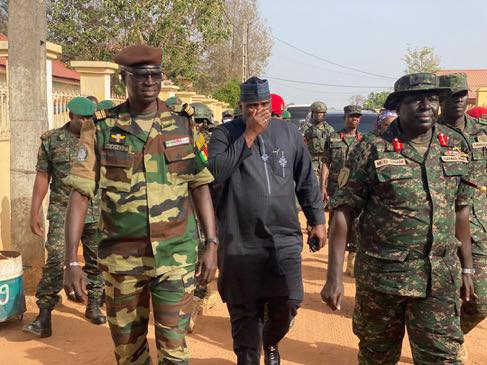
In any functioning democracy, national security decisions must be guided by intelligence, risk assessment, and professional military advice — not partisan sentiment or electoral calculations. Yet the recent reestablishment of the BWIAM ECOMIG checkpoint raises troubling questions about whether security policy is being shaped by genuine threats or by political pressure.
According to sources, the decision to reinstate the checkpoint has little to do with the security concerns outlined in the GAF press briefing. Instead, it appears to have been triggered by political dissatisfaction among NPP supporters who perceived the earlier removal of the checkpoint as a political victory for Hon. Almamy Gibba and his No-To-Alliance position. If this account is accurate, it signals a dangerous precedent: that security deployments can be reversed not because of new intelligence, but because of political optics.
This is deeply concerning.
Security infrastructure, especially in a sensitive election cycle, should never become a symbolic tug-of-war between rival camps. When checkpoints are established or dismantled, citizens must be confident that such actions are based solely on national interest — not on which political faction claims credit.
If a checkpoint is necessary, then it should remain in place regardless of who benefits politically. If it is unnecessary, it should not be reinstated merely to neutralise a perceived political advantage. To do otherwise undermines public trust in both the armed forces and civilian leadership.
The broader issue here is institutional credibility. The GAF must remain above partisan influence. ECOMIG’s presence in The Gambia has long been justified on grounds of stabilisation and democratic consolidation. If operational decisions become reactive to party pressure, it risks eroding the very stability these forces were meant to guarantee.
This election cycle demands restraint, maturity, and a commitment to national cohesion. Political competition is natural. However, manipulating or appearing to manipulate security arrangements for partisan balancing is not only irresponsible — it is destabilising.
Citizens deserve clarity. Was there new intelligence that justified the reinstatement? Was there a reassessment of risk? Or was this simply a response to political dissatisfaction?
In times of political contestation, perception is as powerful as reality. If the public begins to believe that security deployments are tools in a partisan chess match, confidence in democratic governance weakens. And once trust in security neutrality erodes, rebuilding it becomes far more difficult than erecting any checkpoint.
National security must never be subordinated to political calculation. The stakes are too high — especially in an election year.
Your support means the world to us! Please follow our page to keep up with our latest posts, and don’t forget to hit that like button and share our content with your friends. Thank you for being a part of the OPEN GAMBIA PLATFORM community! Ensa A B Ceesay, on 22 February 2026! Views expressed by contributors are strictly personal and not of TheOpenGambiaPlatform!
You can now write for the Open Gambia Platform, share information anonymously, and join the community. Please share your stories.
By Ensa A. B. Ceesay